
Push Lock Fuel Line: 4 Hoses and Kits Compared

EVIL ENERGY 3/8-Inch SAE 30R7 Hose suits most buyers seeking a 3/8-inch push-lock fuel line because its hose is specifically described for compatible 3/8-inch push-lock fittings. Choose a different option if you need a complete fitting kit, a 1/2-inch hose, or a working-pressure rating.
A push-lock fuel line uses a hose end designed to grip a matching fitting; hose diameter and fitting compatibility must match the connection.
We earn a commission if you buy through links on this page. As an Amazon Associate I earn from qualifying purchases. Products are compared on manufacturer specifications, not hands-on testing.
- Best overall: EVIL ENERGY 3/8-Inch SAE 30R7 Hose – Its 3/8-inch ID hose is specified for matching 3/8-inch push-lock fittings.
- Best for a fitting kit: 6AN 3/8-Inch Fuel Hose Kit, 20 ft – Includes 20 feet of hose plus eight fittings in straight, 45-degree, and 90-degree configurations.
- Best for 1/2-inch hose: EVIL ENERGY 1/2-Inch 30R7 Hose, 25 ft – Its 1/2-inch ID and 25-foot length differ from the 3/8-inch options.
| Product | Best for | Inner diameter | Length | Working pressure | Shop |
|---|---|---|---|---|---|
| EVIL ENERGY 3/8-Inch SAE 30R7 Hose | 3/8-inch fit | 3/8 in | 20 ft | — | Check Price on Amazon |
| 6AN 3/8-Inch Fuel Hose Kit, 20 ft | Angled fittings | 3/8 in | 20 ft | 700 psi | Check Price on Amazon |
| EVIL ENERGY 6AN 3/8-Inch Kit, 20 ft | Higher pressure rating | 0.38 in | 20 ft | 650 psi | Check Price on Amazon |
| EVIL ENERGY 1/2-Inch 30R7 Hose, 25 ft | Larger hose ID | 1/2 in | 25 ft | 300 psi | Check Price on Amazon |
Push Lock Fuel Line Options
Compare hose diameter, length, and connection hardware before choosing a line for your fuel system.
EVIL ENERGY 3/8-Inch SAE 30R7 Hose

Unlike the complete kits, this is a 20-foot hose intended for compatible 3/8-inch push-lock fittings. It has a 3/8-inch ID, 0.63-inch OD, nitrile rubber tube, and polyester braid reinforcement. The maker identifies it as SAE 30R7 and gives a -40°F to 257°F temperature range. The hose is a good fit when you already have matching fittings; it does not include fittings. Its 1,200 PSI figure is a burst-pressure rating, not a working-pressure rating, so do not use that number to set an operating limit.
Bottom line: Pick this hose when your existing fittings match its 3/8-inch ID.
6AN 3/8-Inch Fuel Hose Kit, 20 ft
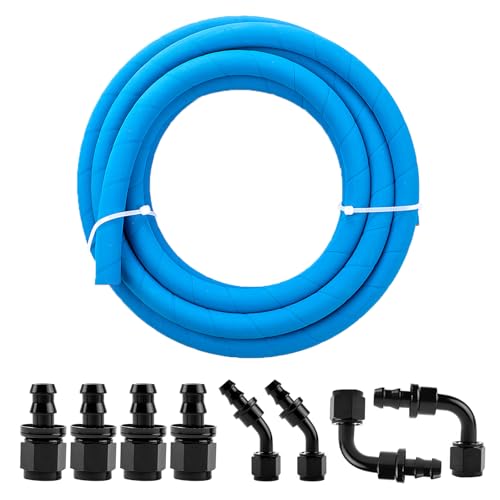
This kit stands out by including several fitting angles rather than hose alone: eight push-lock fittings, with four straight, two 45-degree, and two 90-degree pieces. The 20-foot hose has a 3/8-inch ID, braided polyester reinforcement, and an oil-resistant synthetic-rubber inner tube. The maker gives a 700 PSI working-pressure rating, 4,000 PSI burst rating, and -40°F to 248°F temperature range. It suits a setup that needs included angled connections; confirm that the fitting ends match the components in your system before assembly.
Bottom line: Choose this kit if the included straight and angled fittings suit your routing.
EVIL ENERGY 6AN 3/8-Inch Kit, 20 ft

This 20-foot kit pairs a 0.38-inch-ID, 0.65-inch-OD hose with push-on fittings, and its 650 PSI working pressure distinguishes it from the other options with working-pressure figures. The hose has an NBR inner tube and CPE outer cover, with an operating range of -4°F to 212°F and a 2.60-inch minimum bend radius. The maker specifies compatible 13–19 mm hose clamps for its 3/8-inch barb connections. This option suits buyers comparing pressure and bend constraints, but check that its fitting style matches the intended connection.
Bottom line: Pick it when its pressure rating and bend radius fit your setup.
EVIL ENERGY 1/2-Inch 30R7 Hose, 25 ft

This is the only 1/2-inch-ID option here, and its 25-foot length also exceeds the 20-foot hoses. It has a 0.75-inch OD, 3 mm wall, NBR rubber construction, and polyester braid. The maker says it meets and exceeds SAE 30R7 and gives a 300 PSI working-pressure rating, 1,200 PSI burst rating, and -40°F to 257°F temperature range. Its larger bore suits systems built for 1/2-inch hose; it is not interchangeable with 3/8-inch hose or fittings, so confirm the required diameter first.
Bottom line: Choose this hose when the system calls for a 1/2-inch ID and 25 feet.
How to choose a push-lock fuel line
Start with the fitting size and connection type, then compare hose pressure and temperature ratings with the system’s requirements. A 3/8-inch ID hose and a 1/2-inch ID hose are different sizes; select only the size that matches the fittings and equipment. A kit can save sourcing separate fittings, but included fittings still need to match the connection points. For example, choose a kit when its included angles address your routing and its ends fit your components. If the system requires a working-pressure figure, compare working pressure—not burst pressure. Confirm the fuel and application compatibility before installation, and use the manufacturer’s specifications for the equipment being connected.
Hose diameter and fitting compatibility
Match the hose’s inner diameter to the fitting’s intended hose size; a 3/8-inch hose is not a substitute for a 1/2-inch hose. The maker gives nominal ID sizes, while outer diameter and wall thickness can also matter where a fitting or clamp engages the hose. Push-lock fittings must be made for the hose dimensions and type; the 3/8-inch SAE 30R7 hose here calls for compatible push-lock fittings, while the separate kit identifies its own included fittings. Do not force a mismatched hose onto a fitting or assume that a similar-looking barb is compatible. When replacing a line, check the equipment’s specified size and connection style before cutting hose or assembling the run.
Working pressure, burst pressure, and temperature
Use a hose’s working-pressure rating to judge operating suitability; burst pressure is not a safe operating target. These options give working ratings from 300 to 700 PSI where a working figure is supplied, but actual suitability depends on the system requirements and temperature conditions. Temperature range matters too: the ranges differ, so compare both ends of the range with the intended environment. A hose’s pressure rating does not establish that every fitting or connected component has the same rating. The system is only as suitable as its lowest-rated part. For fuel service, verify that the hose material and fittings are compatible with the particular fuel and application before installation.
Routing and assembly mistakes to avoid
Respect the hose’s minimum bend radius where one is supplied; a tight bend can kink a hose or interfere with flow. For a 66 mm minimum bend radius, keep the bend at least that wide rather than folding the hose sharply around an obstruction. Route the line away from heat, abrasion, and moving parts, and avoid twisting it while securing the ends. The 3/8-inch hose guidance distinguishes clamp-free assembly on matching push-lock fittings from using the correct fuel-line clamp on standard barbs. A clamp does not make an incompatible fitting suitable. After assembly, inspect the connection and check for leaks before relying on the system.
Frequently Asked Questions
Can a 3/8-inch fuel hose fit a 1/2-inch fitting?
No; hose ID and fitting size need to match. A 3/8-inch hose is smaller than a 1/2-inch fitting, so use the diameter specified for the system rather than stretching the hose.
Is burst pressure the same as working pressure?
No; burst pressure is not an operating rating. Use the working-pressure rating for suitability, and make sure all connected parts are rated for the system.
How tight can a fuel hose bend be?
Keep bends at or above the hose’s minimum bend radius. One option specifies 2.60 inches; a smaller bend can kink or restrict the line.
Can one fuel hose carry gasoline and diesel?
Some hose materials are specified as compatible with both, but compatibility differs by hose. Verify the hose’s fuel compatibility and system requirements before use.