
Shimano B01S Brake Pads: Fit and Compound Compared

For a direct B01S replacement, choose Shimano B05S-RX Resin Pad if you want Shimano’s B05S-RX resin pad; its maker says the updated friction material improves wear resistance over B01S. Eastern Power B01S-Compatible Pads also names B01S compatibility and offers several compounds, while the broader-fit packs suit riders whose calipers match their compatibility lists.
Shimano B01S pads are a pad shape used by multiple disc-brake calipers, so confirm the exact caliper model before ordering; pads that look similar may not fit.
We earn a commission if you buy through links on this page. As an Amazon Associate I earn from qualifying purchases. Products are compared on manufacturer specifications, not hands-on testing.
- Best overall: Shimano B05S-RX Resin Pad – Shimano’s B05S-RX is a resin replacement specified for two-piston calipers and offers the most direct brand-to-brand choice.
- Best for compound choice: Eastern Power B01S-Compatible Pads – The product names B01S compatibility and offers resin, semi-metallic and polymetallic options.
- Best for multiple pairs: Four-Pair Semi-Metallic B01S-Compatible Pads – The pack contains four pairs and names B01S among its compatible models.
| Product | Best for | Compound | Pack size | Pad dimensions | Shop |
|---|---|---|---|---|---|
| Shimano B05S-RX Resin Pad | Shimano resin replacement | Resin | 1 pad and spring | — | Check Price on Amazon |
| Eastern Power B01S-Compatible Pads | Compound selection | Resin, semi-metallic, polymetallic | — | 30.5 × 35 × 4 mm | Check Price on Amazon |
| Four-Pair Semi-Metallic B01S-Compatible Pads | Four-pair supply | Semi-metallic | 4 pairs | General | Check Price on Amazon |
Shimano B01S Brake Pad Options
Compare compound, pack contents and caliper compatibility, then match the pad shape to your brake model.
Shimano B05S-RX Resin Pad
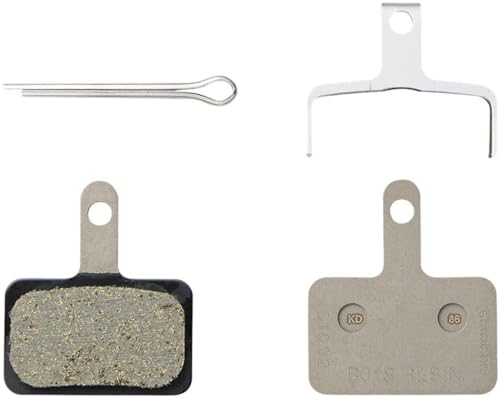
Shimano’s B05S-RX is the direct brand replacement in this group, with a resin friction material and stainless-steel back plate. The maker says its newer material has 50% better wear resistance than B03S and 110% better than B01S; it also specifies a two-piston caliper. Choose it when a resin compound and a Shimano pad are priorities. The dimensions do not identify the pad shape, so confirm that B05S-RX is the replacement specified for your exact caliper before ordering.
Bottom line: Choose this for a Shimano resin replacement in a compatible two-piston caliper.
Eastern Power B01S-Compatible Pads

Eastern Power stands out for offering three compound options while naming B01S compatibility. The pads measure 30.5 × 35 × 4 mm, and the compatibility list covers numerous Shimano calipers plus selected Tektro models. The maker says this option suits entry- to mid-level mountain, trekking and city e-bikes. Check the caliper model against the compatibility list, especially because the product excludes M5100, M6100, M7100 and M8100 series brakes. Choose the compound only after confirming that the pad shape and caliper match.
Bottom line: Pick this when you need B01S compatibility and want a choice of friction compound.
Four-Pair Semi-Metallic B01S-Compatible Pads

This four-pair pack is the only option here that explicitly combines multiple replacement pairs with a semi-metallic compound. Its compatibility examples include B01S, Shimano M575, M525 and M515, as well as selected Tektro and TRP models. The maker says the compound is designed for wet and dry conditions and heat resistance up to 700 degrees, without giving the temperature scale. The generic size label does not establish fit by itself, so verify the exact caliper model before choosing this multipair pack.
Bottom line: Choose this if several B01S-compatible bikes need semi-metallic replacement pads.
How to choose Shimano B01S brake pads
Start with the caliper model, not the bicycle brand or the appearance of an old pad. B01S is a pad pattern shared across certain brake systems, and manufacturers may replace older compound generations with compatible newer pads, as Shimano does with B05S-RX. Resin pads generally emphasize quieter operation and modulation; metallic compounds typically tolerate heat and wear better but can be noisier. These are broad compound tendencies, not guarantees for a particular pad. For a like-for-like replacement, match the caliper’s specified shape and compound; consider another compound only if the caliper maker allows it. If the caliper model is absent from a product’s compatibility list, confirm the pad shape before ordering rather than inferring fit from a similar model name.
How to confirm brake pad fit
Confirm the full caliper code printed on the brake, then compare it with the pad maker’s compatibility list. A name such as MT200 or M575 is more useful than a general label such as mountain bike, because a bicycle can have different brakes front and rear. The decisive rule is simple: if the exact caliper model is not named, do not assume fit based on brand alone. When the old pad is removed, compare its outline and retaining arrangement with the replacement and stop if either differs. Never ride with a pad that cannot seat correctly.
Resin and semi-metallic brake pads compared
Resin and semi-metallic compounds trade noise and feel against durability and heat tolerance. Resin pads are often chosen for lower noise and smoother modulation in ordinary riding; metallic blends are commonly selected for sustained braking, wet riding or heavier use, though rotor compatibility and noise matter. Product compounds can vary, so use these as starting points rather than performance promises. The table helps narrow the choice, but pad shape and caliper compatibility still decide whether a pad will work.
| Need | Starting choice | Fit condition |
|---|---|---|
| Quieter, smooth-feeling braking | Resin | Caliper supports resin pads |
| Repeated hard braking or wet use | Semi-metallic or metallic blend | Rotor and caliper permit that compound |
| Uncertain fit | Match the existing pad pattern | Verify the full caliper code |
Safe brake pad replacement and bedding
Brake pads are a safety-critical wear part: replace them as a pair on a wheel and keep oil, grease and cleaning residue away from the friction surfaces. Many bicycle disc pads are replaced when friction material is around 0.5 mm thick, but the caliper maker’s minimum takes precedence. After installation, bed new pads with repeated controlled decelerations in a safe, traffic-free area; avoid holding a hot brake continuously, which can create uneven deposits. Check rotor condition and thickness against its marked minimum, since worn or contaminated rotors can undermine new pads. If the lever feels soft, the wheel does not spin freely, or the pad does not sit squarely, do not ride until the brake is corrected.
Frequently Asked Questions
Do Shimano B01S and B05S pads fit the same brakes?
Shimano’s B05S-RX is presented as an updated resin material compared with B01S, but pad shape alone does not confirm every caliper fit. Match the full brake model to the caliper maker’s compatibility guidance before installing it.
When should bicycle disc brake pads be replaced?
Many bicycle disc pads need replacement when friction material approaches 0.5 mm, though the caliper’s minimum is the controlling limit. Replace contaminated or damaged pads rather than waiting for them to wear down.
Can resin pads work in wet weather?
Resin pads can be used in wet conditions if the brake and rotor are approved for them, but braking may feel different and wear can increase. For frequent wet riding, compare a compatible semi-metallic option and follow the rotor’s compound limits.
How should new bicycle brake pads be bedded in?
Bed new pads with a series of controlled slowdowns in a safe, traffic-free area, allowing the brake to cool between harder applications. Avoid long continuous dragging, which can overheat the brake or deposit material unevenly.
Do front and rear brake pads need to match?
Use pads shaped for each caliper; front and rear brakes may use different pad patterns. Check both caliper codes separately, especially when the bicycle has brakes from different model families.