
Pelvic Floor Exercise Equipment: 3 Trainers Compared

For pelvic floor exercise equipment that includes a resistance level and a band, TINRIEF 35 lb Trainer is the clearest match; its trainer is rated at 35 pounds and its included band at 40 pounds. Choose LED Display Thigh Trainer if tracking workout time and repetitions matters more, or MERACH 360° Pelvic Floor Trainer if you prefer a simpler device without a resistance figure.
These thigh trainers are designed for squeezing between the legs, but pelvic floor exercises rely on deliberately contracting and relaxing the pelvic floor muscles—not just pressing the thighs together.
We earn a commission if you buy through links on this page. As an Amazon Associate I earn from qualifying purchases. Products are compared on manufacturer specifications, not hands-on testing.
- Best overall: TINRIEF 35 lb Trainer – It gives separate resistance figures for the trainer and included band: 35 and 40 pounds.
- Best for tracking: LED Display Thigh Trainer – Its LED display shows workout time, repetitions, and calories burned.
- Best for simplicity: MERACH 360° Pelvic Floor Trainer – It offers a 360-degree rotating design and materials including PP, TPE, and high-strength springs.
| Product | Best for | Resistance | Display | Weight | Shop |
|---|---|---|---|---|---|
| TINRIEF 35 lb Trainer | Resistance options | 35 lb trainer; 40 lb band | None stated | 1.85 lb | Check Price on Amazon |
| LED Display Thigh Trainer | Workout tracking | 20 lb band | Time, reps, calories | 0.8 lb | Check Price on Amazon |
| MERACH 360° Pelvic Floor Trainer | Rotating design | — | None stated | 1.0 lb | Check Price on Amazon |
Pelvic Floor Exercise Equipment Compared
Compare the trainers by resistance, tracking features, and weight before choosing a style for your routine.
TINRIEF 35 lb Trainer

Separate resistance figures distinguish TINRIEF 35 lb Trainer from the other trainers: the device is rated at 35 pounds, and the included resistance band is 40 pounds. Its triangular frame has a steel spring, silicone joint, and TPE anti-slip pads; the dimensions are about 12.8 by 4.5 by 6.3 inches. The band adds an option for exercises beyond squeezing the trainer between the thighs, and the product is presented for multiple muscle groups.
Choose it if you want both a thigh trainer and a separate band. Its resistance is fixed, so buyers seeking adjustable trainer resistance should verify the mechanism before ordering.
Bottom line: Pick this if you want a trainer and a separately rated resistance band.
LED Display Thigh Trainer
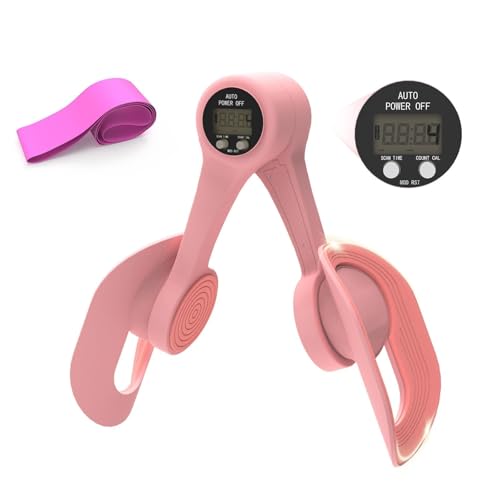
The LED display is the defining difference for LED Display Thigh Trainer: it shows workout time, repetitions, and calories burned. The compact device measures 8.3 by 4.5 by 4.6 inches and weighs 0.8 pound; its name specifies a 20-pound resistance band. The product describes a 360-degree adjustable design and use for thigh, hip, leg, and arm workouts.
Choose it if you value a visible workout counter and a light device. The 20-pound figure applies to the band, not a resistance level for the trainer itself, so it may not suit buyers who want a clearly quantified trainer resistance.
Bottom line: Choose this if a workout display matters more than a trainer resistance.
MERACH 360° Pelvic Floor Trainer

The 360-degree rotating design and named materials set MERACH 360° Pelvic Floor Trainer apart: it combines PP, TPE, and high-strength springs. At 1 pound, it is slightly heavier than LED Display Thigh Trainer and lighter than TINRIEF 35 lb Trainer. The product describes it as a thigh trainer for several muscle groups, including thighs, buttocks, abdomen, arms, and back.
Choose it if the rotating design and material combination are your priorities. No resistance figure is provided for comparison, so buyers who need to match a particular load should verify the resistance before ordering.
Bottom line: Pick this if a rotating design matters more than comparing stated resistance.
How to Choose Pelvic Floor Exercise Equipment
Choose pelvic floor exercise equipment by the movement you need to practice, not by the number of body parts named on the package. The pelvic floor is a group of muscles at the base of the pelvis; a Kegel is a deliberate contraction followed by a full release. A thigh trainer adds resistance between the legs, but squeezing it alone does not ensure that the pelvic floor is contracting correctly.
Use the table to match a priority to a device feature, then judge whether that feature fits your routine.
| Priority | Feature to compare | Choice cue |
|---|---|---|
| Known resistance | Trainer or band rating | Prefer a clearly stated pound figure |
| Workout tracking | Time and repetition display | Choose a display if you will use its count |
| Rotating design | 360-degree rotation | Choose only if that movement suits your routine |
Start with gentle effort and maintain normal breathing; avoid bearing down or tensing the buttocks. If the movement causes pain, stop rather than increasing resistance.
How to Use a Thigh Trainer for Pelvic Floor Exercises
A thigh trainer can provide an external squeeze, while a pelvic floor contraction is a separate, controlled muscle action. Begin seated or lying comfortably, keep your breathing steady, and gently lift and squeeze the muscles you would use to stop passing gas; then fully relax. Avoid gripping the thighs, buttocks, or abdomen as a substitute for the pelvic floor.
Many public-health exercise guides use a pattern of up to 10 slow contractions and 10 quick contractions, repeated several times daily, but technique and tolerance matter more than reaching a count. Start below that volume if you are new to the exercise, and release completely between contractions. A resistance trainer should not force painful squeezing or make you hold your breath; discomfort, pelvic pressure, or worsening symptoms are reasons to stop and seek advice from a healthcare professional.
Pelvic Floor Trainer Fit and Resistance
Fit the device to your body and the exercise position, not to a generic size label. A thigh trainer sits between the inner thighs, so check that its frame can rest comfortably without pinching skin or pressing sharply into the knees. Dimensions are useful for comparing storage and overall size, but they do not establish a personal fit; seated and lying positions can change how the device contacts the legs.
Compare resistance ratings only when the rating refers to the same part: a band’s pound rating is not automatically the resistance of the trainer’s spring. If a product provides a resistance number, treat it as a selection aid rather than a target you must reach. Choose a lower effort or skip the device if you cannot squeeze and release without pain, breath-holding, or involuntary straining.
Pelvic Floor Exercise Safety and Common Mistakes
Pelvic floor exercises should include relaxation as well as contraction. Repeatedly holding a squeeze, pushing downward, or clenching the thighs can make it harder to identify the pelvic floor muscles and may increase discomfort. Normal breathing and a clear release between repetitions are practical checks that the movement is controlled.
Do not use a resistance device through pain, numbness, or pelvic pressure. People with pelvic pain or difficulty relaxing these muscles may need guidance from a pelvic health physical therapist rather than more squeezing; a clinician can help determine whether strengthening is appropriate. After childbirth or surgery, seek individualized clearance before adding resistance. Keep the device clean and dry according to its material care guidance, and stop if a spring, pad, or joint becomes damaged.
Frequently Asked Questions
Do thigh trainers strengthen the pelvic floor?
A thigh trainer resists pressure between the legs, while the pelvic floor needs a deliberate contraction and release. An inner-thigh squeeze alone does not confirm that you are using the pelvic floor muscles.
How many pelvic floor contractions should beginners do?
A common exercise pattern is up to 10 slow contractions plus 10 quick contractions, repeated several times a day. Begin with fewer if you cannot maintain normal breathing or fully relax between repetitions.
Should pelvic floor exercises hurt during use?
No—stop if a contraction or thigh trainer causes pain, pressure, or numbness. Pain can signal that the exercise or resistance is not appropriate, and a pelvic health clinician can help assess it.
Can I use a pelvic floor trainer after childbirth?
Timing depends on recovery and any birth-related injury, so get individualized guidance before adding resistance. Gentle pelvic floor contractions are different from forceful squeezing with a device.
How can I tell if I am squeezing the right muscles?
A pelvic floor contraction feels like a gentle lift and squeeze around the openings at the base of the pelvis, followed by a complete release. Keep breathing and avoid substituting a strong buttock or thigh clench.