
Self Etching Primer for Aluminum: 3 Options Compared

Rust-Oleum Automotive Self Etching Primer, 12 oz is the best fit for most aluminum projects because it is explicitly suitable for aluminum and combines etching and priming in one spray-can step.
Self etching primer is an acid-based coating that helps prepare bare metal for paint; it is not a substitute for cleaning or removing loose oxidation. These choices are aerosol products, so use them only with appropriate ventilation and follow their label precautions.
We earn a commission if you buy through links on this page. As an Amazon Associate I earn from qualifying purchases. Products are compared on manufacturer specifications, not hands-on testing.
- Best overall: Rust-Oleum Automotive Self Etching Primer, 12 oz – It combines etching and priming and is specified for aluminum, with coverage up to 12 square feet per can.
- Best for six-can projects: LAUCO Self Etching Primer, Gray, 6-pack – The aerosol pack is identified as a six-can option for broader automotive or industrial prep.
| Product | Best for | Can size | Coverage | Topcoat timing | Shop |
|---|---|---|---|---|---|
| Rust-Oleum Automotive Self Etching Primer, 12 oz | Single-can projects | 12 oz | Up to 12 sq ft | 30 minutes | Check Price on Amazon |
| Rust-Oleum 249322 Self Etching Primer, 12 oz, 4-pack | Four-can projects | 12 oz per can | Up to 12 sq ft per can | 30 minutes | Check Price on Amazon |
| LAUCO Self Etching Primer, Gray, 6-pack | Six-can projects | — | — | — | Check Price on Amazon |
Self Etching Primer for Aluminum
Compare these aluminum-compatible self etching primers by package format and the project facts provided.
Rust-Oleum Automotive Self Etching Primer, 12 oz

Rust-Oleum says its oil-based Stops Rust formula is intended to resist rust, and the can covers up to 12 square feet. The maker says it dries to the touch in 10 minutes and can be topcoated in 30 minutes. The formula is specified for bare metal, aluminum and fiberglass, so it suits small automotive prep where those surfaces are involved. Its limitation is the single-can format; larger jobs may call for a multipack.
Bottom line: Choose this for a smaller bare-aluminum job where a single spray can is enough.
Rust-Oleum 249322 Self Etching Primer, 12 oz, 4-pack
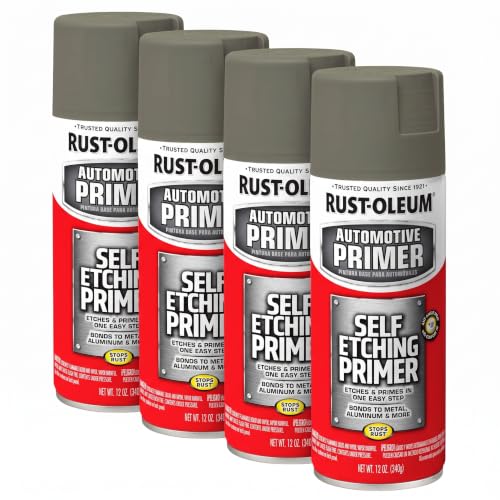
Rust-Oleum says the dark-green, oil-based primer combines etching and priming, is suitable for bare metal, aluminum and fiberglass, and uses a Stops Rust formula. Each 12-ounce can covers up to 12 square feet; the maker gives 10 minutes to touch-dry and 30 minutes before topcoating. It suits projects that need several cans on hand, but the package size is unnecessary for a small repair.
Bottom line: Pick this when the project calls for several cans of the same aluminum-compatible formula.
LAUCO Self Etching Primer, Gray, 6-pack

For work that calls for a six-can package and a gray primer, LAUCO offers a self etching aerosol intended for bare-metal prep before truck-bed liner or other coatings. LAUCO says its phosphoric-acid etch formula promotes adhesion on aluminum and galvanized steel and provides corrosion protection; it also describes the finish as sandable. That makes it a candidate for broader automotive or industrial preparation where sanding matters. The product facts do not give per-can volume, coverage or a topcoat interval, so confirm those before planning material quantities or coat timing.
Bottom line: Choose this for a multi-can bare-metal project where a sandable gray finish is useful.
How to choose self etching primer for aluminum
Choose a primer that explicitly names aluminum and matches the project’s coating sequence. Self etching primers use an acid component to help create adhesion on bare metal, while a conventional primer may provide a base coat without that etching step. Clean off oil, wax and contaminants before sanding; sanding cannot remove grease reliably. For many automotive bare-metal prep jobs, 180- to 320-grit abrasive is a useful working range, but the coating label’s prep directions take priority. Remove sanding dust and coat promptly: aluminum develops a thin oxide film again after exposure to air. If the next coating is a bed liner or specialty finish, verify its compatibility with the primer before starting.
Prepare bare aluminum before spraying
Start with clean, dry, bare aluminum rather than spraying over paint, corrosion, or a slick contaminated surface. Degrease first, abrade evenly, then remove dust with a clean method that leaves no residue. Aluminum’s oxide layer reforms quickly, so apply primer after preparation instead of leaving freshly sanded metal exposed for an extended period. Keep aerosol passes light and overlapping rather than trying to build a thick wet coat in one pass; heavy coats can sag and trap solvent. Work with strong ventilation, keep the spray away from flames and sparks, and use the respiratory and eye protection specified on the can label. Do not assume a self etching product is suitable for every substrate or topcoat.
Compare self etching and aluminum primer types
Self etching and aluminum primers are not interchangeable names. A self etching primer includes an etching step for bare metal; an aluminum primer may instead focus on adhesion and corrosion resistance without claiming an etch function. The product type matters when a later coating specifies a particular base layer. Use this quick distinction when selecting a coating system, then confirm the next coat’s label allows the primer underneath.
| Primer type | Typical role | Check before use |
|---|---|---|
| Self etching | Etches and primes compatible bare metal | Substrate and topcoat compatibility |
| Aluminum primer | Provides an adhesion-oriented base for aluminum | Whether an etch step is required |
Avoid stacking unrelated primer layers without a compatible system: extra coats do not automatically improve adhesion, and incompatible layers can fail between coats.
Frequently Asked Questions
Can self etching primer go directly on aluminum?
Yes, when the can identifies aluminum as a suitable substrate and the surface is bare, clean and properly abraded. Remove oil and loose oxidation first; primer does not replace surface preparation.
Should aluminum be sanded before self etching primer?
Yes, abrading bare aluminum helps remove oxidation and gives the coating a prepared surface. A common automotive prep range is 180 to 320 grit, subject to the primer’s label instructions.
Can self etching primer be sprayed over old paint?
It is intended for compatible bare metal, not as a universal paint-over primer. Remove old coating where the repair requires bare aluminum, and check the coating system’s instructions before layering products.
Is self etching primer safe to spray indoors?
Aerosol primer should be used only with strong ventilation and the label’s specified protective equipment. Keep it away from ignition sources, since solvent aerosols can be flammable.