
Best Markers That Don’t Bleed Through Paper: 5 Pads Compared

For most artists, Fuxi 9 × 12 Marker Pad is the strongest fit because its 200 gsm, 9-by-12-inch paper is designed for double-sided marker work. Choose Bianyo A4 Marker Pad instead if you prefer a lightweight, glue-bound A4 pad; choose Belenova 9 × 12 Marker Pad if you want 100 sheets and a protective sheet for heavier passes.
Markers are ink tools, and paper choice matters because ink can feather along fibers or soak through a sheet. Even paper marketed as bleedproof can show ghosting or transfer with saturated colors, so test a small swatch before committing a finished drawing.
We earn a commission if you buy through links on this page. As an Amazon Associate I earn from qualifying purchases. Products are compared on manufacturer specifications, not hands-on testing.
- Best overall: Fuxi 9 × 12 Marker Pad – Its 200 gsm, 9-by-12-inch pad is made for double-sided marker art.
- Best for lightweight sheets: Bianyo A4 Marker Pad – The A4, 70 gsm paper is glue-bound and coated on the reverse.
- Best for more sheets: Belenova 9 × 12 Marker Pad – The 100-sheet pad includes a reusable protective sheet.
| Product | Best for | Paper weight | Size | Sheets | Shop |
|---|---|---|---|---|---|
| Fuxi 9 × 12 Marker Pad | Double-sided artwork | 200 gsm | 9 × 12 in | 60 | Check Price on Amazon |
| 8.3 × 8.9 Marker Sketchbook | Compact drawing | 200 gsm | 8.3 × 8.9 in | 30 | Check Price on Amazon |
| Umriox 9 × 12 Marker Pad | Roomy blending | 150 gsm | 9 × 12 in | 60 | Check Price on Amazon |
| Bianyo A4 Marker Pad | Lightweight blending | 70 gsm | 8.27 × 11.69 in | 50 | Check Price on Amazon |
| Belenova 9 × 12 Marker Pad | High sheet count | 120 gsm | 9 × 12 in | 100 | Check Price on Amazon |
Best marker paper pads for markers that don’t bleed through
Compare paper weight, pad size and usable sides to match a pad to your marker technique.
Fuxi 9 × 12 Marker Pad

For artists who want thick paper in a full-size sketchbook, this pad combines 200 gsm sheets with a 9-by-12-inch format. The maker describes the paper as double-sided bleedproof and suitable for alcohol, acrylic and paint markers, with up to 120 drawing sides from 60 sheets. Acid-free paper is a useful choice for artwork you plan to keep. The main tradeoff is that the pad has fewer sheets than the 100-sheet option, so frequent sketching may favor a higher-count pad instead.
Bottom line: Choose this for thicker paper and double-sided marker drawings.
8.3 × 8.9 Marker Sketchbook

This compact pad is the smallest option here, with 200 gsm acid-free paper, 30 sheets and a spiral binding designed to lay flat. A tear line makes individual sheets easier to remove, which can help when you want to display or store a drawing separately. The maker says the double-coated sheets support double-sided painting. Its small format offers less room for large compositions than the 9-by-12-inch pads, so choose a larger option for broad layouts or full-page illustrations.
Bottom line: Pick this for a portable, lay-flat pad with thick sheets.
Umriox 9 × 12 Marker Pad
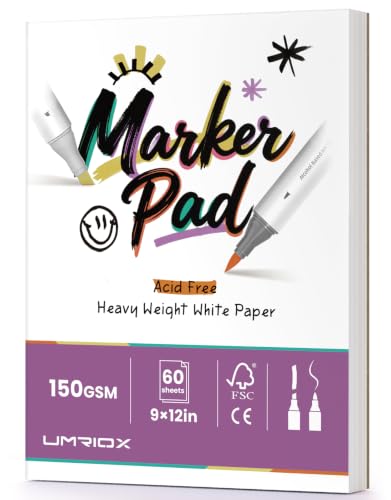
Umriox offers a middle ground in paper weight: its 150 gsm sheets are lighter than the 200 gsm pads but larger than the compact sketchbook. The maker describes the paper as double-sided, with 60 sheets yielding 120 usable pages, and says it is FSC-certified. Tape binding is intended to lay flat and allow easy tearing. Artists seeking the thickest paper in this group should choose a 200 gsm pad; this one suits those who prioritize a roomy 9-by-12-inch surface at a lighter weight.
Bottom line: Choose this for a large drawing surface at 150 gsm.
Bianyo A4 Marker Pad

Bianyo is the lightest paper here at 70 gsm, making it a distinctly different choice from the heavyweight sketchbooks. The A4 pad has 50 white, acid-free sheets and a glue-bound fold-over design. The maker says the reverse side is coated to prevent bleed-through, but also cautions that the back has a different surface and is not intended for drawing. That one-sided use matters if you want to fill both sides of every sheet; a double-sided pad will suit that need better.
Bottom line: Pick this for an A4, glue-bound pad used on one side.
Belenova 9 × 12 Marker Pad

With 100 sheets, Belenova provides the highest sheet count among these pads, while its 120 gsm paper is lighter than the 150 and 200 gsm choices. The maker describes a dual-layer bleed-resistant structure and includes a reusable protective sheet for use beneath heavier marker passes. That barrier is useful when you want extra protection for the sheet underneath, but it does not make this the thickest option. Artists layering heavily may prefer one of the 200 gsm pads.
Bottom line: Choose this for the most sheets and an included protective barrier.
How to choose marker paper that resists bleed-through
Paper coating and weight both affect how marker ink behaves, but grams per square meter (gsm) alone do not guarantee that ink will stay off the next sheet. Marker paper is often coated to keep ink near the surface for smoother blending; heavier drawing paper can feel sturdier but may absorb ink differently. For double-sided work, choose paper explicitly made for both sides, and test a saturated swatch before starting a finished piece. If a pad is meant for one-sided drawing, place a scrap sheet beneath it rather than assuming the reverse is usable. For repeated heavy layering, start with paper around 150 to 200 gsm and check how your specific marker performs.
| Drawing need | Useful paper choice |
|---|---|
| Double-sided pages | Paper explicitly described for both sides |
| Frequent heavy layering | Consider 150–200 gsm paper |
| Lightweight, single-sided sketches | Coated paper around 70 gsm |
What paper weight and size mean for marker drawings
Paper weight in gsm measures mass per area, not bleed resistance by itself. The options here range from 70 to 200 gsm, so compare weight alongside the coating and intended surface use. Sheet size also changes the working feel: a 9-by-12-inch sheet gives more room for full-page illustrations than an 8.3-by-8.9-inch pad, while A4 measures about 8.27 by 11.69 inches. If your drawing regularly reaches the page edge, choose a pad with a larger working area than the finished art. A thicker sheet may better tolerate handling, but a coating is the feature specifically aimed at controlling marker spread or transfer.
How to test markers before filling a page
A quick swatch can reveal bleed-through, feathering and blending behavior before a finished drawing is at risk. Test the same marker colors and number of passes you plan to use, since a light single stroke is not a reliable stand-in for a saturated area. Let the swatch dry, then inspect the reverse and the sheet underneath for transfer. Use a separate protective sheet under heavy layers when the pad includes one or when you need a barrier. Marker ink can stain clothing and work surfaces, so keep scrap paper under the drawing and cap markers when they are not in use.
Frequently Asked Questions
Does higher gsm paper always stop marker bleed-through?
No; gsm measures paper weight, while coatings and marker ink also affect transfer. Compare a paper’s single- or double-sided use and test a saturated swatch before drawing on a finished page.
Can I use both sides of marker paper?
Only when the paper is intended for double-sided use. Some coatings give the two faces different drawing characteristics, so test the reverse before relying on it for artwork.
What size marker paper pad should I choose?
A 9-by-12-inch pad gives more room than an 8.3-by-8.9-inch pad, while A4 is about 8.27 by 11.69 inches. Choose a sheet larger than your typical composition if you need room for margins or full-page art.
How can I reduce marker ink transfer while drawing?
Place a spare sheet beneath the page, especially for saturated areas or repeated passes. Test the same marker and layering pattern on a scrap first, since ink load affects transfer.
Is marker paper suitable for alcohol markers?
Some marker pads are designed for alcohol markers, while others may only mention markers or ink generally. Check that the pad is intended for your medium and test blending and layering before starting a finished piece.