
Gold Color for Baking: 4 Food Colors Compared

For a metallic finish on fondant, candy or cake surfaces, INOCERIS Gold Edible Luster Dust is the closest match because it is edible luster dust that can be brushed on dry or mixed into paint. Choose Chefmaster Gold Liqua-Gel instead for tinting icing or batter, or Gold Oil-Based Food Coloring for coloring chocolate and candy melts.
We earn a commission if you buy through links on this page. As an Amazon Associate I earn from qualifying purchases. Products are compared on manufacturer specifications, not hands-on testing.
- Best overall: INOCERIS Gold Edible Luster Dust – Edible luster dust can be brushed on dry or mixed with vodka to make metallic paint.
- Best for icing: Chefmaster Gold Liqua-Gel – Soft gel coloring is intended for icing, frosting, fondant, gum paste and batters.
- Best for chocolate: Gold Oil-Based Food Coloring – Oil-based coloring is formulated to mix with chocolate and candy melts.
| Product | Best for | Format | Package size | Best application | Shop |
|---|---|---|---|---|---|
| INOCERIS Gold Edible Luster Dust | Metallic surface shimmer | Luster dust | 5 g | Cake, fondant, candy | Check Price on Amazon |
| Chefmaster Gold Liqua-Gel | Icing and batter | Soft gel | 2.3 fl oz | Icing, fondant, batter | Check Price on Amazon |
| Gold Oil-Based Food Coloring | Chocolate coloring | Oil-based dye | 2 fl oz | Chocolate, candy melts | Check Price on Amazon |
| Gold Edible Glitter Paint, 2 fl oz | Liquid gold finish | Liquid edible paint | 2 fl oz | Fondant, donuts, candy | Check Price on Amazon |
Gold Color for Baking Compared
Choose by the surface you want to color and whether you need a tint or a metallic finish.
INOCERIS Gold Edible Luster Dust

Unlike liquid dyes, this gold color is a fine mica-based luster dust for adding surface shimmer. The 5-gram container can be brushed on dry, or the powder can be mixed with vodka to make metallic paint. The maker describes it as food-grade, flavorless and gluten-free. It suits decorators who want a metallic effect on cake, fondant, chocolate, candy, drinks or cookies rather than an even tint through a large batch of batter. A small container is less suited to coloring large quantities of dough or frosting uniformly.
Bottom line: Choose this for brushed-on metallic shimmer on finished treats.
Chefmaster Gold Liqua-Gel

For tinting soft mixtures rather than painting a metallic surface, Chefmaster’s gold Liqua-Gel is a soft gel coloring in a 2.3-fluid-ounce bottle. It is intended for icing, frosting, fondant, gum paste and batters, making it the most directly suited option here for coloring a mixture throughout. The maker says the colors are fade-resistant and identifies the formula as gluten-free, kosher-certified, vegan-friendly and halal. This is a dye rather than a luster powder, so choose another format if the goal is a metallic brush-on finish.
Bottom line: Pick this when gold tint in icing, fondant or batter matters more than metallic shine.
Gold Oil-Based Food Coloring
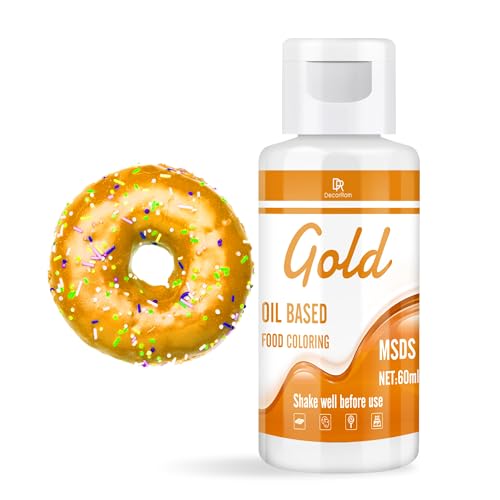
This oil-based dye is the option specifically aimed at chocolate and candy melts, where water-based coloring can cause chocolate to seize. The 2-fluid-ounce bottle is also described for icing, fondant, butter and cookies, so it offers broader uses than chocolate alone. The maker says its formula is odorless and tasteless and identifies soy as an ingredient-related allergen concern. Because it is a coloring dye, not a metallic dust or paint, it is not the right choice when a reflective gold surface is the priority.
Bottom line: Choose this for coloring chocolate or candy melts with an oil-based formula.
Gold Edible Glitter Paint, 2 fl oz

Unlike dry luster dust, this gold edible paint comes in a 2-fluid-ounce squeeze bottle and is presented as a ready-to-apply metallic finish. It is intended for cakes, fondant, candy, cupcakes and donuts, which suits decorators who prefer a liquid product over mixing powder into paint. The maker describes it as food-grade, sugar-free and flavorless, with no fat, GMOs, gluten, dairy or nuts. The formula is glitter paint rather than a general-purpose tint for batters, so use it for decorative surfaces instead of coloring a whole mixture.
Bottom line: Pick this for a ready-to-apply liquid metallic finish on decorated treats.
How to choose gold color for baking
Choose the format by whether you want a tint inside a mixture or a metallic effect on its surface. Gel colors disperse through icing, fondant and batter; luster dust and edible paint are decorative finishes. For chocolate, prefer a colorant made for high-fat mixtures: water-based color can make melted chocolate seize. A practical rule is to choose gel for a whole bowl of frosting, but dust or paint for accents on molded decorations or finished cakes. Check the product label to confirm that a decorative color is intended to be edible, not merely non-toxic or suitable for crafts.
| Project | Format to consider |
|---|---|
| Tint icing or batter throughout | Soft gel |
| Brush on a metallic surface | Luster dust or edible paint |
| Color melted chocolate | Oil-based dye |
Gold luster dust, paint and gel finishes
Luster dust is a dry powder used with a soft brush for a subtle, buildable sheen; mixing it with a small amount of clear alcohol makes a paint-like coating. Edible paint arrives liquid and is applied directly, so it avoids a mixing step but can behave differently on wet or greasy surfaces. Gel color works best when stirred into a moist mixture, not brushed on for a reflective metallic effect. For sharp details, let fondant or royal icing dry before painting; moisture can make the finish streak or pool. Alcohol used as a carrier evaporates during drying, but it should not be used where alcohol must be avoided.
Coloring chocolate and candy melts
Chocolate and candy melts need colors compatible with fat. Water in standard liquid coloring can cause real chocolate to seize into a thick, grainy mass, so use an oil-based color specifically meant for chocolate or use a colored coating designed for the task. Add color in small increments and mix thoroughly; a heavy dose can change texture as well as shade. Candy melts and couverture chocolate are not identical: candy melts contain added fats and may respond differently to color than cocoa-butter-based chocolate. Keep tools and bowls completely dry, because even a small amount of water can ruin a melted chocolate batch.
Applying edible gold finishes safely
Use only products labeled edible on food; “non-toxic” alone does not mean suitable to eat. Apply powder with a clean, dry brush and keep decorating tools separate from craft supplies. For liquid paint, test a small area first because a wet coating can soften delicate icing or leave brush marks. Dust lightly and build layers rather than loading a brush, which helps avoid clumps and uneven patches. If serving people with allergies, read the ingredient and allergen statement on the container every time, since formulas can include allergens such as soy and dietary claims vary by product.
Frequently Asked Questions
Can gold luster dust be mixed into frosting?
Yes, but luster dust is mainly used as a surface finish, and mixing it into a full bowl of frosting may not create an even metallic sheen. For an all-over tint, use a gel color made for icing; reserve dust for brushed accents.
Why does water-based coloring seize chocolate?
Chocolate can seize when even a small amount of water meets melted cocoa solids and sugar, causing the mixture to turn thick and grainy. Use an oil-based color formulated for chocolate, and keep bowls and utensils dry.
Can edible gold paint be used on fondant?
Yes, edible paints are commonly applied to fondant and other dried decorations. Let the fondant surface dry first, then brush on a thin layer to reduce streaking and pooling.
How do you make luster dust into paint?
Mix a small amount of luster dust with clear alcohol to form a brushable paint, adding liquid gradually until it reaches the desired consistency. Let the coating dry before handling; avoid alcohol if it is unsuitable for the people being served.
Is non-toxic glitter safe to eat on cakes?
No; non-toxic does not necessarily mean edible. Use only decorative color labeled edible for food, and check ingredients and allergen statements before serving.