
Rubber Sealant for Cars: 3 Types Compared by Use

For rubber sealant for cars, choose Autty Butyl Sealant Tape, 13 ft when you need a non-hardening, flexible seal for doors, lights, or windshield joints; its 13-foot butyl tape format is the deciding difference. Choose a paintable urethane seam sealer instead for metal body seams, or flowable silicone for glass areas and narrow leak paths.
We earn a commission if you buy through links on this page. As an Amazon Associate I earn from qualifying purchases. Products are compared on manufacturer specifications, not hands-on testing.
- Best overall: Autty Butyl Sealant Tape, 13 ft – Non-hardening butyl tape is intended for automotive joints and can be flattened or stretched.
- Best for paintable metal seams: Black Urethane Automotive Seam Sealer, 10.5 oz – The urethane formula is made for bare, primed, or painted metal and is paint-ready in 30 minutes, according to the maker.
| Product | Best for | Form | Amount | Paintable | Shop |
|---|---|---|---|---|---|
| Autty Butyl Sealant Tape, 13 ft | Flexible joints | Butyl tape | 13 ft | No | Check Price on Amazon |
| Black Urethane Automotive Seam Sealer, 10.5 oz | Paintable metal seams | Urethane seam sealer | 10.5 oz | Yes | Check Price on Amazon |
| Black Polyurethane Automotive Seam Sealer | Paintable body seams | Polyurethane seam sealer | — | Yes | Check Price on Amazon |
Rubber sealant for cars by application
Match the sealant chemistry and format to the joint, panel, or glass area you need to seal.
Autty Butyl Sealant Tape, 13 ft

Unlike the paintable seam compounds, this is a non-drying butyl rope for flexible automotive joints. The 13-foot black tape can be flattened or stretched, and the maker identifies doors, windshield joints, waterproof film, hood, lights, and body-panel joints as uses. Clean the installation area before applying it. Its non-hardening character suits joints that need a pliable seal rather than a finished, paintable seam. The limitation is format: tape is not a flowing liquid for filling narrow hidden voids or a paint-ready panel bead.
Bottom line: Choose this for flexible, non-hardening seals around automotive joints.
Black Urethane Automotive Seam Sealer, 10.5 oz

This urethane seam sealer is the paintable metal-panel option among these products. The maker says it bonds to bare, primed, or painted metal, is ready for paint in 30 minutes, and remains flexible across temperatures from -60°F to 300°F. It works with a standard caulk gun, which helps when laying a bead along body seams or truck-bed joints. Choose it when a paintable finish matters; its intended metal-seam role is narrower than butyl tape’s uses around lights and glass.
Bottom line: Pick this when a paintable bead on a metal panel is the priority.
Black Polyurethane Automotive Seam Sealer
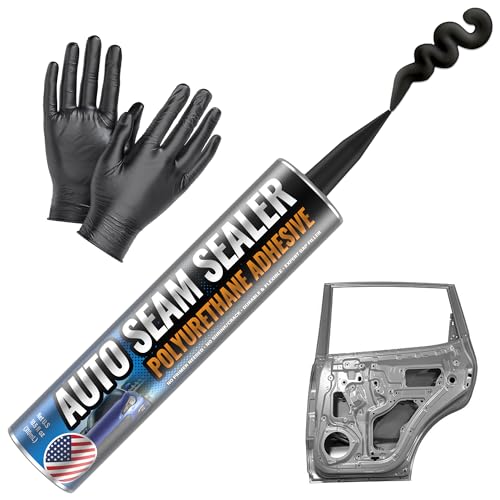
This black polyurethane seam sealer is another paintable metal-seam choice, while Black Urethane Automotive Seam Sealer, 10.5 oz gives a 10.5-ounce amount and temperature range. The maker says this formula bonds to bare, primed, or painted metal, is ready to paint in 30 minutes, and is compatible with a standard urethane caulk gun. Gloves and an application tip are included. Choose it for a conventional automotive seam bead; the maker’s use centers on metal surfaces, so it is not the specialized glass leak product or pliable butyl tape.
Bottom line: Choose this for a paintable automotive seam bead and included application accessories.
How to choose rubber sealant for cars
Choose by surface and application format: butyl tape stays pliable, urethane forms a paintable metal seam, and flowable silicone reaches narrow leaks. Automotive butyl is commonly used as a non-hardening ribbon around lamps, doors, and vapor barriers; it is pressed into a clean joint rather than brushed on. Urethane seam sealer is typically applied as a bead over prepared body seams, then finished and painted according to the product requirements. Silicone sealers cure by moisture exposure, so cure time depends on bead thickness and air exposure. For a visible metal seam that will be refinished, select paintable urethane; for a glass-edge leak, use a glass-compatible product rather than assuming any general silicone is suitable.
Where each car sealant type fits
Butyl, urethane, and silicone solve different sealing jobs, so surface compatibility matters more than a broad “automotive” label. Butyl tape is useful for joints that need a non-hardening seal; it is not designed to create a paintable body finish. Urethane seam products suit metal-panel seams where adhesion and later painting are needed. Flowable silicone is a better format for small leak channels near glass, while a conventional silicone bead suits repairs where the maker identifies compatible substrates. The maker’s range for Black Urethane Automotive Seam Sealer, 10.5 oz is -60°F to 300°F, but that range should not be transferred to another formula. Avoid applying an unverified sealer near exhaust heat or over an incompatible coating.
This quick match chart separates the main use cases.
| Repair need | Sealant type | Key distinction |
|---|---|---|
| Flexible lamp or door joint | Butyl tape | Non-hardening ribbon |
| Paintable metal body seam | Urethane seam sealer | Bead-forming and paintable |
| Narrow glass-edge leak | Flowable silicone | Flows into small paths |
Prepare car surfaces before sealing
Clean, dry contact surfaces are the starting point for reliable adhesion, and the butyl tape maker specifically calls for cleaning the installation area. Remove loose dirt, old failed sealer, and corrosion without damaging paint or glass; solvents can harm finishes, so use one only if it is compatible with the substrate. Mask adjacent trim when applying a bead, and keep the bead continuous across corners and overlaps. A gap wider than the product’s intended bead can require backing material rather than a thick mass of sealant. For a windshield or headlamp leak, locate the water path first: sealing the visible drip point may leave the actual entry point untouched.
Apply and cure automotive sealants safely
Allow the product’s full cure before exposing the repair to water, vibration, or paint, because “ready for paint” and fully cured are different milestones. The urethane maker’s 30-minute paint-ready claim applies to its product, not necessarily to another sealer or to thick beads. Silicone cures through exposure to air and moisture, so a deep bead can take longer than a thin film; temperature and humidity also affect cure. Work with ventilation, avoid skin and eye contact, and keep uncured chemicals away from flames or hot components. Never use a sealer as a substitute for a structural windshield bond or a repair that carries vehicle loads.
Frequently Asked Questions
Can butyl tape seal a car windshield?
Butyl tape is suitable for some windshield perimeter or trim joints, but it is not a substitute for structural windshield adhesive. Use a product intended for the specific joint; structural glass bonding requires the correct automotive urethane system.
How long should automotive silicone cure before rain?
Allow the silicone to cure fully before water exposure; air-cure time depends on bead depth, temperature, and humidity. A thin surface can skin before the deeper material cures, so avoid judging readiness by touch alone.
Can I paint over automotive seam sealer?
Paint only a sealer identified as paintable, and distinguish paint-ready time from full cure. One urethane formula here is maker-rated ready for paint in 30 minutes, but thicker beads and shop conditions can change timing.
What should I use for a leaking headlight assembly?
Use a sealant compatible with the headlamp lens and housing; flowable silicone is designed to enter hidden leak paths, while butyl tape suits a pliable joint. Keep moisture out of electrical connectors and allow the seal to cure before reconnecting or testing.
Does car sealant stop rust in body seams?
A continuous, compatible seam seal can help keep moisture out, but it does not remove existing rust or replace corrosion repair. Prepare the metal and restore protective coatings before sealing, especially where bare metal is exposed.