
5 Pounds of Fat Model: 3 Replica Options Compared

For a five-pound fat model, choose Medarchitect 5 lb Fat Replica for a replica described as showing both the weight and approximate volume of five pounds of fatty tissue. Choose Ultrassist 5 lb Fat Replica instead if a display base and easy-clean surface matter more; Medarchitect Fat and Muscle Replica also includes a muscle replica for side-by-side demonstrations.
A teaching model is a visual aid, not a measurement of anyone’s body composition: real fat is distributed differently from person to person.
We earn a commission if you buy through links on this page. As an Amazon Associate I earn from qualifying purchases. Products are compared on manufacturer specifications, not hands-on testing.
- Best overall: Medarchitect 5 lb Fat Replica – It represents five pounds of fat and is described as showing the tissue’s approximate weight and volume.
- Best for display: Ultrassist 5 lb Fat Replica – It includes a display base and an easy-clean surface.
- Best for muscle comparison: Medarchitect Fat and Muscle Replica – It pairs the five-pound fat replica with a muscle replica and stand.
| Product | Best for | Fat replica weight | Included pieces | Texture or material | Shop |
|---|---|---|---|---|---|
| Medarchitect 5 lb Fat Replica | Volume demonstrations | 5 lb | Fat model | Soft, flexible | Check Price on Amazon |
| Medarchitect Fat and Muscle Replica | Paired tissue display | 5 lb fat | Fat and muscle replicas; stand | Soft fat; firmer muscle | Check Price on Amazon |
| Ultrassist 5 lb Fat Replica | Base-supported display | 5 lb | Fat model; display base | Thermoplastic; silicone-like | Check Price on Amazon |
5 Pounds of Fat Models
Compare the five-pound replicas by what they include and how you plan to use them for demonstrations.
Medarchitect 5 lb Fat Replica
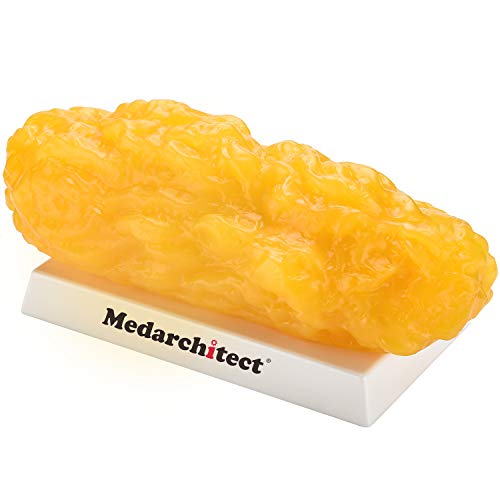
For a standalone five-pound tissue visual, this Medarchitect replica is described as representing the approximate weight and volume of fatty tissue. Medarchitect says its soft, flexible texture and realistic appearance support anatomy and nutrition lessons. It suits educators, dietitians and coaches who need a single fat replica for demonstrations. Its limitation is that the product features do not identify a stand or a paired muscle model, so buyers who need those features should choose a different option.
Bottom line: Pick this for a standalone five-pound fat visual aid.
Medarchitect Fat and Muscle Replica

Unlike the standalone replicas, this Medarchitect set combines a five-pound fat replica with a muscle replica and a stand. Medarchitect says the fat is soft and slightly oily to the touch, while the muscle feels more solid; the set is intended to show differences in texture and muscle configuration. It suits gym, clinic or classroom demonstrations that need a physical comparison. The muscle replica is presented as a comparison piece, not as another five-pound fat model, so this is less direct if you want only one tissue sample.
Bottom line: Choose this when a stand and muscle comparison are central to the demonstration.
Ultrassist 5 lb Fat Replica

The Ultrassist replica is distinguished by its included display base and easy-clean surface, features suited to a model that will be shown repeatedly in a classroom, clinic or gym. Ultrassist says the thermoplastic and silicone-like material is designed to mimic soft, slightly oily fat tissue and withstand repeated handling. This is a fit for buyers who want a base-supported display rather than a paired muscle model.
Bottom line: Pick this when a display base and easy-clean surface are priorities.
How to Choose a Five-Pound Fat Model
Choose by the demonstration you need: a standalone fat model illustrates tissue volume, while a paired model adds a muscle comparison. Five pounds is 80 ounces, or about 2.3 kilograms, so confirm the replica’s weight if that quantity is the lesson’s focus. A rough volume estimate for five pounds of adipose tissue is about 2.5 liters, using an approximate density of 0.9 kilograms per liter; actual tissue varies and a replica is not a body-composition measurement. If the model will be handled by a group, favor a design with a base when a stable tabletop display matters, and check surface-cleaning compatibility before applying cleaners.
What Five Pounds of Fat Looks Like
A five-pound model makes mass and approximate volume easier to picture, but it cannot show where fat sits on a particular person. Adipose tissue distribution varies with factors such as genetics, age and sex, and fat under the skin differs from fat around internal organs. A replica is therefore best used to discuss general scale, not to estimate an individual’s body fat or predict a health outcome. Keep a measurable comparison in view: five pounds equals 80 ounces, while a gallon of water weighs about 8.3 pounds, so five pounds of tissue is a little over half a gallon by approximate volume. That comparison is only an estimate, not a precise conversion.
Fat and Muscle Replicas Compared
A fat-only replica keeps the lesson focused on the volume associated with a set weight; a fat-and-muscle set adds a tactile comparison. Muscle is denser than adipose tissue, so an equal mass of muscle generally occupies less volume. That difference helps explain why scale weight alone cannot distinguish fat mass from lean mass. Use a matched-weight pair for a direct same-mass comparison; do not assume a muscle piece weighs the same as the five-pound fat model unless the model specifications say so. A display base helps keep a replica upright during a talk, while a standalone flexible model may work better for close handling.
| Teaching need | Model type | Useful decision rule |
|---|---|---|
| Show fat volume | Five-pound fat replica | Choose when the lesson centers on one tissue and weight. |
| Compare tissue composition | Fat-and-muscle set | Choose when both textures and shapes are needed. |
| Keep a model upright | Replica with stand or base | Choose when tabletop display stability matters. |
Frequently Asked Questions
How much volume does five pounds of body fat represent?
Five pounds of adipose tissue is roughly 2.5 liters, using an approximate density of 0.9 kilograms per liter. The actual volume varies because body tissue is not uniform, so treat the figure as an estimate.
Is a five-pound fat replica a body composition measurement?
No, a replica is a teaching visual, not a measurement of an individual’s fat mass. Body composition requires an assessment method, and the model cannot show a person’s fat distribution.
Why does muscle look smaller than fat at the same weight?
Muscle tissue is denser than adipose tissue, so equal masses generally occupy different volumes. A same-weight comparison is useful only when both pieces are identified as the same mass.
How should I clean a handled fat model?
Check that the cleaning method is compatible with the model’s material before applying a cleaner. Thermoplastic and silicone-like surfaces can have different care requirements, so avoid assuming that a solvent or disinfectant is suitable.