
Best Wrist Brace for Tennis: 4 Options Compared

For tennis, Bauerfeind Sports Wrist Strap S/M is the strongest match because its adjustable strap lets players set wrist pressure while its 3D AirKnit fabric is made for athletic use. Choose HiRui Wrist Compression Strap 2-Pack if you want a two-pack and an adjustable wrap sized for 5- to 10-inch wrists; the other options are less specifically aimed at tennis.
We earn a commission if you buy through links on this page. As an Amazon Associate I earn from qualifying purchases. Products are compared on manufacturer specifications, not hands-on testing.
- Best overall: Bauerfeind Sports Wrist Strap S/M – An athletic wrist strap with adjustable pressure and 3D AirKnit fabric.
- Best for two-hand coverage: HiRui Wrist Compression Strap 2-Pack – Includes two adjustable wraps and fits wrists measuring 5–10 inches.
- Best for hand-and-wrist support: Copper Compression Wrist Brace Right S/M – Shaped for either the right or left hand, in separate sizes.
| Product | Best for | Fit | Material | Pack | Shop |
|---|---|---|---|---|---|
| Bauerfeind Sports Wrist Strap S/M | Athletic wrist support | S/M; adjustable strap | 3D AirKnit fabric | 1 strap | Check Price on Amazon |
| HiRui Wrist Compression Strap 2-Pack | Two-wrist coverage | Adjustable; 5–10-inch wrists | Perforated neoprene | 2 straps | Check Price on Amazon |
| Copper Compression Wrist Brace Right S/M | Hand-and-wrist coverage | Right hand, S/M | — | 1 brace | Check Price on Amazon |
| HiRui Dual-Layer Wrist Compression Straps 2-Pack | Everyday compression | Adjustable wrap | Neoprene blend | 2 straps | Check Price on Amazon |
Wrist Braces for Tennis
Match the brace to how much wrist movement you want to retain and how you plan to set its compression.
Bauerfeind Sports Wrist Strap S/M

Unlike a general-purpose wrap, this sports wrist strap is developed for athletic use, including tennis. Its elastic loop and adjustable strap let the wearer set pressure, while the maker says targeted pressure helps stabilize the wrist during exercise. The 3D AirKnit fabric is described as light, breathable, durable, and washable. The S/M size suits buyers who need that size; the specifications do not give a wrist measurement range, so confirm sizing before ordering. A strap supports the wrist without the broader hand coverage of a splint.
Bottom line: Choose this if you want an adjustable athletic strap rather than a hand-covering splint.
HiRui Wrist Compression Strap 2-Pack
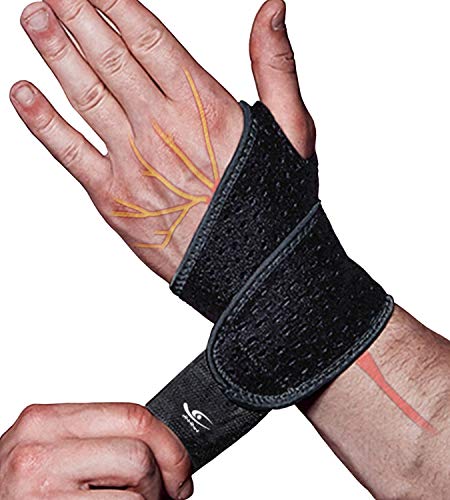
This two-pack is the clearest choice for players who want a wrap for each wrist or a spare, and it is explicitly intended for tennis as well as training. The maker says the adjustable compression supports the wrist while allowing natural movement, a useful distinction for a racket sport that relies on wrist motion. The wrap fits wrists from 5 to 10 inches and uses perforated neoprene for airflow. Its one-size format may not suit wrists outside that range, so measure around the wrist before choosing it.
Bottom line: Pick this for two adjustable wraps and a 5–10-inch wrist range.
Copper Compression Wrist Brace Right S/M

This option covers the wrist and hand, unlike the sport straps that wrap the wrist alone. It is shaped for the right hand in S/M, and the maker says it is designed to support strained muscles, tendons, and joints while allowing range of motion. Tennis appears in its intended-use wording through tennis elbow, but that is not the same as a tennis-specific wrist strap. Buyers seeking hand coverage may prefer its shape; players wanting a sport-focused wrap should consider a more directly matched option. The right-hand version cannot be used on the left.
Bottom line: Choose this if you need a right-hand brace that extends over the hand.
HiRui Dual-Layer Wrist Compression Straps 2-Pack

This two-pack is described for fitness, workouts, and everyday tasks, rather than specifically for tennis. Its flexible cuff slips on and off, and adjustable compression is intended to stabilize the wrist and limit excessive motion. The maker describes a neoprene blend with a breathable, sweat-resistant inner lining. Those features may suit someone seeking general wrist support, but the specifications give no tennis-specific fit range or sport-focused construction claim. Consider it when daily or workout use matters more than a brace explicitly developed for racket sports.
Bottom line: Consider this for general workouts and daily compression, not tennis-specific support.
How to Choose a Tennis Wrist Brace
For tennis, start with the amount of wrist movement the brace allows: a strap or wrap leaves the hand uncovered, while a splint may extend over the hand. Tennis uses repeated forehand, backhand, and serving motions, so a very restrictive brace can interfere with grip and racket control. Choose an adjustable wrap if you want to tune compression during play; choose a hand-covering brace only when that added coverage is the priority. Check the size range before ordering, and measure around the wrist rather than guessing by glove size. If wrist pain persists, worsens, or follows a fall, pause play and seek clinical advice instead of relying on a brace to diagnose the cause.
Wrist Brace Fit and Tennis Movement
A tennis wrist brace should feel secure without causing tingling, numbness, cold fingers, or color change; loosen or remove it if any of those signs appear. Compression wraps work by applying external pressure, but tighter is not automatically better, especially during repeated swings. Leave enough movement to hold the racket comfortably and make a full fist. When a wrap gives a measurement range, compare that range with a flexible tape around the wrist crease; a size outside the range is a reason to choose another fit. A brace that shifts during shadow swings is likely too loose, while one that restricts grip or circulation is too tight.
Wrist Straps Compared With Splints
Wrist straps and splints solve different fit problems: straps wrap the wrist, while splints may cover part of the hand and limit more motion. A sports strap is generally the more direct starting point for tennis because the player needs a secure grip and repeated wrist movement. A splint can make sense when hand coverage is specifically wanted, but it may be cumbersome during racket handling. The table summarizes the differences in these options.
| Need | Option type | Trade-off |
|---|---|---|
| Adjustable pressure for play | Sports strap | Less hand coverage |
| Wrist wrap for both sides | Two-pack compression straps | Confirm wrist range |
| Coverage over wrist and hand | Hand-shaped brace | May limit racket movement |
Use this distinction to narrow the style first, then check the specific size and construction.
Using and Caring for a Tennis Wrist Brace
Put the brace on before play and check that you can grip the racket, open your hand, and move your fingers normally. A brace should not create pressure points beneath a racket handle; adjust or remove it if it shifts or rubs during warm-up swings. Washable fabric is useful after sweaty sessions, but care methods differ by material, so use the maker’s care guidance for the specific brace rather than applying heat or bleach by default. Inspect hook-and-loop closures and seams regularly; worn closures can let a wrap loosen during play. A wrist brace should not substitute for rest when pain is sharp or increasing.
Frequently Asked Questions
How tight should a tennis wrist brace feel?
A tennis wrist brace should feel secure but should not cause numbness, tingling, coldness, or color change in the fingers. Loosen or remove it if those symptoms appear, and check your grip before playing.
Can I wear a wrist brace while playing tennis?
A flexible strap or wrap may permit racket grip and wrist movement, but fit matters. Before a match, make several practice swings and confirm the brace does not shift, rub, or restrict your hand.
How do I measure my wrist for a brace?
Wrap a flexible tape around the wrist near the wrist crease and compare the result with the brace’s range. For example, a wrap sized for 5–10 inches is not a fit match if your measurement falls outside that range.
Should a tennis wrist brace cover the hand?
A wrist-only strap leaves the hand uncovered, while a hand-shaped brace adds coverage and may restrict racket movement more. Choose hand coverage only if that added support is a priority, and confirm the brace fits the correct hand.
When should I stop playing with wrist pain?
Stop playing if pain is sharp, worsening, follows a fall, or comes with swelling, weakness, or numbness. A brace cannot identify the cause, and persistent symptoms warrant assessment by a qualified clinician.