
Throwing Shoes for Track: 3 Models Compared by Fit

For throwing shoes for track, the ASICS Hyper Throw 3 is the one to consider because it has an adjustable midfoot belt and circular pivot points for rotational throwing movements. Choose another model if you need a particular labeled size or an outsole feature, since these shoes differ in fit details and construction.
We earn a commission if you buy through links on this page. As an Amazon Associate I earn from qualifying purchases. Products are compared on manufacturer specifications, not hands-on testing.
- Best overall: ASICS Hyper Throw 3 – An adjustable midfoot belt and circular pivot points support a fit-focused choice for rotational throws.
- Best for wet-condition traction: Nike Zoom Rival SD 2 Racer Blue – Its textured outsole is described as helping provide traction in wet conditions.
- Best for shot put and discus: Sonic Cat Throws – Its product features explicitly name shot put, discus and hammer throw training.
| Product | Best for | Fit label | Weight | Notable feature | Shop |
|---|---|---|---|---|---|
| ASICS Hyper Throw 3 | Adjustable midfoot fit | Men’s 8.5 | 1.2 lb | Midfoot belt, pivot points | Check Price on Amazon |
| Nike Zoom Rival SD 2 Racer Blue | Wet-condition traction | 5.5 | 1.76 lb | Textured outsole, Pebax plate | Check Price on Amazon |
| Sonic Cat Throws | Multiple throwing events | Men’s 8.5 (details: 9) | 0.86 lb | Carbon plate, rotational rubber outsole | Check Price on Amazon |
Throwing shoes for track
Compare the included throwing shoes by labeled fit, weight and the construction details that may matter during turns and throws.
ASICS Hyper Throw 3

The ASICS Hyper Throw 3 pairs a midfoot belt with circular pivot points, giving it a clear rotational-event focus among these options. Breathable mesh underlays and synthetic leather overlays make up the upper, while the men’s size is 8.5. The belt is useful if you want an adjustable hold across the midfoot rather than relying on a conventional lace fit alone. The maker does not identify an event-specific outsole material or wet-weather traction feature, so buyers who prioritize those characteristics should compare the more explicit outsole description on another model.
Bottom line: Choose this pair if adjustable midfoot hold and pivot points are your priorities.
Nike Zoom Rival SD 2 Racer Blue

The Nike Zoom Rival SD 2 in Racer Blue is the only option here with a textured outsole specifically described as helping provide traction in wet conditions. It also has an arch strap, a forefoot Pebax plate, durable midsole foam and a rubber toe tip for planting and forward movement. Its upper uses no-sew synthetic leather. The size is 5.5, so this version is a narrow fit match for buyers whose required size corresponds to that label; the weight is 1.76 lb. The wet-condition claim is a product feature, not a guarantee for every throwing surface.
Bottom line: Pick it when its size matches and wet-surface traction is a priority.
Sonic Cat Throws
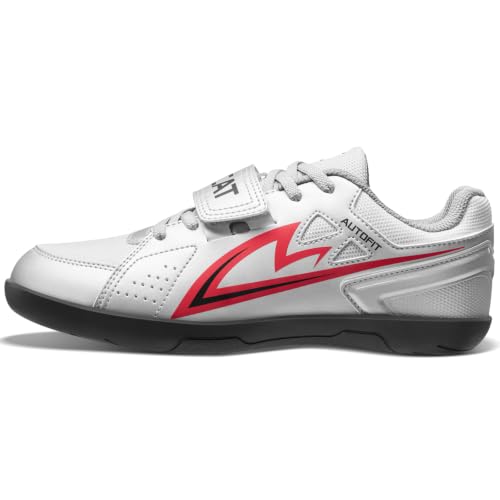
The Sonic Cat Throws is specifically framed for shot put, discus and hammer throw training, making it the most event-explicit choice here. Its carbon plate support system is intended to create a connected underfoot feel, and the rotational rubber outsole is designed for turning through a throw. The weight field converts to about 0.86 lb. There is a discrepancy between the product name’s men’s 8.5 size and the details’ size 9, so confirm the exact size before ordering. Its use is throwing, not running or general gym training.
Bottom line: Choose it for its named throwing-event focus, after confirming the size.
How to choose track throwing shoes
Choose a throwing shoe by event, turning style and fit rather than by running-shoe cushioning. Shot put, discus and hammer involve planted pivots and forceful drive phases; rotational events especially benefit from a sole that allows controlled turning. Many throwers use a smooth, relatively low-profile sole for rotation, while the exact feel depends on the ring surface and technique. An arch strap or midfoot belt can help keep the foot secure during turns. If you prioritize wet-ring grip, look for an explicitly textured outsole feature, but do not assume every throwing shoe has the same tread or traction.
Use the labeled size and gender sizing system as the first filter. With several distinct sizes in this group, a shoe’s event category alone does not make it a fit match.
Fit and sizing for throwing shoes
Start with the maker’s size system, then verify whether a number is men’s or women’s sizing; the same numeric size does not imply the same fit across systems. A unisex shoe may give both equivalents, while a specific colorway can leave the gender label unclear. Measure both feet standing, compare the longer foot to the maker’s size chart, and leave enough room for toes to spread without the heel lifting during a pivot. Do not size up automatically for thick socks: a loose heel can move under rotational load. For Sonic Cat Throws, confirm whether the intended size is 8.5 or 9 before purchase because the size fields conflict.
Throwing shoe features compared
Outsole and upper features change how a shoe feels in a ring. A smooth rotational outsole prioritizes turning; textured rubber can add grip, especially when the surface is damp, but more grip may feel less free during a pivot. A Pebax plate is a firmer structural element underfoot, while midsole foam adds cushioning. Straps or belts secure the midfoot, whereas overlays reinforce the upper. Choose the feature that aligns with your event and preferred turn rather than treating every throwing shoe as interchangeable.
The table maps common needs to a useful feature to prioritize.
| Need | Feature to prioritize | Tradeoff to consider |
|---|---|---|
| Free rotation | Smooth or rotational outsole | Less surface bite may be preferred by some throwers |
| Damp surface grip | Textured rubber outsole | More traction can change pivot feel |
| Secure midfoot | Arch strap or adjustable belt | Fit still depends on the shoe’s size and shape |
Using and caring for throwing shoes
Use throwing shoes for event practice rather than ordinary running workouts: rotational soles are designed around turns and planted movements, not repeated road miles. Keep the outsole clean because clay, dust and debris can change contact with the ring; brush off loose material after practice and let the shoes air dry away from direct heat. Avoid using a wet shoe until the upper and sole have dried, since moisture can affect both fit and traction. Check the outsole and toe area for uneven wear, especially if repeated pivots concentrate abrasion on one side. Replace a pair when the sole is visibly worn or the upper no longer holds the foot securely.
Frequently Asked Questions
Are throwing shoes suitable for regular running?
Throwing shoes are designed for planted turns and event movements, not general running. Use running shoes for road or distance workouts, since rotational soles are not built around repeated forward mileage.
How should throwing shoes fit during a pivot?
A throwing shoe should hold the heel and midfoot securely while leaving toe room for spread. If the heel lifts during a controlled turn or the toes press against the front while standing, try a different size or shape.
Can I use throwing shoes on a wet ring?
Wet-ring grip depends on the outsole, and not every throwing shoe has a feature described for wet conditions. A textured outsole is a useful attribute to seek, but always reduce speed and check the surface before throwing.
How often should throwing shoes be replaced?
Replace throwing shoes when the outsole is visibly worn, the upper is damaged, or the shoe no longer holds your foot securely. The rate depends on practice frequency and how much abrasion your event’s turns create.
Should shot put and discus shoes be different?
Many throwing shoes are made for multiple rotational events, but event technique and preferred pivot feel vary. Choose based on whether you need controlled rotation, a more secure midfoot or added outsole grip, then practice in the same type you will use in competition.