
Best High-Vis Fishing Line: 3 Mono Options Compared

Stren Original Hi-Vis Gold 4 lb suits most anglers looking for high-vis fishing line because its 4-pound test and 330-yard spool fit light freshwater setups. Choose High-Vis Mono Catfish Line 50 lb instead for catfish applications requiring 50-pound line, or Lew’s Mr. Crappie Mega Spool Hi-Vis 4 lb for a small-reel setup.
High-visibility line is colored so anglers can track line movement; it does not guarantee that fish will see or ignore it.
We earn a commission if you buy through links on this page. As an Amazon Associate I earn from qualifying purchases. Products are compared on manufacturer specifications, not hands-on testing.
- Best overall: Stren Original Hi-Vis Gold 4 lb – Its 4-pound test and 330-yard spool suit light freshwater fishing.
- Best for catfish: High-Vis Mono Catfish Line 50 lb – The 50-pound copolymer nylon line is aimed at blue, channel and flathead catfish.
- Best for small reels: Lew’s Mr. Crappie Mega Spool Hi-Vis 4 lb – It is a 4-pound hi-vis line designed for small reel use.
| Product | Best for | Line type | Test | Spool length | Shop |
|---|---|---|---|---|---|
| Stren Original Hi-Vis Gold 4 lb | Light freshwater | Monofilament | 4 lb | 330 yd | Check Price on Amazon |
| High-Vis Mono Catfish Line 50 lb | Catfish setups | Copolymer nylon | 50 lb | 500 yd | Check Price on Amazon |
| Lew’s Mr. Crappie Mega Spool Hi-Vis 4 lb | Small reels | Monofilament | 4 lb | — | Check Price on Amazon |
High-Vis Fishing Line Options
Match line strength and spool length to your target fish, reel and fishing setup.
Stren Original Hi-Vis Gold 4 lb

Stren Original Hi-Vis Gold 4 lb is the light freshwater option in this group, with a 4-pound break strength and a 330-yard spool. The Hi-Vis Gold color is easy to see and track in the water, and the maker says its low-memory line helps handling and casting. This suits anglers who want a visible line for lighter setups; the 4-pound test is the limitation when targeting larger fish or fishing around heavy cover. Check that the line strength suits your rod, reel and target species before spooling.
Bottom line: Choose this for light freshwater fishing where 4-pound line fits the setup.
High-Vis Mono Catfish Line 50 lb

High-Vis Mono Catfish Line 50 lb is the heavy-line choice here: its 50-pound test and 500-yard spool are aimed at blue, channel and flathead catfish. The maker says the copolymer nylon has low stretch, UV protection, low memory, and abrasion resistance. That combination suits anglers setting up for catfish in rugged conditions, but the 50-pound rating is a poor match for light tackle or small-reel finesse fishing. Its color is green; the maker also describes blaze orange as an available high-visibility color, so confirm the color variant you want.
Bottom line: Pick this for catfish fishing that calls for 50-pound line.
Lew’s Mr. Crappie Mega Spool Hi-Vis 4 lb
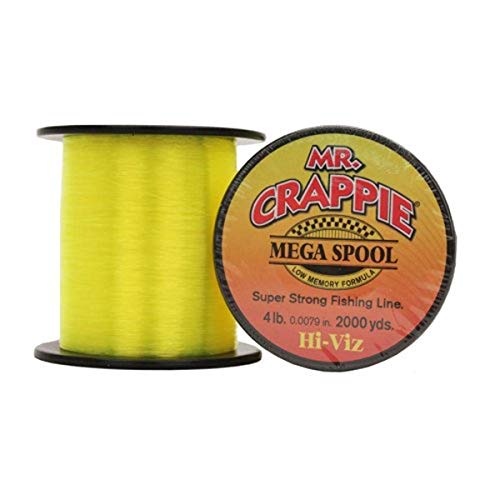
Lew’s Mr. Crappie Mega Spool Hi-Vis 4 lb is the small-reel choice, with a 4-pound size and a formula the maker describes as extremely abrasion resistant. It is designed specifically for small reel use, which makes it relevant to anglers building a light setup rather than a heavy catfish rig. The size gives its test strength, but not the spool length, so anglers who need a specific refill amount should verify that before buying. Keep the light test within the limits of the rod and reel and avoid treating it as a heavy-cover line.
Bottom line: Choose this when the small-reel design and 4-pound size fit your setup.
How to choose high-vis fishing line
Choose high-vis line by matching its test strength to your target fish and cover, then confirm that your reel can hold the line diameter you select. A 4-pound option is intended for light setups, while 50-pound line is geared toward much heavier work; those ratings are not interchangeable. Monofilament is a single nylon strand that stretches under load, while copolymer lines use more than one nylon polymer formulation. High-visibility colors help anglers watch the line for movement, especially when line angle or drift makes a bite hard to feel. For wary fish in clear water, a less-visible leader can be tied to visible main line, but the connection knot must pass through the guides if you cast it.
What high-vis line color means
High-vis color is chiefly an angler-facing cue: it helps reveal line movement, slack or direction changes, but color alone does not establish how fish perceive the line underwater. Light absorption and water clarity change the appearance of colors with depth, so there is no single hue that stays equally visible in every condition. Use a visible main line when monitoring drift or subtle movement matters, and consider a clear or lower-visibility leader when fish are line-shy. A leader is the short section between the main line and terminal tackle; keep it long enough for the presentation but short enough that its joining knot works through your rod guides if it must be reeled in.
Match line strength to the setup
Match line test to the weakest-rated part of the system, including rod, reel and terminal tackle, rather than assuming higher test automatically means a safer setup. A light 4-pound line can support finesse fishing but leaves less margin for abrasion and sudden loads than a 50-pound line. Line diameter also affects how much line fits on the spool and how it behaves on the reel, so use the reel’s capacity markings for the chosen line type and test. Table values show the practical split among these choices; choose by fish and tackle rather than color alone.
| Fishing need | Relevant option | Deciding specification |
|---|---|---|
| Light freshwater setup | Stren Original Hi-Vis Gold 4 lb | 4 lb, 330 yd |
| Catfish setup | High-Vis Mono Catfish Line 50 lb | 50 lb, 500 yd |
| Small-reel setup | Lew’s Mr. Crappie Mega Spool Hi-Vis 4 lb | 4 lb; small-reel design |
Spooling and caring for fishing line
Fill a spinning reel to about 1/8 inch below the spool lip; overfilling can cause loose coils and tangles, while too little line can shorten casts. Lay monofilament on the floor label-up and wind slowly under steady tension to reduce twist, stopping if the line begins to coil or spring off the spool. Retie after a rough snag or visible abrasion, and inspect the first several feet before each outing because that section takes the most contact with structure and terminal tackle. Store spare line away from prolonged direct sunlight and excessive heat, which can age nylon line.
Frequently Asked Questions
Does high-visibility fishing line spook fish?
High-visibility color helps anglers track line, but color by itself cannot predict whether fish will detect it underwater. In clear water or with wary fish, attach a lower-visibility leader and keep the visible main line away from the terminal presentation.
How much line should I put on a spinning reel?
Leave about 1/8 inch between the line and the spool lip on a typical spinning reel. Overfilling encourages loose coils and tangles; reel capacity markings help set the fill amount for the selected line.
When should I replace monofilament fishing line?
Replace monofilament when it shows nicks, flattened spots, discoloration or persistent coiling, and retie after contact with rough structure. UV exposure and storage heat can also age nylon, so inspect line more often when it has been stored in sun or a hot vehicle.
Should I use a leader with high-vis fishing line?
A leader can separate visible main line from the lure or bait when a less-visible presentation is useful. Keep the joining knot compact if it needs to pass through rod guides, and retie the leader when it becomes abraded.
How can I prevent line twist when spooling?
Wind new line onto the reel under steady tension and stop if the line coils or springs off the spool. On a spinning reel, filling roughly 1/8 inch below the spool lip also helps avoid loose coils caused by overfilling.