
Schrade Old Timer Honesteel: 5 Models Compared by Use

Old Timer Honesteel 7-inch is the match for a Schrade Old Timer Honesteel search: its 7-inch A3 steel rod is made to realign an already sharp knife edge. Choose one of the knives instead only if you need a cutting tool, since those products do not serve as honing steels.
A honing steel is a rod used to restore edge alignment between sharpenings; it does not replace sharpening when a blade is dull or damaged.
We earn a commission if you buy through links on this page. As an Amazon Associate I earn from qualifying purchases. Products are compared on manufacturer specifications, not hands-on testing.
- Best overall: Old Timer Honesteel 7-inch – A 7-inch A3 steel honing rod with a leather sheath and lanyard hole.
- Best for longer fixed blade: Old Timer 165OT Woodsman – A 5-inch blade and front quillon distinguish this outdoor knife.
- Best for compact fixed blade: Old Timer Sharpfinger – A 3.3-inch blade and 3.1-ounce weight make this the smallest fixed blade here.
| Product | Best for | Tool type | Overall length | Blade length | Shop |
|---|---|---|---|---|---|
| Old Timer Honesteel 7-inch | Honing knife edges | Honing steel | 7 in | — | Check Price on Amazon |
| Old Timer 165OT Woodsman | Longer fixed blade | Fixed-blade knife | 9.3 in | 5 in | Check Price on Amazon |
| Old Timer Sharpfinger | Compact fixed blade | Fixed-blade knife | 7.1 in | 3.3 in | Check Price on Amazon |
| Old Timer 3-Folder Combo | Multiple folding knives | Three folding knives | — | — | Check Price on Amazon |
| Old Timer 15OT Deerslayer | Longer full tang | Fixed-blade knife | 10.5 in | 5.6 in | Check Price on Amazon |
Schrade Old Timer Honesteel and related tools
Compare the honing rod with the related Old Timer knives by the job each tool is built to do.
Old Timer Honesteel 7-inch
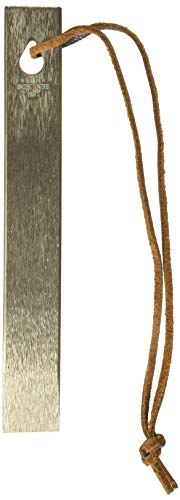
Unlike the other options here, this is a honing rod rather than a knife. The 7-inch A3 steel rod is shaped to contact the blade through a stroke, and the set includes a lanyard hole and brown leather sheath. Old Timer says honing pushes a steel blade back into alignment before use; that suits upkeep of an already sharp edge, not repair of a chipped or dull blade. The 6.2-ounce weight is a consideration for buyers who want a light carry tool, while the rod’s function is narrower than a standalone sharpener.
Bottom line: Choose this for routine edge alignment between sharpening sessions.
Old Timer 165OT Woodsman

Old Timer 165OT Woodsman is a fixed-blade knife, not a honing tool, and its 5-inch clip-point blade is longer than the blade on the other fixed knives here. It has a high-carbon stainless steel blade, sawcut Delrin handle, front quillon, and brown leather belt sheath; the overall length is 9.3 inches and the weight is 8.3 ounces. The quillon is a useful distinction for buyers who want a guard between hand and blade. It will not realign another knife’s edge, so it is the wrong choice if honing is the primary task.
Bottom line: Pick this only when you need a longer fixed blade rather than a honing rod.
Old Timer Sharpfinger

Old Timer Sharpfinger is the compact fixed-blade option, not a honing steel: its overall length is 7.1 inches and its blade measures 3.3 inches. The full-tang high-carbon stainless steel blade is paired with sawcut Delrin slabs, a thumb rise, finger choil, and brown leather belt sheath. At 3.1 ounces, it is lighter than the larger fixed blades in this group. Its short blade and carry sheath suit someone seeking a small outdoor cutting knife, but neither its handle features nor its sheath perform the edge-alignment job of a honing rod.
Bottom line: Choose this for a compact fixed knife, not knife maintenance.
Old Timer 3-Folder Combo

Old Timer 3-Folder Combo differs from the Honesteel because it is a set of three folding knives, not a sharpening or honing tool. The features describe stainless steel blades and saw-cut handles, with a gift tin included; no blade lengths are available to compare with the fixed knives here. This set suits someone looking for several folding knives for general outdoor or light tasks. It cannot realign the edge of another knife, and buyers who need a rod for edge upkeep should choose a honing steel instead.
Bottom line: Choose this for a three-knife folding set, not for honing.
Old Timer 15OT Deerslayer

Old Timer 15OT Deerslayer has the longest overall length and blade among the fixed knives here, at 10.5 inches and 5.6 inches. It is a full-tang knife with a high-carbon stainless steel clip-point blade, sawcut Delrin handle, finger choil, thumb jimping, and brown leather belt sheath. Its 7.7-ounce weight is lighter than the Woodsman despite the longer stated dimensions. That makes it an option for buyers prioritizing a longer fixed blade; it is not a Honesteel substitute and will not hone another knife.
Bottom line: Pick this for a longer fixed blade rather than a honing rod.
How a honing steel works
A honing steel realigns a rolled edge; sharpening removes metal to create a new edge. For routine honing, use light pressure and alternate sides in controlled strokes, rather than pressing hard as if grinding the blade. Many kitchen knives are honed at roughly 15 to 20 degrees per side, but the correct angle depends on the knife’s edge geometry. A ceramic or diamond rod can remove more material than a smooth steel, so identify the rod type before using an unfamiliar one. Stop honing when the edge has chips, a bend, or remains dull after a few light passes; those conditions call for sharpening rather than more honing.
Choosing a honing rod length
A rod should be longer than the blade you plan to hone so the full edge can travel along it in a controlled stroke. A common home-kitchen range is 10 to 12 inches for chef’s knives, while shorter rods can suit paring knives and compact carry kits. The 7-inch Honesteel is therefore a compact option, but buyers maintaining long chef’s knives should confirm the rod’s usable contact length before choosing it. Keep the rod tip on a stable cutting board or counter during strokes, and move the knife away from your body and fingers. Never use a rod whose length or grip makes a controlled stroke difficult.
Honing rods and sharpeners compared
Choose a honing rod for light edge maintenance and a sharpener for an edge that has dulled through use. A honing rod generally realigns an edge; whetstones, pull-through sharpeners, and powered sharpeners abrade steel to form a new edge. The table separates these tool roles so a buyer does not mistake a honing rod for a complete sharpening solution.
| Tool | Main job | When to choose |
|---|---|---|
| Honing rod | Realign a rolled edge | Edge remains sharp but feels less crisp |
| Whetstone | Remove metal and form an edge | Blade is dull or needs refinement |
| Pull-through sharpener | Abrade an edge through fixed stages | Convenience matters more than angle control |
Angle control and material removal differ by tool, so avoid treating repeated honing as a fix for a damaged edge.
Safe honing and common mistakes
Safe honing depends on a stable rod, light pressure, and a clear path for both hands. Set the rod tip against a nonslip surface and keep fingers behind the handle and away from the blade’s travel line. A common mistake is using a steep, inconsistent angle, which can round the edge instead of maintaining its geometry. Another is expecting honing to fix chips or deep dullness; honing moves an edge back into alignment but does not remove enough material to rebuild a damaged bevel. Wipe the blade after honing to clear loose metal particles, and store the rod in its sheath so its working surface is protected.
Frequently Asked Questions
Does a honing steel sharpen a dull knife?
No, a honing steel mainly realigns a rolled edge and removes little material. A persistently dull or chipped blade needs sharpening with an abrasive tool.
How often should I hone a kitchen knife?
Many home cooks hone before or after each use, while softer or heavily used knives may need it more often. Use a few light alternating strokes and stop if the edge does not improve.
What angle should I use on a honing rod?
About 15 to 20 degrees per side is common for many kitchen knives, but the knife’s original bevel sets the right angle. Keep the angle steady through the stroke rather than increasing pressure.
Can a honing rod damage a knife edge?
Yes, hard pressure or an inconsistent angle can round or scratch an edge. Use light strokes and stop if the blade has chips or the rod does not restore its feel.
How long should a honing rod be?
Choose a rod longer than the blade so the full edge can contact it during each stroke; 10 to 12 inches is common for kitchen chef’s knives. Compact rods work better with shorter blades, so check usable rod length against your longest knife.