
Elephant Ear Irrigation System: Kits Compared by Fit

For a more complete Doctor Easy setup, Doctor Easy Elephant Ear Washer 25-Piece Set pairs its bottle system with a basin and 20 extra disposable tips; Doctor Easy Economy Bottle System is the smaller six-piece set. The other kits are alternatives, not Doctor Easy Elephant Ear Washer systems.
Ear irrigation flushes the ear canal with fluid, but it is not suitable for everyone: avoid it with a perforated eardrum, ear tubes, active ear infection, or prior ear surgery unless a clinician advises otherwise.
We earn a commission if you buy through links on this page. As an Amazon Associate I earn from qualifying purchases. Products are compared on manufacturer specifications, not hands-on testing.
- Best overall: Doctor Easy Elephant Ear Washer 25-Piece Set – Includes the Doctor Easy bottle system, basin, and 20 extra disposable tips.
- Best for a smaller set: Doctor Easy Economy Bottle System – The six-piece set includes the washer and five single-use tips.
- Best for extra tools: Tilcare Ear Wax Removal Kit – Adds a basin, bulb syringe, curettes, towel, and 30 disposable tips.
| Product | Best for | Disposable tips | Included tools | Kit size | Shop |
|---|---|---|---|---|---|
| Doctor Easy Elephant Ear Washer 25-Piece Set | Fuller Doctor Easy kit | 25-piece set; 20 extra tips | Basin | 25 pieces | Check Price on Amazon |
| Doctor Easy Economy Bottle System | Smaller Doctor Easy set | 5 single-use tips | Washer | 6 pieces | Check Price on Amazon |
| Tilcare Ear Wax Removal Kit | More included tools | 30 disposable tips | Basin, bulb syringe, curettes, towel | 1 count | Check Price on Amazon |
| Disposable-Nozzle Ear Irrigation Kit | Basic irrigation setup | Disposable nozzles | Irrigation kit | 350 mL | Check Price on Amazon |
Elephant Ear Irrigation Systems Compared
Compare the included tips and accessories to find a kit that matches the setup you need.
Doctor Easy Elephant Ear Washer 25-Piece Set

Among the Doctor Easy systems here, this 25-piece set adds a basin and 20 extra disposable tips to the bottle system. The maker describes it as intended for at-home ear cleaning and says the bottle is filled with solution and used with a disposable tip. This is the better fit if you want the basin and a larger supply of tips in one set. The limitation is that the kit contents do not include the bulb syringe or curettes found in some alternative kits, so choose another setup if those tools matter to you.
Bottom line: Choose this set if you want a Doctor Easy bottle system with a basin and extra tips.
Doctor Easy Economy Bottle System

This is the smaller Doctor Easy option: the six-piece set contains the washer and five single-use tips. Doctor Easy says its tips are guaranteed for fit and function, and identifies itself as the maker of its Elephant and Rhino Professional Ear Washers. The compact contents suit buyers who want the named washer without a large set of extras. Its main limitation is the five-tip supply, compared with the 20 extra tips in Doctor Easy Elephant Ear Washer 25-Piece Set; pick it only if that smaller tip count suits your needs.
Bottom line: Pick this set if five single-use tips are enough for your intended use.
Tilcare Ear Wax Removal Kit

Unlike the Doctor Easy sets, this Tilcare kit combines an irrigator spray bottle with a bulb syringe, four-piece curette kit, microfiber towel, basin, and 30 disposable tips. The maker describes the kit as suitable for adults and children and characterizes its flushing as gentle; those claims do not replace age-appropriate clinical advice. This alternative may suit someone seeking multiple tool types in one package. It is not a Doctor Easy Elephant Ear Washer system, and the broader tool set may be unnecessary if you only want a bottle washer and tips.
Bottom line: Choose this alternative if the bulb syringe and curettes are useful additions.
Disposable-Nozzle Ear Irrigation Kit
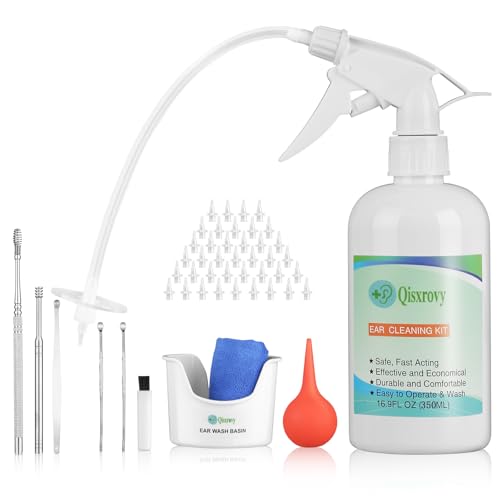
This kit is a general ear irrigation set rather than a named Doctor Easy Elephant Ear Washer system. Its size detail gives a 350 mL capacity, and its maker describes disposable nozzles and a home-use flushing setup. That makes it a possible match for a buyer focused on a basic irrigator rather than a branded washer kit or a group of extra tools. The available contents do not identify a tip count or accessories, so verify that the nozzle supply and included components meet your needs before choosing it.
Bottom line: Consider this alternative if a 350 mL irrigation kit suits your setup.
How to choose an ear irrigation kit
Choose by the parts you will actually use: a bottle washer, disposable tips, and a basin cover a different need from a kit that adds curettes or a bulb syringe. Disposable tips are intended for single use; do not reuse them between people. A basin helps collect runoff, while a towel can catch splashes. More tools do not make irrigation appropriate for every ear, and curettes can injure the canal if inserted too far. If you want the named Doctor Easy washer, stick to the two Doctor Easy sets; the other kits are alternatives. For any ear with pain, drainage, or a history of surgery, ask a clinician before flushing rather than selecting a kit based on its accessory count.
When ear irrigation is not a safe choice
Do not irrigate an ear with a known or suspected eardrum perforation, ear tubes, active infection, or prior ear surgery unless a clinician specifically advises it. Irrigation can introduce fluid where it should not go or worsen an existing problem. People with diabetes or a weakened immune system should seek professional advice before attempting irrigation because ear-canal infections can pose greater risks for them. Stop if flushing causes pain, significant dizziness, or bleeding, and seek medical care for those symptoms. Earwax is protective; routine flushing is not needed simply because wax is present. A clinician can assess persistent blockage or hearing changes and choose a suitable removal method.
How warm should ear irrigation fluid be
Use fluid close to body temperature—about 98.6°F—to reduce the chance of dizziness from a temperature difference in the ear. Water that is too hot can burn, and cold fluid can trigger vertigo or nausea. Test the fluid temperature before use, and never heat it until it feels hot against skin. Use only an ear-cleaning solution intended for irrigation or a clinician-recommended fluid; do not add household chemicals. Keep the stream gentle and do not force fluid against resistance. If fluid causes pain or marked dizziness, stop rather than continuing to flush.
Frequently Asked Questions
Can I reuse disposable ear irrigation tips?
No; a disposable tip should be used once and then discarded. Reusing a tip can transfer germs or leave residue, so use a fresh one for each session.
Can ear irrigation cause dizziness?
Yes; fluid that is notably colder or hotter than body temperature can trigger dizziness or nausea. Aim for about 98.6°F and stop if significant dizziness occurs.
Who should avoid flushing earwax at home?
People with ear tubes, a perforated eardrum, active ear infection, or prior ear surgery should avoid home irrigation unless a clinician advises it. People with diabetes or weakened immunity should ask a clinician first.
Is ear irrigation safe for children?
A kit marketed for children does not establish that home irrigation is appropriate for a particular child. Ask a pediatric clinician first, especially for young children or any child with ear pain, drainage, tubes, or prior ear problems.
What should I do if flushing causes ear pain?
Stop immediately if flushing causes pain, bleeding, or strong dizziness. Seek medical advice rather than repeating the irrigation, particularly if symptoms continue.