
Best Kites for Low Wind: 5 Models Compared

For low wind, choose a broad, lightweight single-line delta kite such as Rainbow Delta Kite, 54-inch; its 54-by-31-inch wing gives a light breeze more area to lift than the compact dual-line option. Pick Prism Synapse 140 Parafoil instead if steering practice matters more than easy, low-wind lifting, and avoid flying near power lines or thunderstorms.
We earn a commission if you buy through links on this page. As an Amazon Associate I earn from qualifying purchases. Products are compared on manufacturer specifications, not hands-on testing.
- Best overall: Rainbow Delta Kite, 54-inch – Its 54-by-31-inch delta wing and single-line setup are a practical match for light-breeze flying.
- Best for a wider wing: SGftre Extra-Large Delta, Blue – Its extra-large delta measures about 54.3 by 35.4 inches.
- Best for dual-line control: Prism Synapse 140 Parafoil – The two-line parafoil enables spins, dives and figure eights, but is less suited to very light wind.
| Product | Best for | Type | Wing size | Line setup | Shop |
|---|---|---|---|---|---|
| Rainbow Delta Kite, 54-inch | Light breeze outings | Delta | 54 × 31 in | Single line, 300 ft | Check Price on Amazon |
| SGftre Extra-Large Delta, Blue | Wider delta wing | Delta | 54.3 × 35.4 in | — | Check Price on Amazon |
| Prism Synapse 140 Parafoil | Two-line steering | Dual-line parafoil | 53 × 20 in | Dual line, 60 ft | Check Price on Amazon |
| Large Single-Line Delta, 63-inch | Long tails included | Delta | 63 × 30 in | Single line, 300 ft | Check Price on Amazon |
| Hengda Octopus Flyer, Red | Tail-first fun | Soft kite | 31 in wide; 157.5 in long | — | Check Price on Amazon |
Kites for Low Wind
Wing area and kite design matter most when choosing among these options for a light breeze.
Rainbow Delta Kite, 54-inch

The 54-by-31-inch delta is the clearest fit here for light-breeze flying because its broad wing can catch more air than the smaller listed options. The kite uses ripstop polyester over a fiberglass frame and includes a 300-foot line, two 13-foot tails, a handle, spare parts and a storage bag. Its single-line setup suits relaxed, steady flying rather than tricks. The tradeoff is that the frame needs assembly and can be damaged by hard impacts, so this is less convenient than a frameless kite for rough handling.
Bottom line: Choose this for a broad delta wing and a simple single-line flight.
SGftre Extra-Large Delta, Blue

The extra-large blue delta has the widest wing among these delta options at about 35.4 inches, which makes it worth considering when maximizing wing area is the priority. Its classic triangular design uses fiberglass rods and is described as portable; the input gives no line length or included flying hardware, so confirm the line and handle are included before ordering. A delta’s wide surface can help it stay aloft in a gentle breeze, but low wind still cannot lift every kite; choose a sheltered open field and wait for a steady breeze rather than running with the line.
Bottom line: Pick this when the widest delta wing matters most.
Prism Synapse 140 Parafoil

The Synapse 140 is the only dual-line parafoil here, so it stands apart for active steering rather than simple low-wind lift. The soft, frameless design packs to 10 by 5 by 2.5 inches and includes 60-foot, 80-pound polyester lines, a winder and storage bag. Its 53-by-20-inch shape is narrower than the broad delta wings, and dual-line control is more engaging when there is enough breeze to keep it inflated. Beginners seeking the easiest light-air launch should choose a delta instead.
Bottom line: Choose this for two-line maneuvers when the breeze is sufficient.
Large Single-Line Delta, 63-inch
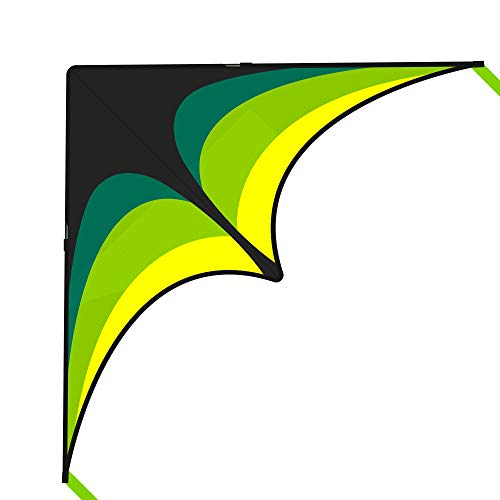
The 63-by-30-inch delta is the longest wing option here, and its three 118-inch ribbons add a distinctive trailing profile. A 300-foot line with handle and basic instructions comes with it, making the setup straightforward for a casual outing. Its 30-inch width is narrower than the wider extra-large delta, so length alone does not guarantee better lift in light air. The kite suits families wanting a large, conventional single-line design, but the ribbons can snag if flown near trees or overhead wires.
Bottom line: Pick this for a long delta with three extended ribbons.
Hengda Octopus Flyer, Red

The Hengda octopus flyer is a soft, tail-heavy design rather than a framed delta, and it is presented as a no-assembly kite that can be taken straight from its bag. Its dimensions are 31 inches wide by 157.5 inches long, with much of that length coming from the colorful trailing shape. The design is convenient for quick setup, but its long profile is less useful than a broad wing when the goal is to stay airborne in very light wind.
Bottom line: Choose this for quick setup and an octopus-style tail.
How to choose a kite for low wind
For light air, start with a broad, lightweight wing and a simple single-line design. A delta’s triangular sail catches airflow across a wide area; a dual-line stunt kite needs enough steady wind to stay pressurized or tensioned while the flyer steers. As a practical rule, choose a delta around 30 inches wide or more when casual low-breeze flight is the goal, and reserve narrower stunt kites for days with a steadier breeze. Kite makers sometimes give a wind range, but these products do not provide one, so use the kite’s design and wing dimensions as a guide rather than assuming it will fly in still air. An open field or beach gives cleaner airflow than a space bordered by buildings or trees.
Delta, parafoil and tail kite differences
Delta kites use a rigid frame to hold a broad triangular sail open, while parafoils use fabric cells and omit rigid spars. A single-line delta is generally the simpler choice for steady, low-effort flying; a two-line parafoil permits steering but needs a usable breeze to respond. A long-tailed soft kite emphasizes its trailing shape, and its length does not equal lifting area. Use this quick comparison to match the design to the outing.
| Need | Design to consider | Tradeoff |
|---|---|---|
| Steady light-air flight | Broad single-line delta | Frame and assembly |
| Steering and maneuvers | Dual-line parafoil | Needs steadier airflow |
| Fast setup and a trailing shape | Soft tail kite | Long profile, less wing area |
Where and when to fly safely
Fly only in a large open area well away from power lines, roads, airports and trees; wet line can conduct electricity, and a kite tangled in a power line can be fatal. Avoid thunderstorms and stop if thunder is audible, since the kite line can put the flyer at risk. Gusty wind is not a substitute for a steady breeze: sudden pulls can stress the line and frame. Keep children supervised and maintain a clear area around the flyer so line and tails do not cross other people. Beach and park settings can work, but check for obstacles and local restrictions before launching.
Launching and avoiding common mistakes
A delta kite needs airflow across its sail, so start facing into a steady breeze with the line taut and give the kite room to rise; do not rely on sprinting to compensate for still air. If the kite repeatedly drops, move to a more exposed open area or wait for a steadier breeze rather than pulling harder. Tails help stabilize some designs, but extra tail length can also drag in weak wind. Keep line wound neatly between flights, inspect it for fraying, and dry fabric fully before storage; wet fabric and knots can make later launches harder. Frame kites should be assembled without forcing rods into place.
Frequently Asked Questions
Can a kite fly when there is almost no wind?
No kite can stay aloft in still air without being moved through the air. A broad, lightweight delta can make better use of a gentle steady breeze, while gusts and running are unreliable substitutes.
Are delta kites easier to fly than stunt kites?
For relaxed flight, a single-line delta is usually simpler because it needs no steering input. Two-line stunt kites need steady airflow and active control, so they suit flyers seeking maneuvers more than easy low-wind lift.
How much space do I need to fly a kite?
Use a large open area with clear space downwind and no overhead obstacles. A 300-foot line can extend far beyond a small park lawn, so keep well clear of roads, power lines, trees and other people.
Is a long kite tail good for light wind?
Not necessarily; a tail adds drag as well as visual movement and stability. In very light wind, a broad lifting sail is generally more useful than extra tail length.
What wind is too strong for a beginner kite?
There is no single safe cutoff for every kite because size, frame and line strength differ. Do not launch in gusty or stormy conditions, and stop if the kite pulls hard enough that the flyer cannot maintain control.