
King Arthur Organic All-Purpose Flour: 3 Options

King Arthur Organic All-Purpose Flour, 2 lb is the straightforward choice for most home bakers because it is one 2-pound bag of organic, unbleached all-purpose flour for everyday recipes. Choose King Arthur Organic All-Purpose Flour, 12-Pack if you need a 12-bag pack, or King Arthur Organic Unbleached All-Purpose Flour, 2 lb if you want the two-bag set.
All-purpose flour works across many baked goods, but protein content affects texture; check the recipe before swapping it for bread or cake flour.
We earn a commission if you buy through links on this page. As an Amazon Associate I earn from qualifying purchases. Products are compared on manufacturer specifications, not hands-on testing.
- Best overall: King Arthur Organic All-Purpose Flour, 2 lb – One 2-pound bag offers organic, unbleached flour for a range of everyday baking.
- Best for bulk: King Arthur Organic All-Purpose Flour, 12-Pack – The package is a 12-bag pack, and its protein content is 11.8%.
- Best for a two-bag supply: King Arthur Organic Unbleached All-Purpose Flour, 2 lb – The product features identify two 2-pound bags of organic, unbleached flour.
| Product | Best for | Package size | Processing / certification | Shop |
|---|---|---|---|---|
| King Arthur Organic All-Purpose Flour, 2 lb | Everyday baking | 1 × 2 lb bag | Malted, unenriched, unbleached; USDA Organic | Check Price on Amazon |
| King Arthur Organic All-Purpose Flour, 12-Pack | Frequent baking | 12 × 2 lb bags | — | Check Price on Amazon |
| King Arthur Organic Unbleached All-Purpose Flour, 2 lb | Two-bag supply | 2 × 2 lb bags | Unbleached; 100% organic | Check Price on Amazon |
King Arthur Organic All-Purpose Flour Options
Compare the package counts and flour specifications to choose the format that suits your baking plans.
King Arthur Organic All-Purpose Flour, 2 lb
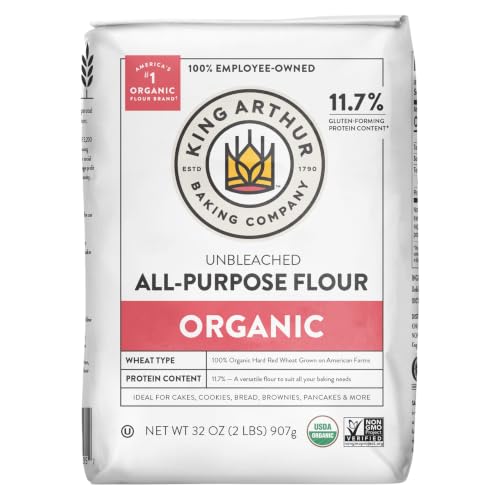
For a single-bag pantry staple, King Arthur Organic All-Purpose Flour, 2 lb comes in a 2-pound bag and is milled from organic hard red winter and spring wheats. King Arthur identifies it as malted and unenriched, and the flour is unbleached and unbromated. The package also carries USDA Organic and Non-GMO Project Verified claims. Brownies, cookies, breads and biscuits are among the uses named for this all-purpose flour, making it a flexible choice when you do not want separate flours for every recipe. The main limitation is the small package: frequent bakers may prefer a multi-bag option.
Bottom line: Choose this for a single, versatile 2-pound pantry bag.
King Arthur Organic All-Purpose Flour, 12-Pack

The 12-bag format makes King Arthur Organic All-Purpose Flour, 12-Pack the option for kitchens that use flour regularly or need multiple bags on hand. Each bag is identified as 2 pounds, and the product gives a protein content of 11.8%, a useful comparison point when a recipe’s texture depends on gluten development. All-purpose flour at this protein level can serve many general baking needs, though recipes designed for lower-protein cake flour or higher-protein bread flour may turn out differently. Choose this pack only if you have room to store the extra bags; a single 2-pound bag is easier to manage for occasional baking.
Bottom line: Pick this pack when you bake often and can store 12 bags.
King Arthur Organic Unbleached All-Purpose Flour, 2 lb

For a two-bag supply without the 12-pack quantity, King Arthur Organic Unbleached All-Purpose Flour, 2 lb is identified as two 2-pound bags of 100% organic, unbleached all-purpose flour. That format suits bakers who want a spare bag available while keeping the purchase smaller than a bulk pack. The product is specifically identified as all-purpose flour, so it can cover a range of standard baking recipes; check the recipe’s flour type when a more specialized texture is important. The key tradeoff is that this option does not give a protein percentage for comparison, unlike King Arthur Organic All-Purpose Flour, 12-Pack, so it is less useful when protein content is the deciding specification.
Bottom line: Choose this when two 2-pound bags suit your baking pace.
How to choose all-purpose flour
Choose flour by the texture your recipe needs and how quickly you will use the package. All-purpose flour commonly falls around 9% to 12% protein; bread flour is often around 12% to 14%, while cake flour is usually lower, around 7% to 9%. These ranges overlap and can vary by brand, so use a recipe’s specified flour when texture matters. Protein helps form gluten when flour is hydrated and mixed: more gluten development generally means a chewier result. For cookies, biscuits and many everyday bakes, all-purpose flour is a flexible default. If a recipe specifically calls for cake or bread flour, expect a texture change when substituting all-purpose.
How to measure flour accurately
For more consistent results, weigh flour when the recipe gives a weight; a common US reference is about 120 grams per cup of all-purpose flour. Cup measures can vary because scooping packs flour more tightly than spooning it into the cup and leveling the top. If using cups, fluff the flour, spoon it into the measuring cup, then level it without tapping or compressing. Avoid adding extra flour just because dough feels sticky early in mixing: hydration and resting time affect how dough feels. A scale is especially useful for bread and pastry recipes, where small differences in flour quantity can change dough handling and baked texture.
How to store flour safely
Keep flour tightly sealed in a cool, dry place to limit moisture, pests and odor absorption. A sealed container is particularly helpful after opening a bag, and refrigeration or freezing can be useful for longer storage if the flour is protected from moisture and surrounding odors. Bring chilled flour back toward room temperature before mixing when a recipe depends on consistent ingredient temperature. Raw flour is not ready-to-eat: it can carry germs, so do not taste uncooked dough or batter, and wash hands and surfaces after handling it. Bake flour-containing foods thoroughly rather than relying on appearance alone.
How the package options compare
The main difference across these choices is package quantity, with a protein figure available for only one option. Use the chart to match your baking volume and the kind of specification you need to compare.
| Need | Choose | Why |
|---|---|---|
| One pantry bag | King Arthur Organic All-Purpose Flour, 2 lb | One 2-pound bag with organic and processing claims |
| Frequent, high-volume baking | King Arthur Organic All-Purpose Flour, 12-Pack | Twelve 2-pound bags; 11.8% protein stated |
| A two-bag supply | King Arthur Organic Unbleached All-Purpose Flour, 2 lb | Two 2-pound bags identified in its product features |
Before choosing a package, estimate how much flour you can store in a cool, dry place and use while keeping it sealed between baking sessions. Package count is more useful than a per-recipe guess when your baking schedule changes week to week.
Frequently Asked Questions
Can all-purpose flour replace bread flour in a recipe?
All-purpose flour can usually be substituted, but the result may be less chewy because bread flour is generally higher in protein. For bread recipes where structure matters, use the flour type the recipe specifies.
How many grams are in a cup of all-purpose flour?
A common US baking reference is about 120 grams per cup of all-purpose flour. Scooping can pack in more flour, so weighing is the more consistent approach when the recipe provides grams.
Should opened flour be kept in the refrigerator?
A cool, dry pantry in an airtight container works for routine storage, while refrigeration or freezing can help for longer storage. Seal flour well to prevent moisture and nearby odors from affecting it.
Is raw flour safe to taste in cookie dough?
No; raw flour can carry germs, so avoid tasting uncooked dough or batter. Wash hands and surfaces after handling it, and bake flour-containing foods thoroughly.
Does higher protein flour make baked goods chewier?
Generally, yes: protein supports gluten formation when flour is mixed with water, which can produce a chewier texture. Mixing and hydration also affect the result, so avoid substituting flour types when a recipe depends on a particular texture.