
Gel Cushion for Bed Sores: 5 Options Compared

For a gel cushion for bed sores, Gel Wheelchair Bedsore Cushion is the closest match because it combines gel and memory foam with a pressure-relief design intended for wheelchair seating. Choose Thick Large Gel Seat Cushion or Acaine Pure Gel Cushion instead if you want a general-purpose gel seat cushion; a cushion alone cannot prevent pressure injuries, so people at risk also need a care plan for repositioning and skin checks.
We earn a commission if you buy through links on this page. As an Amazon Associate I earn from qualifying purchases. Products are compared on manufacturer specifications, not hands-on testing.
- Best overall: Gel Wheelchair Bedsore Cushion – Combines gel and memory foam in an 18-by-16-by-3-inch cushion designed for wheelchair seating.
- Best for airflow: Thick Large Gel Seat Cushion – Uses a ventilated honeycomb gel design and measures 18.9 by 17.7 inches.
- Best for wider seats: Acaine Pure Gel Cushion – Its 18-by-18-inch pure-gel surface is wider than the other gel options.
| Product | Best for | Material | Dimensions | Design | Shop |
|---|---|---|---|---|---|
| Gel Wheelchair Bedsore Cushion | Wheelchair seating | Gel and memory foam | 18 × 16 × 3 in. | Cross-shaped zones; slope | Check Price on Amazon |
| Thick Large Gel Seat Cushion | Ventilated seating | Gel | 18.9 × 17.7 × 1.6 in. | Honeycomb vents | Check Price on Amazon |
| Acaine Pure Gel Cushion | Wider gel surface | Pure gel | 18 × 18 × 1.8 in. | Multi-layer gel | Check Price on Amazon |
| Cross-Zone Memory Foam Cushion | Foam support | Memory foam | 18 × 16 × 3 in. | Cross-shaped zones; slope | Check Price on Amazon |
| T-Shaped Memory Foam Cushion | Coccyx opening | Memory foam | 18 × 16 × 4.5 in. | T-shaped opening; detachable | Check Price on Amazon |
Gel cushions for bed sores
Compare the materials and dimensions first, then match the cushion to the seat and the user’s pressure-care needs.
Gel Wheelchair Bedsore Cushion
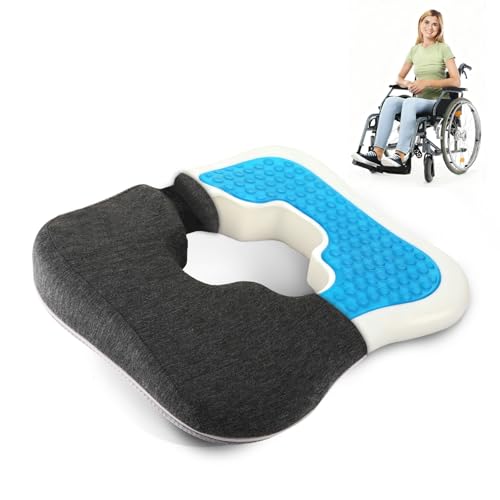
Unlike a general-purpose gel seat pad, this cushion is specifically presented for wheelchair use and pressure-sore concerns. It measures 18 by 16 by 3 inches and combines gel with memory foam; the maker says its cross-shaped zones and 15-degree slope distribute body pressure. Those dimensions may suit an adult chair, but measure the seat before choosing: a cushion that overhangs or shifts can interfere with stable seating. This is a seating aid, not a substitute for a clinician-directed pressure-care plan, regular repositioning, or skin checks.
Bottom line: Choose this when you want a gel-and-foam cushion intended for wheelchair pressure relief.
Thick Large Gel Seat Cushion

The ventilated honeycomb construction sets this cushion apart from the zoned foam designs. It measures 18.9 by 17.7 inches and is 1.6 inches thick; the maker says the openings promote airflow and heat dissipation. Its broader footprint may work on office chairs, cars, and wheelchairs when the seat is at least as wide and deep, but it is presented as a general sitting cushion rather than a bed-sore-specific design. Check that the pad stays flat and does not reduce seat stability, especially on a wheelchair.
Bottom line: Choose this for a larger, vented gel cushion for everyday sitting.
Acaine Pure Gel Cushion

A square 18-by-18-inch footprint distinguishes this pure-gel cushion from the narrower options. It is 1.8 inches thick, and the maker says its multi-layer gel padding absorbs impact and distributes body weight. That size can cover a wider chair seat, provided the cushion fits without overhanging or raising the sitter into an unsafe position. The product is framed for general long-sitting comfort rather than specifically for pressure injuries, so people with elevated skin-injury risk should use it only as part of an appropriate care plan.
Bottom line: Choose this when the seat needs a wider square gel cushion.
Cross-Zone Memory Foam Cushion

This option shares the 18-by-16-by-3-inch footprint and cross-shaped zoning of a pressure-relief design, but its material is memory foam rather than gel. The maker says its 15-degree slope distributes pressure around the buttocks and coccyx. It may suit someone seeking a contoured foam seat cushion, but it is not a gel cushion, so it is a less direct match for shoppers specifically seeking gel. Compare the pad dimensions with the chair, and do not rely on the cushion alone to manage pressure-injury risk.
Bottom line: Choose this if memory foam matters more than a gel construction.
T-Shaped Memory Foam Cushion

The T-shaped opening and 4.5-inch thickness make this the most distinctive design here, but its material is memory foam, not gel. The product describes a detachable, foldable construction, which may appeal when access to the coccyx area is the priority. That cutout changes where the body is supported, so it may not suit every user or seating position; ask a clinician about an opening-style cushion when managing a pressure injury or high risk. Check seat height and stability as well, since this is taller than the other cushions.
Bottom line: Choose this if you specifically need an opening-style foam cushion.
How to choose a gel cushion for bed sores
Start with the seat dimensions and the person’s pressure-care needs, not the cushion’s marketing claims. Measure the usable seat width and depth; the cushion should fit within those boundaries and lie flat. Gel pads may use a continuous slab or a ventilated honeycomb, while combination cushions add foam for shape. Neither construction guarantees prevention of pressure injuries. A cushion is one part of a plan that can include repositioning, skin checks, and clinical assessment. If the person cannot shift weight independently or has a current wound, ask a clinician or seating specialist to select the support surface. Avoid choosing a substantially taller cushion without checking seat height, foot support, and transfer safety.
Fit a cushion to the wheelchair or chair
A correct footprint helps the cushion stay supported: a pad wider or deeper than the seat can overhang, while a much smaller pad can leave parts of the sitting area unsupported. Measure the seat at its narrowest points and account for armrests, wheel guards, and any existing cushion. The options here range from 16 to 18 inches in width and 16 to 18 inches in depth, with thicknesses from 1.6 to 4.5 inches. Those measurements do not establish a universal fit. Check whether the cushion changes the user’s seated height, posture, foot contact, or ability to transfer. For wheelchair use, a clinician or seating professional can assess fit and pressure distribution.
Gel, foam, and cutout cushion designs
Gel cushions distribute load through a flexible gel layer, and honeycomb versions add open channels; memory foam conforms under body weight, while a cutout removes support beneath a targeted area. Design alone does not show which cushion will manage an individual’s pressure risk. Use this comparison to narrow the type, then confirm compatibility with the chair and care plan.
| Design | What it offers | Check before choosing |
|---|---|---|
| Ventilated gel | Honeycomb channels and broad seating area | Seat footprint and stability |
| Gel with memory foam | Gel plus shaped, zoned support | Clinician-approved fit for wheelchair use |
| Memory foam with opening | Cutout around the coccyx area | Whether the cutout suits the person’s position and risk |
Pressure care and cushion safety
A cushion cannot replace repositioning or routine skin inspection for someone at risk of pressure injuries. Timing should be individualized: a commonly used starting point is changing position at least every two hours in bed, but a clinician may recommend a different schedule based on mobility, skin condition, and the support surface. Check skin regularly for persistent redness, discoloration, warmth, or damage, and seek medical guidance for a suspected pressure injury. Keep the cushion correctly positioned and follow the chair’s safe-use requirements. If a person has reduced sensation, impaired circulation, or an existing wound, get professional advice before relying on a new cushion.
Frequently Asked Questions
Can a gel cushion prevent bed sores by itself?
No cushion by itself can guarantee prevention of pressure injuries. People at risk also need an individualized plan that may include position changes, skin checks, and clinical assessment.
How often should someone reposition in bed?
A common starting point is at least every two hours, but the right interval depends on mobility, skin condition, and the support surface. A clinician should tailor the schedule for someone at high risk or with a current wound.
How do I measure a wheelchair seat for a cushion?
Measure the usable seat width and depth at the narrowest points, then compare those dimensions with the cushion’s footprint. The pad should lie flat without overhanging or interfering with the chair’s supports.
Is a coccyx cutout cushion right for everyone?
No; a cutout changes how the body is supported and may not suit every person or seating position. Ask a clinician or seating specialist before using one to manage an existing pressure injury or high risk.
What skin changes need prompt medical attention?
Persistent redness or discoloration, unusual warmth, or any open skin can indicate a problem and warrants prompt medical guidance. Reduced sensation can make regular visual skin checks especially important.