
Best Deck Board Removal Tool: 3 Long-Handled Picks

The Duckbill Deck Wrecker is the best deck board removal tool for most users because its fiberglass handle and heavy-gauge steel head pair a lighter handle with a durable working end. Choose a different tool if you need an explicitly 60-inch bar or a steel design for floor and pallet demolition.
Deck board removal tools use leverage to lift boards from their framing, reducing the need to pry with a short general-purpose bar.
We earn a commission if you buy through links on this page. As an Amazon Associate I earn from qualifying purchases. Products are compared on manufacturer specifications, not hands-on testing.
- Best overall: Duckbill Deck Wrecker – A fiberglass handle and heavy-gauge steel head balance handle weight with a robust prying head.
- Best for flooring: GreenTek Demo-Dek Remover – The extra-long steel bar is also designed for hardwood flooring and pallet demolition.
- Best for long reach: meite 60-Inch Pallet Buster – Its 60-inch body and 2-inch forks provide a long lever for prying.
| Product | Best for | Head or fork material | Shop |
|---|---|---|---|
| Duckbill Deck Wrecker | General deck removal | Heavy-gauge steel | Check Price on Amazon |
| GreenTek Demo-Dek Remover | Floor and pallet work | Steel | Check Price on Amazon |
| meite 60-Inch Pallet Buster | Long-reach prying | Carbon steel | Check Price on Amazon |
Best deck board removal tools
Compare these long-handled pry tools by their materials, reach and stated demolition uses.
Duckbill Deck Wrecker
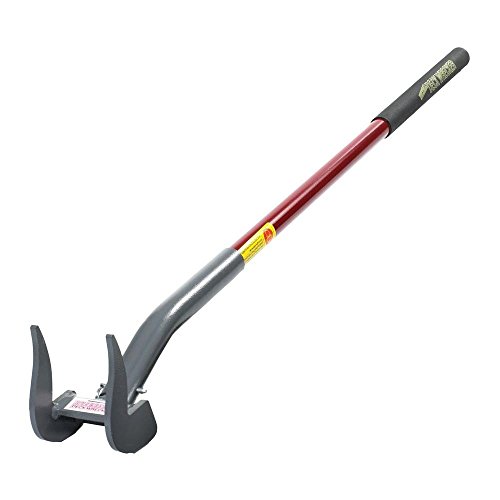
The Duckbill Deck Wrecker stands out for its fiberglass handle paired with a heavy-gauge steel head. Its 6.8-pound weight is a useful point of comparison if you expect to carry the tool around a project, while its dimensions do not establish a usable handle length. The maker says the design is intended to make board removal more efficient. This is the most balanced match here for someone focused on deck boards rather than broader demolition. The limitation is that the specifications do not give a length in inches, so buyers needing a specific reach should confirm that measurement before ordering.
Bottom line: Choose this if a fiberglass handle and steel head matter more than a reach.
GreenTek Demo-Dek Remover

The GreenTek Demo-Dek differs by positioning itself for hardwood flooring and pallet demolition as well as deck boards. Its extra-long handle is described as steel, and the maker says the bar is designed to remove whole planks in one motion. That makes it a fit for buyers who want one demolition bar for more than a deck project. Check the actual dimensions if working clearance or storage space is tight.
Bottom line: Pick this for a steel demolition bar intended for decks, flooring and pallets.
meite 60-Inch Pallet Buster

The meite pallet buster is the only option here with an explicit 60-inch length and a fork width. Its carbon-steel construction, 2-inch forks and 110-degree fork angle are useful distinguishing measurements for reaching beneath boards or pallet plates. The maker claims 2,000 pounds of prying force; treat that as a product claim, not a safe working-load rating. This bar suits buyers prioritizing a long lever and defined fork geometry. Its pallet-buster form is less specialized to deck boards than a dedicated deck wrecker, so the forks may be less convenient where board access is restricted.
Bottom line: Choose this when a 60-inch reach and 2-inch forks suit the work area.
How to choose a deck board removal tool
Choose by access, leverage and the kind of demolition you plan to do. A long handle gives more leverage than a short pry bar, but it also needs room to swing; an explicit 60-inch tool needs about 5 feet of working clearance before accounting for the board and your stance. Fork width and angle matter because the tool must fit beneath a board without damaging adjacent framing. For a deck-only job, favor a purpose-made deck wrecker; if the same bar will also remove flooring or pallets, a broader demolition design may be more useful. Compare actual tool dimensions rather than assuming a long-handled bar will fit through a narrow gap.
Deck board removal tool types and uses
Long-handled deck wreckers and pallet busters both use leverage, but their working ends can differ. A forked pallet buster is designed to engage pallet boards, while a deck wrecker is aimed at lifting deck boards; the right shape depends on how much room there is beneath the board. The table compares the construction and intended tasks, not performance rankings.
| Tool style | Useful for | Check before choosing |
|---|---|---|
| Deck wrecker | Deck boards | Handle reach and head access |
| General demolition bar | Decks, flooring and pallets | Tool length and clearance |
| Pallet buster | Pallet plates and deck boards | Fork width and angle |
With less than 5 feet of clear working room, verify the tool’s dimensions and whether you can reposition it safely before choosing a 60-inch bar.
How to remove deck boards safely
Protect your eyes and hands before prying: old nails can shift or spring free as a board lifts, and splintered wood can cut skin. Wear eye protection, work gloves and sturdy footwear, and keep other people outside the board’s fall path. Start near a fastener or joist where the tool can engage the board, then lift gradually and reposition rather than twisting the bar against a neighboring board. If a board is split or badly rotted, short sections can be easier to control than pulling one long piece. Remove or bend down exposed fasteners as you go so they do not remain in the walking area.
What to check before demolition
Check for utilities and structural hazards before lifting any deck boards. Electrical wiring can run beneath deck surfaces, and stairs, railings or attached structures may rely on boards or framing that appear removable. Do not pry against a railing or a weakened joist; stop and identify the support path if a board is carrying a connection. Inspect the deck from below where accessible, and keep the work area clear of loose boards and protruding nails. For a bar with an unprovided length or fork size, measure the clearance under and around the target boards before ordering; fit matters more than maximum leverage when access is confined.
Frequently Asked Questions
Can I remove deck boards with a pallet buster?
Yes, a pallet buster can be used on deck boards if its forks fit beneath the board and framing. A 2-inch fork width is one example; confirm that the board gap and access allow engagement without levering against adjacent framing.
How long should a deck board removal bar be?
A 60-inch bar provides a 5-foot lever, but it also needs enough surrounding room to reposition. Measure your working clearance first, especially beside a wall, railing or stair.
Should I remove deck screws before prying boards?
Remove accessible screws before lifting a board, since fasteners can bind the wood or tear the board as it rises. For buried or rusted fasteners, loosen the board gradually and stop if the tool begins to bend a joist or split the adjacent board.
What safety gear should I use when pulling deck boards?
Wear eye protection, work gloves and sturdy footwear because fasteners and splinters can become exposed during prying. Keep bystanders outside the board’s fall path and clear protruding nails from the work area as you go.
Can a deck wrecker remove hardwood flooring too?
Some demolition bars are designed for both deck boards and hardwood flooring, while a deck wrecker may be aimed primarily at deck work. Check the tool’s intended uses and working-end geometry before using it where the flooring must remain intact.