
Best Kerf Door Weatherstripping for Different Gaps

Litaibai 40-Foot Kerf Seal suits most people because it specifies a 1/8-inch kerf and a 1/4- to 1/2-inch closed-door gap, making frame and gap fit clear before cutting the 40-foot roll. Choose another option if your measured gap falls outside that range or you need a different color or roll length.
We earn a commission if you buy through links on this page. As an Amazon Associate I earn from qualifying purchases. Products are compared on manufacturer specifications, not hands-on testing.
- Best overall: Litaibai 40-Foot Kerf Seal – Clearly gives a 1/8-inch kerf, 1/4- to 1/2-inch gap range and 40-foot roll.
- Best for wide gaps: Extra-Wide V-Shaped Kerf Seal, 26-Foot – Its gap range is 3/8 to 5/8 inch.
- Best for brown frames: LSGCQ Q-Foam Kerf Seal, Brown, 26-Foot – Brown finish with a 26-foot length and 1/4- to 9/16-inch groove fit.
| Product | Best for | Roll length | Compatible gap | Color | Shop |
|---|---|---|---|---|---|
| Litaibai 40-Foot Kerf Seal | Clear fit range | 40 ft | 1/4–1/2 in | White | Check Price on Amazon |
| Extra-Wide V-Shaped Kerf Seal, 26-Foot | Wider door gaps | 26 ft | 3/8–5/8 in | White | Check Price on Amazon |
| LSGCQ Q-Foam Kerf Seal, Brown, 26-Foot | Brown frame match | 26 ft | — | Brown | Check Price on Amazon |
Kerf Door Weatherstripping Compared
Match the frame groove and closed-door gap first, then choose a suitable length and color.
Litaibai 40-Foot Kerf Seal
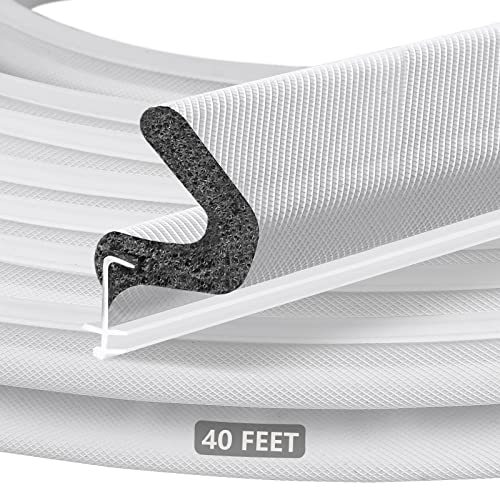
Litaibai 40-Foot Kerf Seal is the clearest match when you can verify both a 1/8-inch kerf slot and a closed-door gap from 1/4 to 1/2 inch. The white, non-adhesive seal presses into a grooved frame, and its 40-foot roll can be cut for multiple doors. The maker says it helps reduce drafts, light leaks, outside noise and heating or cooling loss. It is intended for pre-cut kerf frames, so it will not suit a smooth frame without that groove; measure before choosing it.
Bottom line: Choose this if your frame has a 1/8-inch kerf and your gap measures 1/4 to 1/2 inch.
Extra-Wide V-Shaped Kerf Seal, 26-Foot

Extra-Wide V-Shaped Kerf Seal, 26-Foot covers a larger stated gap range, from 3/8 to 5/8 inch, than the option with a 1/4- to 1/2-inch range. Its white roll is 26 feet long and is made for grooves along the top and sides of a door jamb. That makes it a candidate for a grooved frame with a gap near the upper end of its range.
Bottom line: Choose this for a grooved frame with a measured gap from 3/8 to 5/8 inch.
LSGCQ Q-Foam Kerf Seal, Brown, 26-Foot
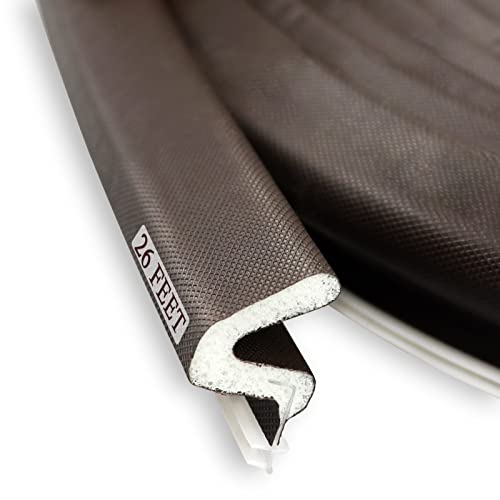
LSGCQ Q-Foam Kerf Seal, Brown, 26-Foot stands out for its brown finish and a groove fit from 1/4 to 9/16 inch, a fit dimension that is not the same as a closed-door gap range. The 26-foot seal combines PU foam, a PE cover film and a rigid PVC flange, and its V-shaped design inserts into a kerf frame. Those materials and the color may suit a replacement where a brown strip better blends with the frame. Because the measurement is for the groove, measure that slot rather than assuming it defines the door gap.
Bottom line: Choose this when the groove measures 1/4 to 9/16 inch and brown suits the frame.
How to Choose Kerf Door Weatherstripping
Measure the closed-door gap and the frame kerf separately; both determine whether a push-in seal can close gaps without binding the door. A kerf is the narrow slot cut into the jamb for the seal’s flange, unlike adhesive weatherstripping that sticks to a flat surface. Use a ruler or calipers to check the groove, then close the door and measure the clearance at the top and both sides. Choose a product whose gap range contains the largest measurement, and confirm its kerf fit. If the door is hard to latch after installation, the seal may be too thick or mispositioned.
Most door weatherstripping is fitted along the head and two jambs, with the threshold handled separately. Leave the sweep or threshold seal to its own measurement rather than trying to make a jamb strip cover the bottom gap.
Kerf Slot and Door Gap Measurements
A kerf seal needs a compatible groove: the flange has to seat firmly without forcing the jamb apart or pulling back out. For example, Litaibai 40-Foot Kerf Seal specifies a 1/8-inch kerf, while LSGCQ Q-Foam Kerf Seal, Brown, 26-Foot gives a groove range of 1/4 to 9/16 inch; those are not interchangeable measurements. Measure the groove width at several points because paint, debris or damage can change the fit along the frame.
Door gaps can differ between the latch side, hinge side and top. Use the largest closed-door gap when comparing to a range; if the gap varies by more than 1/8 inch, inspect whether the door is out of alignment before choosing thicker foam. Remove the old seal and clean the slot before pressing in a replacement.
Kerf Seal Types and Materials
Kerf weatherstripping uses a barbed or finned flange that pushes into a jamb slot, while adhesive-backed foam attaches to a clean, flat surface. The press-in style avoids relying on adhesive, but it only works when the frame already has a compatible groove. Foam and flexible profiles compress as the door closes; too much thickness can make latching difficult or keep the seal from compressing evenly.
For a simple selection, compare the measurement type rather than treating every number as a door-gap range.
| Need | Check | Choice rule |
|---|---|---|
| Grooved frame | Kerf width and closed-door gap | Select only a seal whose fit covers both |
| Wide gap | Largest gap around the jamb | Use a gap range that includes that measurement |
| Color match | Visible frame and seal color | Choose a color that suits the frame |
Installing and Maintaining a Kerf Door Seal
Remove the existing strip, clear dust and loose material from the groove, then measure and cut the replacement with a small amount of extra length to trim for a clean join. Press the flange into the slot along the head and sides, keeping the seal continuous at the corners without stretching it. Close the door gently during installation checks; a seal should compress without preventing the latch from engaging.
Inspect door seals at least once a year and after severe seasonal temperature changes. Replace sections that are cracked, permanently flattened, loose or torn. Do not cover drainage openings or alter a fire-rated door assembly; weatherstripping must not interfere with its closing and latching function.
Frequently Asked Questions
How do I measure a kerf slot for a door seal?
Measure the slot width in the jamb, not the gap between the closed door and frame. Check several points because paint buildup or damage can change the groove along its length.
How large should the gap be for kerf weatherstripping?
Use a seal whose closed-door gap range includes the largest measured clearance around the jamb. If the gap varies by more than 1/8 inch, check door alignment before selecting a thicker profile.
Can kerf weatherstripping go on a frame without a slot?
No, a push-in kerf seal requires a compatible cut groove to hold its flange. A flat frame generally needs an adhesive-backed or otherwise surface-mounted weatherstrip instead.
How often should door weatherstripping be replaced?
Inspect it yearly and replace it when it is cracked, torn, loose or permanently compressed. A door that no longer latches easily after seal replacement may have an overly thick or poorly seated strip.
Can I use kerf weatherstripping on the bottom of a door?
Kerf jamb seals are generally used on the head and sides, while the bottom is sealed with a door sweep or threshold system. Measure the floor clearance separately because the door’s swing and floor unevenness affect the fit.