
Television Antennas for Rural Areas: 5 Compared

For rural TV reception, start with an outdoor antenna if you can mount one with a clear view toward broadcast towers; Antennas Direct ClearStream 4V is the named Antennas Direct model here, with VHF and UHF elements and a multi-directional design. Choose an indoor model instead when an outdoor mount is impractical, but reception will depend more on the building and placement.
These antennas are intended for over-the-air broadcasts, not cable channels, and long-distance claims are not a guarantee of reception; terrain, tower direction and obstructions matter.
We earn a commission if you buy through links on this page. As an Amazon Associate I earn from qualifying purchases. Products are compared on manufacturer specifications, not hands-on testing.
- Best overall: Antennas Direct ClearStream 4V – Its multi-directional outdoor design includes both Hi-VHF elements and UHF loops.
- Best for remote aiming: Five Star Motorized Outdoor Antenna – The motorized 360-degree rotation allows adjustment toward distant towers.
- Best for a long cable run: 35-Foot 360° Amplified TV Antenna – The indoor/outdoor antenna comes with a 35-foot coax cable.
| Product | Best for | Installation | Reception design | Cable or TV support | Shop |
|---|---|---|---|---|---|
| Antennas Direct ClearStream 4V | Outdoor installations | Indoor, attic, or outdoor | Multi-directional; VHF and UHF | 20-inch mast included | Check Price on Amazon |
| Five Star Motorized Outdoor Antenna | Remote tower aiming | Outdoor; mounting pole included | Motorized 360° rotation | Supports up to 5 TVs | Check Price on Amazon |
| 35-Foot 360° Amplified TV Antenna | Long cable runs | Indoor or outdoor | 360° amplified reception | 35-foot coax cable | Check Price on Amazon |
| 38-Foot Indoor/Outdoor TV Antenna | Weak-signal placement | Indoor or outdoor | Amplified; VHF and UHF claim | 38-foot coax cable | Check Price on Amazon |
| 38-Foot 360° Amplified TV Antenna | All-direction reception | Indoor or outdoor | 360° amplified reception | 38-foot coax cable | Check Price on Amazon |
Television Antennas for Rural Areas
Compare installation style and aiming options first; the right choice depends on tower direction, terrain and where you can mount the antenna.
Antennas Direct ClearStream 4V
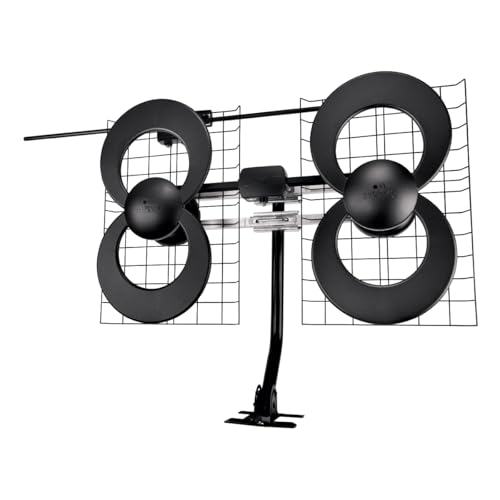
For a fixed outdoor or attic setup, this model stands apart with four loop elements, Hi-VHF elements and reflectors in a multi-directional design. It measures 27.8 inches wide, 17.4 inches high and 6 inches deep, and includes a 20-inch mast. The maker says it supports over-the-air UHD and NEXTGEN TV; actual reception depends on tower distance, obstructions and building materials. It suits homes that can place an antenna with a relatively open view. Its size and mast make it less convenient than a compact indoor antenna when a roof or attic mount is not practical.
Bottom line: Choose this for a fixed outdoor or attic position when a multi-directional VHF/UHF design fits your site.
Five Star Motorized Outdoor Antenna

For households that need to aim toward different tower directions, this outdoor model adds motorized rotation controlled by remote, unlike the fixed designs. It includes a mounting pole, a built-in bubble level and a tool-free snap-and-fold assembly. The maker claims a 200-mile range and support for up to five TVs; neither claim guarantees usable reception at a particular home. This may suit a site where tower direction is the main installation concern. The rotating mechanism adds setup complexity, and a strong claimed range cannot overcome terrain or buildings blocking the broadcast path.
Bottom line: Pick this when remote directional adjustment and support for several TVs matter.
35-Foot 360° Amplified TV Antenna

The included 35-foot coax cable distinguishes this amplified antenna from the other indoor/outdoor options, giving more flexibility in locating the antenna. Its maker claims 360-degree reception and a 6,000-plus-mile range, but those figures are not a reliable prediction of reception at a rural home. The antenna is presented for indoor or outdoor use and includes an amplifier. It may suit a setup where the cable needs to reach a window or exterior position. The specifications do not establish its mounting hardware or weather protection, so verify those before planning an exposed installation.
Bottom line: Choose this if the 35-foot cable suits your placement and you can verify outdoor mounting needs.
38-Foot Indoor/Outdoor TV Antenna

This antenna is pitched specifically for rural and weak-signal areas, and its maker claims VHF/UHF reception with an amplifier and a 6,000-plus-mile range. It includes a 38-foot cable, a little longer than the 35-foot option in this group, which can help with placement flexibility. Treat the range figure as a claim rather than a promise: usable channels depend on the actual broadcast path and antenna position. This may suit someone trying an indoor placement near a window. Its generic indoor/outdoor framing does not establish outdoor weather protection, so verify that before exposing it to the elements.
Bottom line: Consider it for flexible placement where weak-signal positioning is the priority.
38-Foot 360° Amplified TV Antenna
This 38-foot-cable model combines a maker-claimed 360-degree pattern with a signal booster, so it differs from the motorized outdoor antenna by claiming all-direction reception without remote aiming. The maker also claims a 6,000-plus-mile range, which should not be treated as a dependable coverage radius. It is intended for smart and older TVs and for indoor or outdoor placement. That flexibility may appeal when tower directions are uncertain or when rotating an antenna is undesirable. The specifications do not establish weather resistance or a mounting pole, so check those before selecting an exposed outdoor location.
Bottom line: Choose this when you want an amplified all-direction design and a 38-foot cable.
How to choose a rural TV antenna
For most rural homes, prioritize a clear outdoor position and the actual direction of broadcast towers over a large advertised range. UHF and VHF are separate broadcast bands, so antenna elements designed for both can matter when local stations use different bands. Directional antennas focus reception toward a tower area; multi-directional designs are more forgiving when stations come from multiple directions but may not perform the same as a focused antenna. Before choosing, identify the stations and tower bearings you want, then compare those bearings with your mounting location. If towers are clustered in one direction, favor a setup you can aim toward them; if they are spread around the horizon, consider multi-directional reception.
Where to mount an antenna in rural terrain
Higher, unobstructed placement generally improves the radio horizon, but a roofline, hill, tree line or neighboring structure can still block or weaken signals. UHF reception is especially sensitive to obstructions, while VHF uses different antenna elements and may travel differently through the local environment. Start with the highest safe location that has a clear view toward the tower area; an attic can be convenient but roofing, foil insulation and wiring may interfere. Keep coax runs as short as practical because cable loss increases with length and frequency. Ground and install any outdoor antenna according to applicable electrical and building safety requirements; never place an antenna where it could contact power lines.
Indoor, fixed outdoor and rotating designs
Indoor antennas are easiest to place, but walls and roofing materials can weaken broadcast signals; outdoor antennas usually gain a clearer path. Fixed multi-directional designs can receive stations from more than one bearing without adjustment, while a directional antenna is aimed toward a chosen tower area. Motorized rotation adds the ability to change aim from inside, but it also adds a moving component and requires a suitable mounting setup. Use this guide to match the installation to the site.
| Site or need | Design to consider | Tradeoff |
|---|---|---|
| Clear outdoor tower view | Fixed outdoor or attic antenna | Requires a suitable mounting position |
| Stations in several directions | Multi-directional antenna | Not a guarantee for weak or blocked signals |
| Need to change aiming remotely | Motorized rotating antenna | More installation and mechanical complexity |
| No practical outdoor mount | Indoor antenna near an exterior wall or window | Building materials can reduce reception |
Range claims and reception checks
Advertised mileage is not a dependable way to predict rural reception: terrain, tower height, antenna height, signal power and obstructions all affect whether a station is usable. Claims of thousands of miles should not be read as literal coverage guarantees; the earth’s curvature and intervening terrain limit line-of-sight reception. Check the locations and directions of the stations you want, then place and aim the antenna accordingly. Scan for channels after changing the position, because small placement changes can alter reception. If a station drops out, first test a higher or clearer location and reassess the cable path rather than assuming a stronger amplifier will fix a blocked signal.
Frequently Asked Questions
Can a TV antenna receive stations 200 miles away?
A 200-mile claim is not a reliable promise of reception. Terrain, tower height, antenna height and the curvature of the earth limit usable paths, so assess the local tower direction and try a clear elevated position.
Does an amplified antenna improve rural reception?
An amplifier can help compensate for signal loss in a long coax run, but it cannot restore a signal blocked by terrain or buildings. Try improving antenna height and line of sight before relying on amplification.
Should a rural TV antenna point toward one tower?
A directional antenna should generally face the tower area carrying the stations you want. If desired stations are spread across different bearings, a multi-directional design may reduce the need to reposition, though reception still depends on obstructions.
Can I put a TV antenna in my attic?
An attic can work when it has a clear path toward the broadcast towers, but roofing, metal and foil insulation can weaken reception. Test reception from the attic before permanently mounting the antenna.
How long can the antenna coax cable be?
Longer coax runs lose more signal, especially at higher frequencies, so use the shortest practical cable route. If a long run is unavoidable, better antenna placement and a suitable amplifier may help with cable loss but not a blocked broadcast path.