
Cold Weather Face Protection: 5 Masks Compared

For adjustable coverage in changing cold, Fleece Balaclava Hoodie stands out with an extra-long neck and draw-tight toggles. Choose Fleece Balaclava with Mesh Panel instead if breathable mesh and several wearing styles matter more, or Carhartt Knit Insulated Face Mask if you want a knit mask with 40-gram Thinsulate Flex insulation.
We earn a commission if you buy through links on this page. As an Amazon Associate I earn from qualifying purchases. Products are compared on manufacturer specifications, not hands-on testing.
- Best overall: Fleece Balaclava Hoodie – The extra-long neck and draw-tight toggles let you adjust coverage as conditions change.
- Best for airflow: Fleece Balaclava with Mesh Panel – Breathable mesh paneling and multiple wearing styles suit active use.
- Best for knit insulation: Carhartt Knit Insulated Face Mask – Acrylic rib-knit fabric pairs with 40-gram Thinsulate Flex insulation.
| Product | Best for | Coverage | Adjustment | Pack size | Shop |
|---|---|---|---|---|---|
| Fleece Balaclava Hoodie | Adjustable coverage | Full face, neck | Draw-tight toggles | 1 mask | Check Price on Amazon |
| Fleece Balaclava with Mesh Panel | Airflow options | Face, ears, neck | Four wearing styles | 1 mask | Check Price on Amazon |
| Carhartt Knit Insulated Face Mask | Knit insulation | Face, neck | Stretch rib-knit | 1 mask | Check Price on Amazon |
| WTACTFUL Half-Face Neck Gaiter | Helmet wear | Half face | Ergonomic fit | 1 gaiter | Check Price on Amazon |
| ROXUN Balaclava 5-Pack | Multiple masks | Full face, head, neck | Multiple wearing styles | 5 masks | Check Price on Amazon |
Cold Weather Face Protection Options
Compare face and neck coverage, adjustment features and pack size to narrow the choice for your activity.
Fleece Balaclava Hoodie

Compared with the other options, this fleece balaclava adds draw-tight toggles for changing coverage and an extra-long neck. The maker says its heavyweight fleece is intended for extreme cold, and the hood can be worn as a full mask, half mask or neck warmer. Its 16.5-inch length gives more neck coverage than the 15.7-inch mask in Fleece Balaclava with Mesh Panel. The one-size design may not suit people who need a precise fit; check that the toggles and hood shape work with your helmet or eyewear before choosing it.
Bottom line: Choose this if adjustable face and neck coverage is your priority.
Fleece Balaclava with Mesh Panel

Unlike the adjustable hood in Fleece Balaclava Hoodie, this fleece-lined mask uses breathable mesh paneling and offers four wearing styles: full face, open balaclava, half mask or neck gaiter. The maker says the mesh enhances airflow and helps prevent moisture buildup during active use. Its length is 15.7 inches, and the one-size design keeps the choice simple if a flexible fit works for you. The feature set emphasizes airflow rather than a draw-tight fit, so consider another option if you want toggles to cinch coverage.
Bottom line: Choose this for mesh airflow and multiple ways to wear one mask.
Carhartt Knit Insulated Face Mask

Unlike the fleece styles in Fleece Balaclava with Mesh Panel and Fleece Balaclava Hoodie, this mask uses 100% acrylic stretchable rib-knit fabric with 40-gram Thinsulate Flex insulation. It has an overlock-stitched eye opening and an extra-long neck, making it a straightforward option for someone who prefers a knit construction. The one-size mask does not list interchangeable wearing styles or draw-tight toggles among its features, so it is a less flexible pick for someone who wants to change coverage during an outing.
Bottom line: Choose this if you prefer a knit mask with specified insulation.
WTACTFUL Half-Face Neck Gaiter
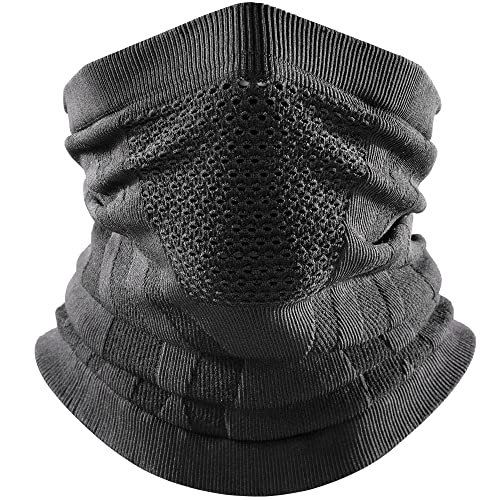
This half-face gaiter differs from the full-coverage balaclavas by focusing on the nose and mouth, with vents at both areas. The maker says the vents help reduce moisture and fogging on helmets, goggles or glasses, and describes the fit as ergonomic and stable during movement. That makes it a useful option when eye protection fog is a concern.
Bottom line: Choose this when you want a vented half-face cover under eyewear.
ROXUN Balaclava 5-Pack

This is the only five-pack among these choices, with five colors and multiple wearing styles including an open or closed balaclava, scarf, neck gaiter or helmet liner. The maker says the masks are machine washable and reusable, and describes them as suitable for winter activities. At 0.088 pounds per mask, they are the lightest by weight in this group.
Bottom line: Choose this if you want several masks and color options in one pack.
How to Choose Cold Weather Face Protection
Choose coverage and fit around the activity: a full balaclava covers more skin, while a half-face gaiter leaves the head and ears uncovered. For moving hard, prioritize a secure fit and a clear breathing path; for a helmet, check that the mask does not bunch at the nose or interfere with the helmet seal. Wind exposure matters: the National Weather Service frostbite chart shows exposed skin can freeze in about 30 minutes at a wind chill of -15°F. In that condition, cover exposed skin and limit time outside. Use the table to match a coverage need to a general mask type.
| Need | Type to consider |
|---|---|
| Cover head, face and neck | Full balaclava |
| Adjust coverage during use | Balaclava with toggles |
| Cover nose and mouth only | Vented half-face gaiter |
Fit Under Helmets and Goggles
A good fit stays put without pressing fabric into the nose or mouth. Try the mask with the helmet and eyewear you will wear: fabric bunching at the bridge of the nose can affect goggle contact, while bulky seams can create pressure under a helmet. Leave enough room to breathe freely, and do not use a loose or shifting face covering around moving equipment. One-size garments rely on stretch and shape rather than a measured size range, so check that the eye opening and neck length suit your face and torso. If the covering will be used for motorcycling, keep the helmet’s fit and fastening secure rather than adjusting it to accommodate a bulky mask.
Breathability and Moisture in Freezing Weather
Moisture can make a face covering feel colder, especially when damp fabric sits against skin in wind. During strenuous activity, pause to let the mask dry or switch to a dry one; a pack can be useful if the first covering becomes wet. Vents or mesh may improve airflow, but they do not guarantee that goggles will stay clear in every condition. Avoid pulling a damp covering over the nose and mouth if it restricts comfortable breathing. For longer time outdoors, bring a spare layer and check exposed skin periodically, since wind chill can accelerate frostbite risk.
Common Face-Mask Selection Mistakes
Choosing maximum coverage without checking breathing room is a common mistake: fabric should not press against the nostrils or mouth during normal movement. Another is treating a one-size label as a guarantee of fit; face shape, eyewear and helmet design all change how a mask sits. Check eye openings for an unobstructed field of view, and make sure a long neck section does not bunch uncomfortably inside a jacket. For very cold or windy outings, cover exposed skin rather than relying on a neck gaiter that leaves the cheeks or ears open. Wet fabric should be changed or dried, not assumed to retain the same comfort as a dry mask.
Frequently Asked Questions
How should a cold weather face mask fit?
A face mask should stay in place while leaving the nose and mouth clear for comfortable breathing. Test it with your helmet and goggles because seams or bunching can change the fit.
Can a face covering fog up ski goggles?
Yes, warm moist breath escaping toward the lenses can fog goggles. A close fit at the nose and vents may help, but test the mask with your goggles before a long outing.
When should I change a damp face covering?
Change or dry a covering once it becomes damp enough to feel cold or restrict breathing. Bring a spare for strenuous activity or extended time outside in freezing wind.
Does a neck gaiter protect the ears?
A half-face gaiter generally covers the lower face, not the ears. Choose a hood-style balaclava or separate ear covering when your ears need protection.
At what wind chill can exposed skin freeze quickly?
At a wind chill of -15°F, the National Weather Service chart indicates exposed skin can freeze in about 30 minutes. Cover exposed skin and reduce time outdoors in severe wind chill.