
Log Splitter Hydraulic Filter Options Compared by Fit

For a direct log splitter replacement, 723P0405 Log Splitter Filter is the clearest fit because it names MTD Troy-Bilt and Bobcat models and replacement numbers. Choose a different option if you need a complete return-line housing or specific flow and pressure ratings, rather than a filter replacement.
We earn a commission if you buy through links on this page. As an Amazon Associate I earn from qualifying purchases. Products are compared on manufacturer specifications, not hands-on testing.
- Best overall: 723P0405 Log Splitter Filter – Names specific MTD Troy-Bilt and Bobcat machines and replacement numbers.
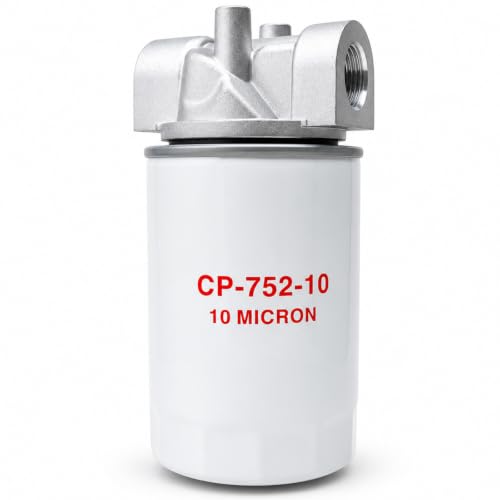
- Best for 10-micron filtration: CP-752-10 Return-Line Housing – Specifies a return-line housing, 20 GPM flow and 200 PSI maximum pressure.
- Best for 3/4-inch ports: 221006 Return-Line Filter Assembly – Specifies 3/4-inch NPTF ports in a return-line assembly.
| Product | Best for | Filter type | Flow / pressure | Shop |
|---|---|---|---|---|
| 723P0405 Log Splitter Filter | Named model fit | Replacement filter | — | Check Price on Amazon |
| CP-752-10 Return-Line Housing | 10-micron housing | Return-line housing | 20 GPM / 200 PSI | Check Price on Amazon |
| 723-0405 Hydraulic Filter Housing | Named equipment range | Filter housing | — | Check Price on Amazon |
| 221006 Return-Line Filter Assembly | NPTF port match | Return-line assembly | 20 GPM / 200 PSI | Check Price on Amazon |
Log splitter hydraulic filters
Compare replacement filters and return-line assemblies by fitment, filtration and hydraulic-system ratings.
723P0405 Log Splitter Filter

723P0405 Log Splitter Filter is a replacement filter identified for MTD Troy-Bilt LS27 and Bobcat 700, 720 and 721 machines, making its named fitments the key distinction. It also gives replacement numbers 723P0405, 723-0405, 120-818 and 6515541, which can help match an existing part. Its dimensions are 7.09 inches high and 3.9 inches long and wide. Choose it when your machine and old filter cross-reference to those numbers. Its compatibility is not universal, so owners of other models should verify the exact replacement number before ordering.
Bottom line: Pick this replacement when your machine matches one of its named models or part numbers.
CP-752-10 Return-Line Housing

CP-752-10 Return-Line Housing stands apart by combining a return-line housing with a 10-micron rating, 20 GPM flow and 200 PSI maximum pressure. The maker says it removes 99% of contaminants from petroleum-based hydraulic fluids; treat that as a maker performance claim, not a guarantee for every fluid or operating condition. Its 1-inch-12 UNF thread and listed replacement cross-references are useful matching clues. This suits buyers replacing a housing as well as its filter element. The thread differs from the 3/4-inch NPTF ports on 221006 Return-Line Filter Assembly, so confirm the system connection before choosing it.
Bottom line: Choose this housing if its 1-inch-12 UNF thread and ratings match your return circuit.
723-0405 Hydraulic Filter Housing

723-0405 Hydraulic Filter Housing is a filter housing that names a broad set of splitter applications, including MTD and Troy-Bilt LS27, LS27CC, LS33CC, LS25 and GS21T, alongside Bobcat cross-references. Its compatibility list includes 723-0405, 723P0405 and 120-818, and the product name identifies it as a 10-micron housing. At 3.8 inches high and wide and 5.5 inches long, its dimensions can help assess available space. This is a fitment-led choice rather than a unit with a flow or pressure rating, so buyers matching circuit limits should verify those separately.
Bottom line: Pick it when your splitter matches its model or replacement-number family.
221006 Return-Line Filter Assembly
221006 Return-Line Filter Assembly is the option to consider when the connection is the deciding factor: it specifies 3/4-inch NPTF ports, 20 GPM flow and 200 PSI maximum working pressure. The spin-on assembly is intended for return-line service and has a height of 7.87 inches with a 3.66-inch length and width. It is presented for select log splitters and mini excavators, rather than as a fit for every machine. Check port type as well as nominal diameter; a 3/4-inch NPTF connection is not interchangeable with the 1-inch-12 UNF thread specified for CP-752-10 Return-Line Housing.
Bottom line: Choose this assembly when your return circuit takes 3/4-inch NPTF ports and meets its ratings.
How to choose a log splitter hydraulic filter
Match the replacement number first, then confirm the filter type and hydraulic connection. A spin-on element, a filter head or housing, and a complete assembly are different replacement jobs; buying a housing when only an element is due can leave you with an incompatible part. Hydraulic return filters work in the low-pressure return path to catch particles before fluid returns to the reservoir, while suction and pressure-side filters serve different locations and pressure demands. Use the machine manual or the old component’s markings to identify the circuit and part number. Then compare thread standard, flow capacity and maximum working pressure. If any connection or rating does not match, do not assume that a similar-looking filter will fit.
Check ports, flow and pressure before fitting
Port thread and circuit ratings are measurable fit conditions, not cosmetic differences. For example, 3/4-inch NPTF and 1-inch-12 UNF threads are distinct standards and cannot be substituted just because the openings look close. Flow rating must meet or exceed the circuit’s required flow; a 20 GPM assembly is only appropriate when the system requirement is no higher than that rating. Maximum working pressure also needs to suit the location where the filter sits, though a return-line typically operates at lower pressure than a pressure line. Compare the machine specification, old housing markings and available mounting clearance. If one of those checks fails, choose another matching filter rather than adapting a mismatched port.
Replacement filters and complete housings compared
A replacement element changes the consumable filter while retaining the existing head; a housing or assembly replaces more of the filter unit. This distinction determines what to match. The following guide uses the product type and rating as decision points.
| Need | Choose | Check first |
|---|---|---|
| Replace an identified filter | Replacement filter | Machine fitment and cross-reference number |
| Replace the return-line housing | Housing or assembly | Port thread and mounting space |
| Match hydraulic circuit limits | Rated assembly | Required GPM and maximum pressure |
Filter micron ratings also need context: a smaller micron number represents finer particle capture, but the rating method and media matter. Compare like-for-like ratings rather than treating every “10 micron” claim as identical.
Service safely and avoid common fit mistakes
Depressurize the hydraulic system and let hot fluid cool before opening a filter housing; trapped fluid under pressure can penetrate skin and requires emergency medical care. Lower the splitter’s beam, shut off its power source and follow the machine maker’s service procedure before disconnecting lines. Keep dirt out of open ports, because debris introduced during a filter change can circulate through pumps and valves. Common mistakes include confusing an element with a complete housing, matching only the outside diameter, and overlooking the thread standard or flow direction. Inspect the old seal and seating surface during service, and replace seals that are damaged rather than forcing a leak-tight fit by overtightening the filter.
Frequently Asked Questions
How often should I change a log splitter hydraulic filter?
Use the interval in the splitter manual; many hydraulic systems schedule filter service around 50 to 100 operating hours, but the machine maker’s interval takes priority. Heavy dust, dirty fluid or unusually frequent use can warrant earlier inspection.
Can I use any 10-micron hydraulic filter?
No. Match the replacement number, thread, filter location, flow rating and pressure rating as well as the micron rating. A 10-micron label alone does not establish that a filter suits your splitter.
What does a return-line filter do on a log splitter?
A return-line filter captures particles from oil returning to the reservoir, helping keep contamination from recirculating. Return filters are not interchangeable with suction or pressure-line filters, which face different flow and pressure conditions.
Can I change a hydraulic filter while the splitter is hot?
Let the system cool and depressurize it before service; hot oil can burn, and pressurized fluid can cause a severe injection injury. Never check for a leak with a hand, since even a fine hydraulic jet can penetrate skin.
How do I identify the right filter thread?
Check the old housing markings or the machine service manual for both diameter and thread standard, such as 3/4-inch NPTF or 1-inch-12 UNF. Similar nominal sizes do not mean threads are interchangeable.