
Silicone Cake Rose Molds: 4 Options Compared

For a rose-shaped cake or dessert, BAKER DEPOT Rose Mold Set is the clearest match because each cavity measures 2.75 inches across and the mold is rated to 445°F. Choose Sakolla Three-Flower Cake Mold Set for a larger rose-shaped cake pan or Two-Pack Rose Flower Molds and ORIONE Rose Flower Molds for rose decorations; mini liners serve a different shape and scale.
We earn a commission if you buy through links on this page. As an Amazon Associate I earn from qualifying purchases. Products are compared on manufacturer specifications, not hands-on testing.
- Best overall: BAKER DEPOT Rose Mold Set – Two rose molds with 2.75-inch cavities suit individual molded desserts.
- Best for a large cake: Sakolla Three-Flower Cake Mold Set – The rose pan measures 9.5 inches across and comes with two other flower shapes.
- Best for rose decorations: Two-Pack Rose Flower Molds – The two rose-shaped molds are made for cake and dessert decorations.
| Product | Best for | Set contents | Rose size | Heat range | Shop |
|---|---|---|---|---|---|
| BAKER DEPOT Rose Mold Set | Small molded desserts | 2 molds | 2.75-in cavity diameter | -40 to 445°F | Check Price on Amazon |
| Sakolla Three-Flower Cake Mold Set | Large flower cakes | 3 flower molds | 9.5 × 3-in rose pan | -104 to 446°F | Check Price on Amazon |
| Two-Pack Rose Flower Molds | Rose decorations | 2 rose molds | — | -40 to 446°F | Check Price on Amazon |
| ORIONE Rose Flower Molds | Small cake accents | 2 rose molds | — | -40 to 446°F | Check Price on Amazon |
Silicone Cake Rose Molds
Compare the rose shape, scale, and temperature range before choosing a mold for cakes or smaller desserts.
BAKER DEPOT Rose Mold Set
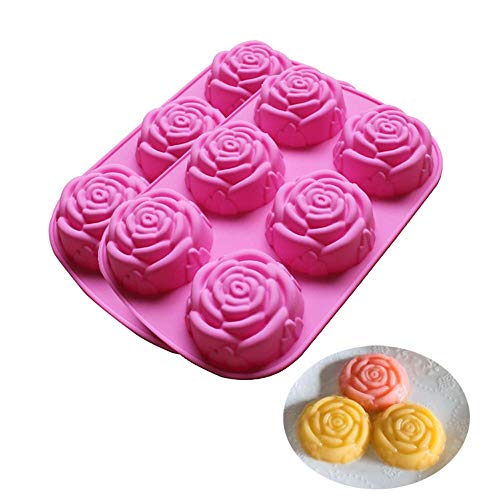
Two flexible molds with 2.75-inch rose cavities distinguish this set from the larger whole-cake pans. The silicone is rated from -40 to 445°F, and the maker lists uses including mousse, jelly, cake, bread, and chocolate. The maker says the soft material helps release molded food; it also recommends supporting the mold on a tray when moving it. This scale suits individual servings or decorations, but buyers seeking a single large rose cake should choose a larger pan instead.
Bottom line: Choose this set for small rose-shaped portions and molded desserts.
Sakolla Three-Flower Cake Mold Set

A 9.5-inch rose pan plus chrysanthemum and sunflower molds make this the broadest shape variety in the group. The rose mold measures 9.5 inches across and 3 inches high, and the set’s temperature range is -104 to 446°F. The maker says the silicone is BPA-free and conforms to the LFGB standard. This set suits bakers who want a large floral cake shape and alternate flower designs; its three-pan assortment is more than needed if you only want small rose decorations.
Bottom line: Pick this set for a large rose cake and two alternate flower shapes.
Two-Pack Rose Flower Molds

These two rose-shaped molds are intended for cake, chocolate, mousse, jelly, fondant, and sugarcraft, rather than a specified whole-cake pan size. The maker says the food-grade silicone meets LFGB standards and is BPA-free; the temperature range is -40 to 446°F. That combination makes the set a flexible choice for molded decorations or chilled desserts as well as oven use. Because no cavity dimensions are provided, confirm the finished rose size before ordering if the decoration must fit a particular cake or serving.
Bottom line: Choose this pair when the rose shape matters more than a known cavity size.
ORIONE Rose Flower Molds

These two silicone rose molds provide another food-use option for cake decorating and sugarcraft. The maker says the silicone passes the LFGB standard, is nonstick, and is rated from -40 to 446°F; listed uses include cakes and pizza. Unlike the larger Sakolla pan, the dimensions do not establish a large cake-pan footprint, so this is better considered for molded accents unless the cavity size is confirmed. The maker also emphasizes official ORIONE packaging, a point that matters to buyers checking brand identity.
Bottom line: Pick this pair for rose accents if its cavity dimensions suit your project.
How to choose a silicone cake rose mold
Choose by the finished dessert size first: a 2.75-inch cavity makes individual portions, while a 9.5-inch-wide pan can shape a larger cake. Silicone molds bend more easily than rigid metal pans, so place a flexible mold on a flat baking sheet before filling; the sheet supports it during transfer. Silicone also conducts heat less readily than metal, so cakes may brown more slowly and need a doneness check rather than relying only on surface color. For highly detailed rose petals, avoid overfilling cavities, which can blur the shape. Match the mold’s temperature range to the recipe’s oven setting and intended chilling method.
Using flexible silicone molds safely
Keep silicone bakeware away from direct flame and broiler elements; the oven-safe range does not make a mold suitable for those heat sources. Fill and move a flexible mold while it rests on a rigid sheet, since carrying it by the edges can flex the cavities and spill batter. Use oven mitts when removing the sheet, and allow hot silicone to cool before handling or unmolding. Food-grade silicone is made for food contact, but do not use a mold that is torn, sticky, or visibly deteriorating. Hand washing can help preserve fine petal details even when a particular mold is dishwasher safe.
Rose mold sizes and intended uses
Small rose cavities work better for individual chocolates, jellies, or cake accents; a pan near 9.5 inches across is the more relevant scale for a large floral cake. The table separates stated cavity dimensions from products whose size must be confirmed. Use the intended dessert as the deciding condition: choose the 2.75-inch cavity for small portions, and verify dimensions when the finished decoration must match a cake’s diameter. A rose-shaped cavity produces a molded flower form, while cupcake liners produce cups rather than a rose-shaped cake.
| Use | Useful scale | Selection cue |
|---|---|---|
| Individual molded treats | 2.75-inch cavity | Small rose portions |
| Large floral cake | 9.5 inches across | Whole-cake shape |
| Decorative accents | Confirm cavity size | Match the cake or serving |
Temperature and release basics
Most home baking recipes use oven settings below 450°F, so a mold rated to 445°F or 446°F covers many common cake temperatures but leaves little margin for hotter settings. Never assume a mold’s freezer rating means it can move straight from freezer to a hot oven; abrupt temperature changes can stress bakeware. Flexible silicone is naturally easy to bend for release, but fully cooling baked goods before unmolding helps delicate petal edges hold their shape. For intricate designs, a light coating of butter or baking spray can help, especially with dense batter, even when the material is described as nonstick.
Frequently Asked Questions
Should a silicone cake mold sit on a baking sheet?
Yes, set a flexible mold on a rigid baking sheet before filling and keep it there during transfer. The sheet supports the mold and reduces spills when the filled cavities bend.
Can silicone rose molds go in a microwave?
Some silicone molds are microwave-safe, but check the specific mold’s range and uses first. Avoid metal decorations or accessories in a microwave, and use only molds intended for food.
How full should rose cake mold cavities be?
Fill cavities only to the recipe’s expected rise level, typically leaving about one-quarter of the cavity empty for batter expansion. Overfilling can obscure petal edges and make release messier.
Why does cake brown less in silicone?
Silicone transfers heat less efficiently than metal, so cakes can develop less browning on the sides and bottom. Use a toothpick or the recipe’s internal doneness cues rather than color alone.
How do you release a cake from a rose mold?
Let a baked cake cool before gently flexing the mold away from the petals. Deeply sculpted shapes can benefit from a thin coating of butter or baking spray before filling.