
Epstein Barr Test at Home: 5 Kits Compared by Markers

For a home Epstein-Barr test, choose a kit that checks both VCA and EBNA IgG and follow its reading window; those antibodies alone do not diagnose an active infection. The five options here focus on those markers, but a home result is not a substitute for a clinician’s assessment of symptoms.
Choose a clinician-ordered blood test instead if you need help diagnosing current illness or interpreting antibody results.
We earn a commission if you buy through links on this page. As an Amazon Associate I earn from qualifying purchases. Products are compared on manufacturer specifications, not hands-on testing.
- Best overall: EBV Finger-Prick Kit – Lists the fingerstick lancet, cassette, buffer, guide, and VCA/EBNA IgG markers.
- Best for two tests: EBV Two-Test Kit – The product name specifies a two-test pack and VCA/EBNA markers.
- Best for stated result window: EBV Home Test Kit – Gives a 15–20 minute result window and identifies VCA/EBNA IgG.
| Product | Best for | Markers | Sample method | Result time | Shop |
|---|---|---|---|---|---|
| EBV Finger-Prick Kit | Complete kit contents | VCA and EBNA IgG | Fingerstick blood | Around 15 minutes | Check Price on Amazon |
| EBV Two-Test Kit | Two test units | VCA and EBNA | — | 10–15 minutes | Check Price on Amazon |
| EBV VCA/EBNA Fingerstick Kit | Fingerstick collection | VCA and EBNA IgG | Fingerstick blood | 15 minutes | Check Price on Amazon |
| EBV VCA/EBNA IgG Self-Test | Storage instructions | VCA and EBNA IgG | — | 10 minutes | Check Price on Amazon |
| EBV Home Test Kit | Longer result window | VCA and EBNA IgG | Finger-prick blood | 15–20 minutes | Check Price on Amazon |
At-home Epstein-Barr test kits
Compare each kit’s antibody markers, sample collection method, and advertised result window before choosing.
EBV Finger-Prick Kit
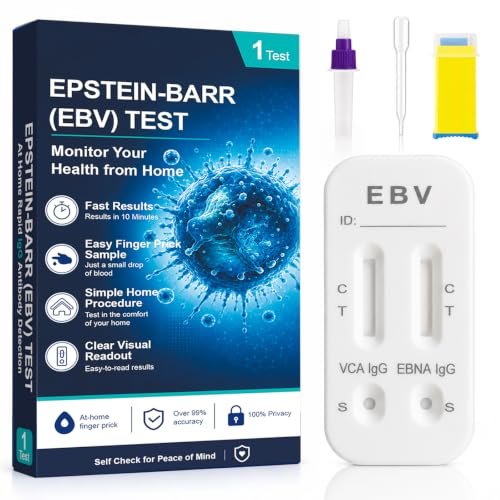
Among these kits, this option spells out the collection supplies: a lancet, test cassette, buffer solution, and guide. It checks VCA and EBNA IgG markers and describes a fingerstick self-collection process, with a result in around 15 minutes. That makes it a practical match for someone who wants the components and a single-use home check for past-exposure markers. The limitation is that IgG markers cannot by themselves establish whether symptoms are caused by a current EBV infection; seek clinical interpretation if you are ill or uncertain about the result.
Bottom line: Choose this if you want the included fingerstick supplies and a roughly 15-minute check.
EBV Two-Test Kit

The clearest differentiator here is the two-test quantity; the name also identifies VCA and EBNA as the targets. The maker advertises results in 10–15 minutes and describes the kit as an at-home check, but it does not explain the sample method in the specifications. This may suit someone prioritizing two tests in one pack, provided the package instructions match their needs. The accuracy claim is not a guarantee for an individual result, and antibody testing is not a stand-alone diagnosis of active infection.
Bottom line: Pick this if a two-test pack is your deciding requirement.
EBV VCA/EBNA Fingerstick Kit
This kit is the only one besides EBV Finger-Prick Kit whose fields explicitly call out a fingerstick sample and a 15-minute result window. It checks IgG response to VCA and EBNA, with simple-to-read results as a feature. It suits buyers who want those markers and a collection method without prioritizing a multi-test quantity. Its specifications do not identify the included supplies, so confirm the package contents before ordering if you need lancets or collection materials. A positive antibody result can reflect prior exposure rather than prove current illness.
Bottom line: Choose this if a fingerstick method and 15-minute window matter most.
EBV VCA/EBNA IgG Self-Test

This option stands out for giving a storage range for its strips: 39°F to 86°F, away from direct sunlight, heat, and freezing. It checks VCA and EBNA IgG and says results take 10 minutes, though its product name gives a 15-minute figure; use the kit’s own reading instructions rather than assume a window. It suits someone who can keep test strips within those conditions.
Bottom line: Pick this if you can maintain the strip-storage conditions.
EBV Home Test Kit

This kit has the longest result window among the products with a defined range: 15–20 minutes. Its fields describe a three-step finger-prick process and name a lancet, cassette, buffer, and instructions among the components. It suits someone who prefers an explicit testing window and collection outline. The wording qualifies the kit’s validated capabilities, so verify the authorized intended use and package instructions before relying on a result. As with other IgG checks, the markers alone cannot distinguish current infection from past exposure.
Bottom line: Choose this if you are comfortable allowing up to 20 minutes for the result.
How to choose an at-home Epstein-Barr test
For an EBV home test, first check which antibodies it detects and whether its sample method is workable for you. VCA and EBNA IgG are markers of an immune response; timing and patterns across antibodies matter, so one home IgG result does not establish active infection. A fingerstick requires a lancet and a blood sample, while the instructions determine how much blood and buffer to use. Compare the reading window, too: these products advertise roughly 10 to 20 minutes. Choose a clinician-ordered test when you have symptoms or need a diagnosis, and share the result with a clinician rather than treating the kit as a full clinical workup.
What VCA and EBNA IgG results can tell you
VCA IgG commonly appears during EBV infection and can remain detectable for life, while EBNA IgG usually appears months after infection and also persists. That timing means antibodies can suggest past exposure, but interpreting a possible new infection usually requires a pattern including other antibodies, such as VCA IgM, plus symptoms and clinical context. These kits focus on IgG markers, so a positive result does not prove an active infection and a negative result should not override concerning symptoms. Do not use a home result to decide that a serious or persistent illness needs no care; ask a healthcare professional to interpret it.
How to read the result window and handle a fingerstick
Read a rapid test only within the time window in its own instructions; checking too early or long after the cutoff can make a line difficult to interpret. Allow the full stated window—up to 20 minutes for one option here—and keep the kit’s strips protected from heat, sunlight, and freezing where applicable. Fingerstick kits use a lancet to collect blood, so wash and dry hands, use the sterile lancet only once, and place it in an appropriate sharps container rather than loose household trash. Follow the kit guide for sample and buffer amounts; a poorly collected sample can make the result unreadable.
When a home EBV test is not enough
A home IgG screen is not a complete diagnosis, especially when symptoms are recent, severe, or ongoing. Clinicians may consider antibody types beyond IgG, the timing of symptoms, and other causes; a CBC or liver enzyme tests may also be considered depending on the situation. Seek prompt medical advice for significant illness, trouble breathing or swallowing, severe abdominal pain, or worsening symptoms. Avoid contact sports if you have suspected or confirmed mononucleosis until a clinician advises you, because an enlarged spleen can be vulnerable to injury. The kit’s result should support a conversation with a professional, not replace one.
Frequently Asked Questions
Can an EBV IgG test show a current infection?
An IgG result alone cannot reliably show whether EBV is currently causing symptoms. VCA IgG and EBNA IgG often persist after prior infection, so clinicians interpret their pattern alongside timing and, when appropriate, other antibodies.
How long should an EBV home test take?
The kits here advertise result windows from 10 to 20 minutes. Follow the specific kit’s read-time cutoff; interpreting a rapid test outside that window can make the result unreliable.
Does a positive EBV test mean mono?
A positive VCA or EBNA IgG result can indicate prior exposure and does not by itself diagnose mononucleosis. Symptoms and additional clinical testing help determine whether an illness is active EBV infection or another condition.
What does EBNA IgG usually indicate?
EBNA IgG usually develops months after an EBV infection and may remain detectable for life. A clinician interprets it with VCA antibodies and the person’s symptoms rather than using it alone.
When should I see a doctor after a home EBV test?
Seek medical advice when symptoms are severe, worsening, persistent, or the result is unclear. Trouble breathing or swallowing and significant abdominal pain warrant prompt attention.