
Kitchen Forks and Spoons Metal Holders Compared

FAZZCASA Round Stainless Steel Holder suits most kitchens because its drainage holes help water escape after washing forks and spoons. Choose Ferrochef 3-Pack Silver Steel Caddies instead if you want three matching compact holders, or Round Stainless Steel Utensil Crock if you need a wider single crock for cooking tools as well as cutlery.
Metal cutlery holders keep loose utensils upright on a counter; perforations can help wet pieces drain, while solid-sided crocks are better suited to dry storage or serving.
We earn a commission if you buy through links on this page. As an Amazon Associate I earn from qualifying purchases. Products are compared on manufacturer specifications, not hands-on testing.
- Best overall: FAZZCASA Round Stainless Steel Holder – Drainage holes and a 5.3-inch height suit countertop drying and storage.
- Best for serving sets: Ferrochef 3-Pack Silver Steel Caddies – Three matching 4-inch stainless steel holders can separate utensils across a buffet.
- Best for cooking tools: Round Stainless Steel Utensil Crock – Its 5.1-inch diameter and vent holes fit larger utensils such as spatulas and whisks.
| Product | Best for | Dimensions | Pack | Shop |
|---|---|---|---|---|
| FAZZCASA Round Stainless Steel Holder | Draining cutlery | 5.3 × 4.7 in. | 1 holder | Check Price on Amazon |
| Ferrochef 3-Pack Silver Steel Caddies | Buffet serving | 4 × 3.94 in. | 3 holders | Check Price on Amazon |
| Round Stainless Steel Utensil Crock | Cooking utensils | 5.3 × 5.1 in. | 1 holder | Check Price on Amazon |
Kitchen Forks and Spoons Metal Holders
Compare the holders by material, footprint, and how many containers come in each set.
FAZZCASA Round Stainless Steel Holder

Unlike a solid-sided crock, this round holder has dense drainage holes to let water flow out and air circulate around damp forks and spoons. It is made from seamless stainless steel and measures 5.3 inches high by 4.7 inches across, so it can also hold chopsticks, knives, and small kitchen tools. The maker says the steel is food-grade and easy to clean. This is the strongest fit for a counter where utensils may go in wet; the open holes also mean loose crumbs or water can pass through, so place it on a wipeable surface.
Bottom line: Choose this if you want damp cutlery to drain on the counter.
Ferrochef 3-Pack Silver Steel Caddies

The three-piece set is the only option here that supplies matching holders for separating forks, spoons, and other serving utensils. Each brushed-silver stainless steel cylinder measures 4 inches in diameter and about 3.94 inches high. That compact footprint can work on a buffet or crowded counter, and the repeated finish keeps a serving setup visually consistent. The maker says the construction is corrosion-resistant and stable. The shorter height holds smaller cutlery more neatly than tall cooking tools, so choose another style if you want to store long spatulas or whisks upright.
Bottom line: Pick this set when you need several compact matching caddies for serving.
Round Stainless Steel Utensil Crock
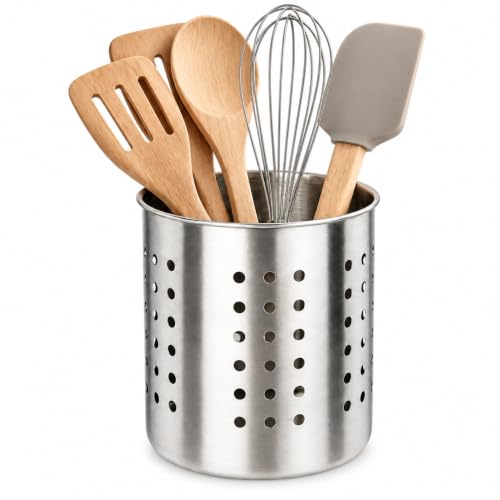
This single crock has the widest diameter among the metal holders, at 5.1 inches, and its vent holes make it suitable for cooking utensils as well as forks and spoons. The stainless steel body is 5.3 inches high and is described by the maker as sturdy and easy to clean. Its broader footprint is useful when a counter caddy needs to accommodate spatulas, whisks, or tongs. The product is framed around cooking-tool storage rather than a multi-piece flatware service, so it is less suited to buyers who want separate matching containers for a buffet.
Bottom line: Choose this for one wider counter crock that can hold cooking tools.
How to Choose a Metal Fork and Spoon Holder
Choose by whether utensils will go into the holder wet, how many groups you need to separate, and the space available. A perforated holder gives water a route out and lets air circulate; a solid-sided cylinder keeps utensils contained for dry storage or serving. Measure the counter footprint before choosing: the diameters here range from 4 to 5.1 inches. If you need three separate utensil groups at a buffet, a multi-caddy set avoids sorting everything into one container. For a sink-side drying spot, favor a design with drainage holes and leave room beneath or around it for water to escape.
| Need | Useful feature |
|---|---|
| Drying washed cutlery | Drainage holes and air space |
| Separating serving utensils | Multiple matching containers |
| Storing cooking tools | Wider diameter and taller sides |
Holder Size and Counter Fit
Measure the counter space and the longest utensil before deciding on a holder. The metal options here are about 3.94 to 5.3 inches high and 4 to 5.1 inches in diameter; the wider crock occupies more counter area but leaves more room for bulky tools. A practical rule is to allow at least an inch of clearance around the holder so hands can reach utensils without knocking it over. Height alone does not guarantee that long-handled tools will stay upright: compare the holder height with the utensil handles you use most. For a crowded counter, the 4-inch-diameter format takes less space than a 5.1-inch crock.
Drainage Versus Solid-Sided Storage
Perforated metal holders suit freshly washed cutlery because openings let water drain and improve airflow. Water still needs somewhere to go, so set a draining holder on a surface that can be wiped and avoid letting pooled water sit beneath it. Solid-sided holders are a better match for dry forks and spoons at a table or buffet, where open holes could let small utensils or crumbs escape. Stainless steel is commonly used for kitchen utensils because it resists corrosion, but standing water and food residue can still leave marks; empty and dry the holder during routine cleanup. Keep wet and dry uses separate if a caddy does not have drainage holes.
Cleaning and Everyday Use
Rinse away food residue and dry a metal holder after cleaning, especially around seams and drainage openings where debris can collect. Stainless steel can be scratched by abrasive scouring pads, so a soft cloth or sponge with dish soap is a sensible everyday approach. For sink-side use, empty any water-catching tray frequently if one is used; trapped moisture slows drying rather than helping it. Do not overload a narrow cylinder with heavy tools: utensils leaning far to one side can make a lightweight holder unstable. Reserve dry-serving caddies for clean, dry cutlery, and return wet utensils to a draining setup until they have dried.
Frequently Asked Questions
Should forks and spoons go into a holder wet?
A holder with drainage holes is the better choice for damp cutlery because water can escape and air can circulate. Empty or wipe the area beneath it so water does not remain pooled.
What diameter works for a kitchen utensil holder?
A 4-inch diameter suits a compact cutlery container, while a 5-inch diameter gives bulkier utensils more room. Measure counter clearance first; leave about an inch around the holder for easy access.
Can a metal caddy hold cooking utensils too?
Yes, a wider holder can accommodate tools such as spatulas, whisks, and tongs. Compare its height with the longest handle you plan to store so tools stay upright rather than tipping outward.
How should I clean a stainless steel cutlery holder?
Wash stainless steel with dish soap and a soft sponge, then dry it to limit water spots and residue. Avoid abrasive pads that can scratch the finish, and clear food bits from drainage holes.
Are countertop holders safe for wet utensils?
They are suitable when the design drains and the counter area can be dried regularly. Keep standing water from collecting beneath the holder, and store utensils only after washing them clean.