
Tractor Air Conditioning Units: 4 Cab Options Compared

OutEquipPro 12V Rooftop AC suits many tractor owners who want a low-profile rooftop unit, with 10,000 BTU of cooling and a 12V connection. Choose a mini-split or under-dash setup instead if your cab roof cannot accept a rooftop unit or your mounting space favors another layout.
We earn a commission if you buy through links on this page. As an Amazon Associate I earn from qualifying purchases. Products are compared on manufacturer specifications, not hands-on testing.
- Best overall: OutEquipPro 12V Rooftop AC – Its low-profile rooftop layout and 10,000 BTU capacity suit buyers who can mount an AC on the cab roof.
- Best for higher capacity: 13700 BTU Under-Dash AC Kit – The under-dash kit has the largest cooling capacity at 13,700 BTU.
- Best for metal housing: 12V 10000 BTU Metal-Shell Mini-Split – Its metal shell distinguishes it from the ABS-housed unit and rooftop options.
| Product | Best for | Cooling capacity | Power | Mounting style | Shop |
|---|---|---|---|---|---|
| OutEquipPro 12V Rooftop AC | Low-profile rooftop | 10,000 BTU | 12V DC | Rooftop | Check Price on Amazon |
| 13700 BTU Under-Dash AC Kit | Higher cooling output | 13,700 BTU | 12V | Under-dash split | Check Price on Amazon |
| VEVOR 12V Mini-Split AC | Airflow specification | 10,000 BTU | 12V | Mini-split | Check Price on Amazon |
| 12V 10000 BTU Metal-Shell Mini-Split | Metal casing | 10,000 BTU | 12V | Mini-split | Check Price on Amazon |
Tractor Air Conditioning Units Compared
Compare the cooling output, electrical supply and mounting layout before choosing a unit for a tractor cab.
OutEquipPro 12V Rooftop AC

The low-profile rooftop design sets this unit apart for tractor cabs where a roof-mounted installation is suitable. It provides 10,000 BTU of cooling and runs from a vehicle’s 12V electrical system. The maker says it can provide 8 hours of cooling from a 480Ah power source or 10 hours from a 600Ah source when parked. UV-stabilized ABS, an EPDM foam gasket and a zinc-coated condenser are listed construction features. This choice suits buyers who want a rooftop layout; it is not the right fit if the cab roof cannot accommodate one.
Bottom line: Choose this if your cab supports rooftop mounting and you want a low-profile unit.
13700 BTU Under-Dash AC Kit

The 13,700 BTU capacity is higher than the 10,000 BTU output of the other options, and the under-dash layout avoids a rooftop installation. The kit uses a 12V electric supply, a scroll compressor and four adjustable vents. The maker says its variable-frequency drive optimizes power use and that cabin temperature can drop in as little as 8 minutes. This format suits buyers with usable under-dash and component mounting space. Its higher capacity does not guarantee a better fit: confirm the kit’s mounting clearances and electrical requirements for your tractor before ordering.
Bottom line: Pick this when under-dash installation works and higher stated cooling capacity is the priority.
VEVOR 12V Mini-Split AC
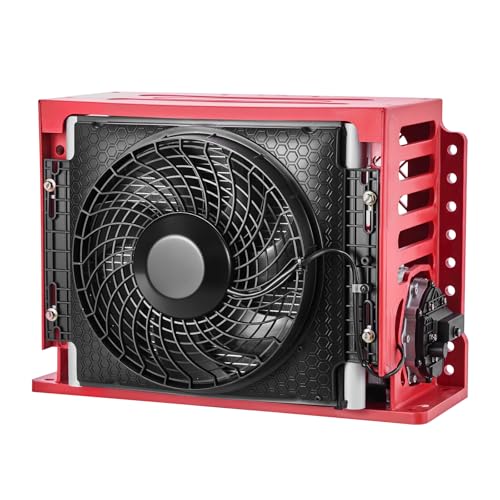
The 400 m³/h airflow distinguishes this mini-split from the other 10,000 BTU choices. It runs on 12V and uses automotive-grade inverter technology with a variable-frequency scroll compressor. The maker says the unit can run for 6–8 hours on a 12V battery and reports noise as low as 65 dB. Its ABS housing is another practical distinction from the metal-cased option. This unit suits buyers who want a mini-split layout and value an airflow figure; check that its separate components can be mounted in the tractor’s available spaces.
Bottom line: Choose this if its mini-split layout and stated airflow match your cab setup.
12V 10000 BTU Metal-Shell Mini-Split

The metal casing is the defining feature of this 10,000 BTU mini-split, rather than the ABS housing used by another mini-split option. It connects to a vehicle battery and is intended for 12V vehicle applications, including tractors. The maker describes the shell as protection against external collisions and compression. This unit suits buyers who prioritize a metal exterior and can accommodate a mini-split installation. Its product name also spans several vehicle types, so verify the mounting arrangement and electrical compatibility for the specific tractor rather than relying on a broad vehicle fit claim.
Bottom line: Pick this if a metal shell and mini-split installation suit your tractor.
How to choose a tractor air conditioner
Start with mounting space and electrical compatibility, then compare cooling capacity. A ton of cooling equals 12,000 BTU per hour, so 10,000 BTU is below one ton while 13,700 BTU is above it; cab size, sunlight, glass area and air leakage affect the load a unit must handle. Rooftop, under-dash and mini-split layouts require different mounting locations, so measure available space before choosing by capacity alone. A 12V air conditioner draws power from a vehicle electrical system, and high-current equipment needs wiring and circuit protection sized for the unit. Confirm the manufacturer’s current draw and installation requirements against the tractor’s electrical system before buying.
Rooftop, under-dash and mini-split layouts
Choose a layout according to where the tractor has usable mounting space. Rooftop units keep the evaporator assembly at the roof, but require a suitable roof opening, clearance and support. Under-dash systems place the cabin vents and evaporator below the dash; a split arrangement may still need space for other components. Mini-splits separate components, which can help when one location cannot hold the whole assembly, but they need suitable mounting points and connecting routes. The table compares the main layouts represented here; actual fit depends on the cab geometry and the unit’s installation requirements.
| Layout | Good starting point | Fit issue to check |
|---|---|---|
| Rooftop | Clear, supported cab roof | Roof opening and overhead clearance |
| Under-dash | Open dash area | Legroom and component space |
| Mini-split | Separate mounting locations | Space and route between components |
12V power and tractor installation checks
Check the unit’s electrical requirements against the tractor before installation; a 12V label alone does not establish that the battery or charging system can support it. Air conditioners can draw substantial current, so wiring gauge, fuse rating, connection quality and battery capacity must match the manufacturer’s specifications. Never substitute a larger fuse for the specified protection, because wiring can overheat before the fuse opens. For parked operation, account for other electrical loads and the battery reserve needed to start the tractor. If the maker gives a run-time estimate, treat it as conditional on the battery capacity and operating conditions, not as a universal runtime.
Frequently Asked Questions
How much cooling capacity does a tractor cab need?
A one-ton air conditioner provides 12,000 BTU per hour, which gives a useful reference point for comparing cab units. The needed capacity also depends on cab size, sun exposure, glass area and how well the cab seals.
Can a 12V tractor AC run while the tractor is off?
It can only run from stored battery power when the engine is off, and runtime depends on battery capacity and the AC’s electrical draw. Allow reserve to restart the tractor, and use the maker’s current and battery requirements to estimate safe run time.
What should I measure before installing a rooftop tractor AC?
Measure the available roof area, overhead clearance and any existing opening against the unit’s mounting dimensions. A rooftop unit also needs adequate support and a seal that keeps water out of the cab.
Is a mini-split or under-dash tractor AC easier to fit?
Neither layout is universally easier: a mini-split needs separate mounting locations and a route between components, while an under-dash unit needs room below the dash. Measure those spaces first and preserve operator legroom and control access.
Why does tractor cab size affect AC performance?
A larger cab and greater glass area expose more interior air and surfaces to heat, while direct sun and air leaks add to the cooling load. Compare capacity in BTU per hour, but assess the cab conditions as well as the number.