
Best Coil Cleaner for AC: 3 Foaming Picks Compared

Leak Saver Foam Blaster, 3-Pack suits most homeowners because its maker says the focused spray is designed for evaporator coils without rinsing and condenser coils with a light rinse. Choose a gallon product instead if you need a larger container or prefer foam for an outdoor condenser.
AC coil cleaners loosen dirt and residue from the thin fins that transfer heat; the right formula depends on coil location and its rinse requirements.
We earn a commission if you buy through links on this page. As an Amazon Associate I earn from qualifying purchases. Products are compared on manufacturer specifications, not hands-on testing.
- Best overall: Leak Saver Foam Blaster, 3-Pack – Its maker specifies no-rinse evaporator use and light-rinse condenser use.
- Best for self-rinsing condensers: Simple Green Foaming Coil & Condenser Cleaner – The maker describes its foam as self-rinsing on condensing coils.
- Best for outdoor coils: Wholesalehome AC Coil Cleaner 4291-08 – The product is designated for outdoor air-cooled condensers and finned coils.
| Product | Best for | Container size | Intended use | Format | Shop |
|---|---|---|---|---|---|
| Leak Saver Foam Blaster, 3-Pack | Split applications | 18 fl oz × 3 | Evaporator and condenser | Foaming spray | Check Price on Amazon |
| Simple Green Foaming Coil & Condenser Cleaner | Self-rinsing use | 128 fl oz | HVAC, AC, refrigeration | Foaming liquid | Check Price on Amazon |
| Wholesalehome AC Coil Cleaner 4291-08 | Outdoor condenser use | 128 fl oz | Outdoor air-cooled coils | Alkaline foam | Check Price on Amazon |
AC Coil Cleaners Compared
Match the cleaner to the coil location and the rinse approach you can safely use.
Leak Saver Foam Blaster, 3-Pack
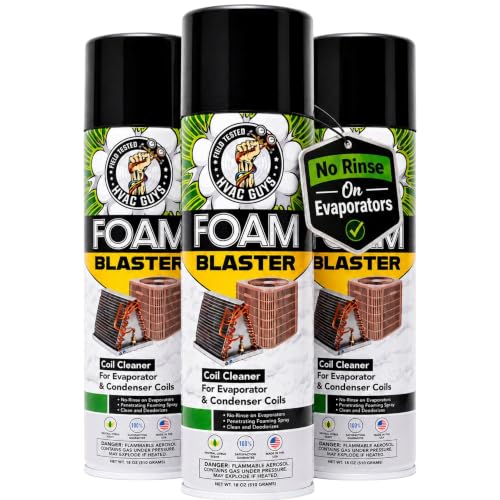
Leak Saver Foam Blaster, 3-Pack is the only option here with a use for both evaporator and condenser coils. The maker says its focused, higher-pressure spray reaches into the coil before expanding into foam; the formula is intended to clean evaporators without rinsing and condensers with a light rinse. The package contains three 18-fluid-ounce cans. This is a practical fit when one product needs to cover both coil locations, but the total is divided among three cans rather than supplied in a single gallon container.
Bottom line: Pick this if you want one spray intended for both indoor evaporator and outdoor condenser coils.
Simple Green Foaming Coil & Condenser Cleaner

Simple Green Foaming Coil & Condenser Cleaner comes in a one-gallon container, making it the largest single container among these picks. The maker describes the foam as low-VOC, non-caustic, non-flammable, and self-rinsing on condensing coils, with HVAC, AC, and refrigeration use. That combination suits buyers looking for a bulk cleaner for condenser applications. The self-rinsing claim is specifically about condensing coils, so do not assume the same approach applies to an indoor evaporator; confirm the product’s application directions for that use.
Bottom line: Choose this for a gallon-size foaming cleaner when self-rinsing condenser use is the priority.
Wholesalehome AC Coil Cleaner 4291-08

Wholesalehome AC Coil Cleaner 4291-08 is an alkaline-based, one-gallon foaming cleaner designated for outdoor air-cooled condensers and other finned coils. Its maker says the foam loosens grease, dirt, grime, and deposits, and the package includes a cloth. The outdoor-use focus makes this a more specific fit than a product positioned for both indoor and outdoor coils. Because it is alkaline-based, check compatibility with the coil material before use; this is especially relevant when the equipment manufacturer specifies a particular cleaner type.
Bottom line: Pick this for outdoor air-cooled condenser coils when an alkaline foaming formula fits the equipment.
How to Choose an AC Coil Cleaner
Choose a coil cleaner by location first: evaporator coils sit indoors, while condenser coils are outdoors and reject heat. Some formulas specify separate rinse approaches by coil, so match the cleaner to the unit rather than assuming one method works everywhere. Foam can cling to vertical fin surfaces, but it does not make a cleaner safe for every coil material. Aluminum fins are thin and easily bent; avoid pressure washers and use gentle water flow when rinsing. If the coil is buried inside an air handler or requires electrical-panel access, leave the cleaning to an HVAC technician. A useful rule: if you cannot reach the coil without removing electrical covers or bending fins, do not attempt a DIY cleaning.
Evaporator and Condenser Coil Cleaning
Evaporator coils absorb indoor heat and collect moisture, while outdoor condenser coils release that heat to the air. Condenser coils often accumulate leaves, dust, and grass clippings, so clear debris from around the cabinet before cleaning. Keep vegetation trimmed back at least 2 feet where practical to preserve airflow around the unit. Indoor evaporator coils are less accessible and can be paired with a condensate drain; a cleaner or loosened debris that enters the drain can cause a clog. For either coil, switch off HVAC power at the thermostat and the outdoor disconnect or breaker before handling the equipment. Never spray electrical components, and stop if fins are damaged or the coil is inaccessible.
Foam, Rinse, and Cleaner Types
Coil cleaner labels commonly distinguish between no-rinse evaporator use and rinse-required condenser use; the correct choice depends on the specific formula and coil. The products here also differ in container size and stated application. Use the table to narrow the format and intended role, then verify material compatibility and rinse directions before applying anything.
| Cleaner | Container | Stated application |
|---|---|---|
| Leak Saver Foam Blaster, 3-Pack | Three 18 fl oz cans | Evaporator and condenser |
| Simple Green Foaming Coil & Condenser Cleaner | 128 fl oz | HVAC, AC, refrigeration |
| Wholesalehome AC Coil Cleaner 4291-08 | 128 fl oz | Outdoor air-cooled coils |
Foam type alone does not determine whether rinsing is needed. Never substitute a no-rinse claim from one product for another product’s directions, and do not use a household pressure washer on coil fins.
Common AC Coil-Cleaning Mistakes
The most common mistake is bending fins with a stiff brush or concentrated water stream. Bent fins restrict airflow, and a fin comb is sized to match the coil’s fin spacing when repair is needed. Another mistake is cleaning without shutting off power; outdoor units can start automatically when the thermostat calls for cooling. Keep spray away from wiring, motors, and control boards, and do not pour cleaner into the condensate pan unless the product specifically allows it. A clogged filter can also contribute to dirty indoor coils, so check the air filter monthly during heavy cooling use and replace it when visibly loaded or according to its size and type. Persistent ice, weak airflow, or recurring coil fouling calls for service rather than repeated chemical cleaning.
Frequently Asked Questions
How often should AC coils be cleaned?
Outdoor condenser coils generally need inspection at least once a year, with cleaning sooner if grass, leaves, or dust are blocking the fins. Indoor evaporator coils can last longer between cleanings when the air filter is kept clean and airflow remains normal.
Should I rinse an AC coil cleaner off?
Rinse only when the cleaner’s directions call for it. Some formulas are intended for no-rinse evaporator use, while condenser applications may require rinsing; never infer the rinse method from the word “foam.”
Can I use a pressure washer on condenser coils?
No; pressure washers can flatten the thin aluminum fins and reduce airflow. Use gentle water flow and keep the spray directed through the coil without concentrating it on one spot.
Can coil cleaner damage aluminum fins?
Yes, an incompatible cleaner or overly aggressive application can harm coil materials or nearby finishes. Check compatibility with the equipment maker’s guidance, and stop if the fins begin to bend or deteriorate.
Do I need to turn off power before cleaning coils?
Yes; shut off HVAC power before touching or spraying the unit because fans and equipment can start automatically. Keep liquid away from wiring, motors, and control components.