
Best Cream for Senile Purpura: 4 Options Compared

DerMend Moisturizing Bruise Cream suits most people seeking a bruise cream for senile purpura because its formula combines arnica, vitamin K, retinol, and ceramides for thin, mature skin.
Senile purpura describes easy bruising associated with fragile, aging skin; creams can support skin care but should not be treated as a cure. New, frequent, or unexplained bruising warrants medical advice, especially when taking blood thinners.
We earn a commission if you buy through links on this page. As an Amazon Associate I earn from qualifying purchases. Products are compared on manufacturer specifications, not hands-on testing.
- Best overall: DerMend Moisturizing Bruise Cream – Arnica, vitamin K, retinol, and ceramides in a bruise cream for mature, thin skin.
- Best for menthol and camphor: Terrasil Arnica Bruise Cream – Combines arnica with menthol and camphor in a 1.7-ounce bruise cream.
| Product | Best for | Size | Key ingredients | Intended use | Shop |
|---|---|---|---|---|---|
| DerMend Moisturizing Bruise Cream | Mature-skin bruises | 2.5 oz | Arnica, vitamin K, retinol, ceramides | Bruise appearance | Check Price on Amazon |
| Terrasil Arnica Bruise Cream | Menthol-camphor formula | 1.7 oz | Arnica, menthol, camphor | Bruise care | Check Price on Amazon |
| PUTRIZEN 15% Arnica Bruise Cream | High arnica concentration | 4.23 oz | 15% arnica, ceramide NP, squalane | Bruise care | Check Price on Amazon |
| Dr. Johnes 7% Arnica Bruise Cream | Botanical daily care | 3.53 oz | 7% arnica, vitamin K, calendula | Bruise appearance | Check Price on Amazon |
Creams for Senile Purpura
Compare the intended use and formula before choosing a bruise cream or a daily moisturizer for fragile skin.
DerMend Moisturizing Bruise Cream
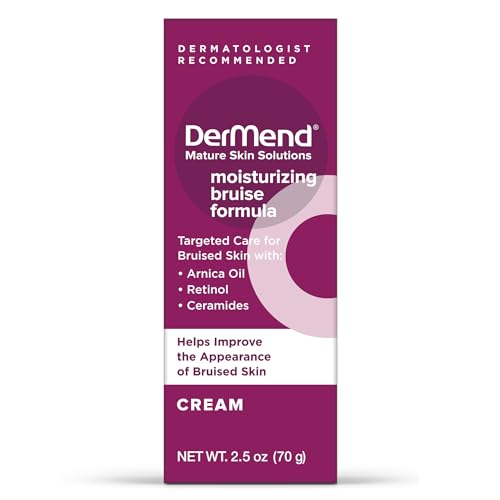
DerMend Moisturizing Bruise Cream is a bruise-focused formula for mature, thin skin, with arnica oil, vitamin K, retinol, and multiple ceramides. The combination distinguishes it from the general fragile-skin moisturizer in this group and may suit someone who wants bruise care alongside moisturizing. The maker says the formula improves bruised-skin appearance and helps restore the skin barrier; these are product claims, not a guarantee that purpura will fade. At 2.5 ounces, it is smaller than the 4.23-ounce and 4.5-ounce options, so it may be less suited to people prioritizing a larger daily moisturizer.
Bottom line: Choose it if you want a bruise-focused cream with several skin-conditioning ingredients.
Terrasil Arnica Bruise Cream

Terrasil Arnica Bruise Cream stands out for combining arnica with menthol and camphor, along with jojoba oil, turmeric, colloidal oatmeal, and beeswax. The maker says the cream is intended to address bruise discoloration, swelling, and pain; those claims do not establish that it treats the cause of senile purpura. Its 1.7-ounce size is the smallest among these bruise-focused formulas, which matters if you plan to apply cream across several areas. Choose a different option if you specifically want a formula featuring vitamin K or ceramides.
Bottom line: Pick it if the menthol-and-camphor blend is your preferred formula.
PUTRIZEN 15% Arnica Bruise Cream
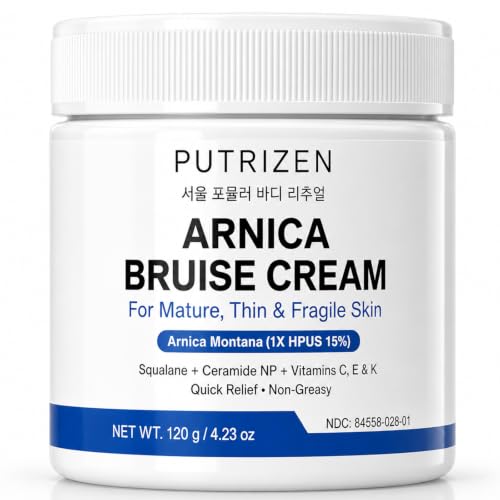
PUTRIZEN 15% Arnica Bruise Cream has the largest arnica percentage given among these products: 15%, plus ceramide NP and squalane. It also includes vitamins K, C, E, and B5 according to its features, which distinguish it from formulas that focus on botanical oils or general moisture. The maker claims faster bruise fading, but the claimed timeline and results should not be treated as established outcomes or a substitute for medical care. The 4.23-ounce container suits buyers who want a larger bruise cream; those seeking a simpler daily moisturizer may prefer a different type.
Bottom line: Choose it if you specifically want 15% arnica with barrier-supporting ingredients.
Dr. Johnes 7% Arnica Bruise Cream

Dr. Johnes 7% Arnica Bruise Cream pairs 7% Arnica Montana HPUS with vitamin K, calendula, aloe vera, and coconut oil, giving it a botanical blend distinct from the menthol-and-camphor cream and the 15% arnica option. The maker says the cream supports the visible appearance of bruises and provides soothing daily care; those claims are not a cure for senile purpura. Its 3.53-ounce size falls between the smaller bruise creams and the larger moisturizer containers. Buyers who want a higher arnica concentration should compare it with PUTRIZEN 15% Arnica Bruise Cream instead.
Bottom line: Pick it if a 7% arnica botanical blend fits your preference.
How to choose a cream for senile purpura
Choose by purpose first: a bruise cream is not the same as a moisturizer for fragile skin. A practical rule is to select a bruise cream when discoloration is your specific concern, and a moisturizer when dryness and fragile texture are the main issue. Claims that a cream speeds fading are not proof that it changes the underlying tendency to bruise. Senile purpura often appears on sun-exposed forearms and hands, where fragile skin and small-vessel damage make minor knocks more visible. Protecting exposed skin from sun and avoiding friction can complement gentle skin care.
What senile purpura creams can and cannot do
Senile purpura is associated with aging skin and fragile blood vessels, so a topical product cannot be assumed to prevent new spots. Arnica and vitamin K are common ingredients in bruise-care products, while ceramides and moisturizers support the skin barrier. Product claims about faster fading or pain relief are not a substitute for evidence about the cause of bruising. Avoid rubbing a fresh bruise hard; pressure and friction can further irritate thin skin. Seek medical advice for bruises that appear without a clear bump, spread quickly, occur with bleeding elsewhere, or begin after a medication change. For a sudden injury, a wrapped cold pack for about 10 to 15 minutes can limit discomfort; never apply ice directly to skin.
Compare bruise creams and fragile-skin moisturizers
This comparison separates products intended for bruise appearance from a moisturizer intended for routine mature-skin care. Container size and ingredient blend can help narrow the choice, but neither proves a product will resolve purpura.
| Product type | Typical focus | Decision cue |
|---|---|---|
| Arnica bruise cream | Bruise appearance | Choose when discoloration is the main concern |
| Bruise cream with barrier ingredients | Bruise care plus conditioning | Compare the specific ingredients, not fading claims |
| Fragile-skin moisturizer | Daily moisture | Choose when routine dryness is the priority |
When the purple marks are new or unexplained, a medical assessment is more useful than switching among topical formulas.
Safer care for thin, easily bruised skin
Gentle handling matters because aging skin can tear as well as bruise. Apply moisturizer with light strokes, keep nails trimmed, and use long sleeves or soft protective clothing during activities that repeatedly bump the forearms. Sunscreen rated SPF 30 or higher on exposed skin helps limit additional sun damage; reapply about every two hours outdoors and after swimming or sweating. Ask a clinician or pharmacist before changing blood thinners or other medicines, since some medicines can increase bruising and should never be stopped without guidance. Avoid applying a cream to broken skin unless its package specifically permits it, and stop if burning, rash, or irritation develops. Persistent or rapidly worsening discoloration deserves clinical evaluation.
Frequently Asked Questions
Can cream make senile purpura go away?
Creams may moisturize fragile skin or be marketed for bruise appearance, but they cannot be relied on to eliminate senile purpura. Seek medical advice for new, frequent, or unexplained bruising.
How long should a bruise take to fade?
Many ordinary bruises change color and fade over roughly 2 weeks, though larger or deeper bruises can take longer. A bruise that grows, is very painful, or appears without a clear injury needs medical advice.
Can I use bruise cream on broken skin?
Do not apply a bruise cream to broken skin unless its package specifically says it is appropriate. Thin skin can irritate easily, so stop use if burning or rash develops.
When should unexplained bruising be checked?
Contact a healthcare professional when bruises appear without a clear cause, multiply quickly, or occur alongside nose or gum bleeding. Bruising after starting or changing a medicine also warrants a medication review; do not stop a prescribed drug on your own.
Does sunscreen help protect fragile skin?
Broad-spectrum SPF 30 or higher helps protect exposed skin from additional sun damage. Reapply about every 2 hours outdoors and after swimming or sweating.