
Elastic Thread for Bracelets: 5 Cord Options Compared

JULIMAIDONG Clear Round Cord, 0.8 mm suits most bracelet makers who want a single clear, round 0.8 mm cord on a 200-foot roll. Choose another option if your beads have unusually small holes or you want several diameters in one pack; cord thickness must fit through every bead.
Elastic bracelet thread is a stretch cord that passes through beads and contracts to hold a finished strand around the wrist.
We earn a commission if you buy through links on this page. As an Amazon Associate I earn from qualifying purchases. Products are compared on manufacturer specifications, not hands-on testing.
- Best overall: JULIMAIDONG Clear Round Cord, 0.8 mm – A 200-foot roll of clear, round 0.8 mm cord offers one versatile size for bracelet projects.
- Best for mixed bead sizes: FIVEIZERO Six-Size Clear Cord Set – Six diameters from 0.4 mm to 1 mm provide options for beads with different hole sizes.
- Best for flat cord: Paxcoo White Flat Cord, 1 mm – The white cord is flat, measuring 1 mm wide by 0.7 mm thick, rather than round.
| Product | Best for | Diameter | Total length | Form and color | Shop |
|---|---|---|---|---|---|
| JULIMAIDONG Clear Round Cord, 0.8 mm | Everyday bead projects | 0.8 mm | 200 ft | Round, clear | Check Price on Amazon |
| FIVEIZERO Six-Size Clear Cord Set | Varied bead holes | 0.4–1 mm | — | Round, clear; six sizes | Check Price on Amazon |
| FIVEIZERO Black and White Stretch Cord | Larger bead holes | 1, 1.2, 1.5 mm | 330 ft total | Black and white | Check Price on Amazon |
| Paxcoo White Flat Cord, 1 mm | Flat cord designs | 1 mm wide, 0.7 mm thick | 328 ft | Flat, white | Check Price on Amazon |
| LUSTEMBER Two-Roll 1 mm Cord | Two-color projects | 1 mm | — | Black and white; two rolls | Check Price on Amazon |
Elastic Thread for Bracelets Compared
Compare the cord diameter, roll length, and shape against the bead holes and look you need.
JULIMAIDONG Clear Round Cord, 0.8 mm

JULIMAIDONG Clear Round Cord, 0.8 mm pairs a single 0.8 mm diameter with a 200-foot roll, making it a straightforward choice for makers who already know that size fits their beads. The clear round cord is polyester spandex and is intended for bracelets, necklaces, and other beadwork. Its transparent appearance can blend with many bead colors, while the fine cord can pass through holes that accept 0.8 mm string. This roll provides only one diameter, so it is less flexible than a mixed-size set when switching among beads with smaller or larger holes.
Bottom line: Pick this if you want a long roll of clear 0.8 mm cord for beads with matching holes.
FIVEIZERO Six-Size Clear Cord Set

FIVEIZERO Six-Size Clear Cord Set stands apart with six separate round diameters: 0.4, 0.5, 0.6, 0.7, 0.8, and 1 mm. That range is useful when a project mixes beads whose holes cannot all take the same thickness, or when you are unsure which size a bead will accept. The cord is clear and made from elastic plastic rubber, with the maker describing resistance to abrasion and aging. The set does not give a combined cord length, so it is harder to compare how much string it provides for repeated projects.
Bottom line: Choose this set when you need multiple diameters for different bead holes.
FIVEIZERO Black and White Stretch Cord

FIVEIZERO Black and White Stretch Cord offers three thicker diameter choices—1, 1.2, and 1.5 mm—and a total length of 330 feet across two rolls. The black-and-white color pairing suits projects where cord color is part of the design or can be hidden by opaque beads. A beading needle is included, according to the product name, and the cord is also presented for sewing, necklaces, and crafts. The thickest option will not pass through many small bead holes, so this set is a poor fit if your beads have narrow openings.
Bottom line: Pick this when your beads have wider holes and you want black and white cord.
Paxcoo White Flat Cord, 1 mm
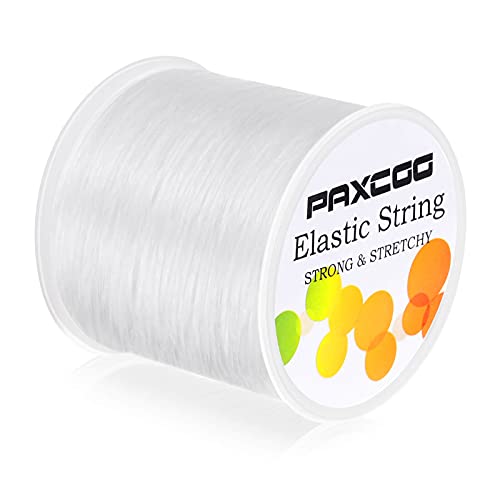
Paxcoo White Flat Cord, 1 mm is the only flat cord in this group: it measures about 1 mm wide and 0.7 mm thick, a shape that matters when matching bead-hole geometry. Its 328-foot roll gives substantial length for repeated projects, and the white polyester-spandex cord is intended for bracelet making. The maker says the flexible string is easy to knot and can thread through small and large beads. Because flat cord is not round, the width alone does not tell you whether it will pass through a hole; check both the hole opening and the cord’s thickness.
Bottom line: Choose this if you specifically want white flat cord and your beads fit its profile.
LUSTEMBER Two-Roll 1 mm Cord

LUSTEMBER Two-Roll 1 mm Cord provides two rolls of 1 mm elastic cord in black and white, with nylon-polyester fabric and braided rubber given as its material. The product is intended for bracelets, necklaces, pony-bead jewelry, and other crafts, so it may suit a maker who wants both colors at the same diameter. The maker describes the cord as easy to cut and tie, and as stretchy enough to return to its original length within its elastic range.
Bottom line: Pick this when you need two colors of 1 mm cord for beadwork.
How to Choose Elastic Thread for Bracelets
Start with the bead-hole opening: cord must pass through the narrowest hole in the strand, including twice if your design doubles the cord. Round elastic cord commonly comes in diameters around 0.5 to 1 mm, while thicker sizes are useful only when bead holes allow them. For small seed beads, try a fine cord such as 0.4 or 0.5 mm; for larger pony or glass beads, 0.7 to 1 mm may fit. These are starting points, not guarantees, because bead-hole sizes differ by bead and maker. If you have less than 1 mm of usable hole clearance, don’t assume a nominal 1 mm cord will pass. A simple choice rule: measure or test the tightest bead before selecting a diameter.
Round Versus Flat Bracelet Cord
Round elastic cord is the common choice for a single strand because its diameter is consistent around the cord and easy to compare with a bead hole. Flat cord can lie differently against the hole: both its width and thickness matter, so a 1 mm-wide cord is not equivalent to a 1 mm round cord. Flat profiles may suit a design that needs a broad, low-profile strand, but they can twist while threading or knotting. Clear cord tends to be less visually prominent between light or transparent beads; white and black cord can coordinate with opaque beads or become visible design elements. Match the cord profile to the bead opening rather than judging fit from one dimension alone.
| Need | Starting choice | Fit check |
|---|---|---|
| Small-hole beads | 0.4–0.6 mm round | Test the narrowest hole |
| General bead strands | 0.7–1 mm round | Confirm single or doubled pass |
| Flat-profile design | Flat cord | Check width and thickness |
How to Tie and Secure Stretch Bracelets
Stretch cord can loosen at the knot, so leave enough tail to tie securely before trimming. A common method is a square knot: cross right over left, tighten, then cross left over right and tighten again; reversing the same direction can create a weaker granny knot. Pre-stretch the cord gently before stringing to reduce later slack, but avoid pulling hard enough to damage or permanently deform it. Keep the knot snug without crushing delicate beads, and test the bracelet’s stretch before cutting tails close. Some makers add a small amount of jewelry adhesive to a knot, but glue compatibility depends on the cord and adhesive; keep uncured adhesive away from skin and follow its label.
Common Elastic Cord Sizing Mistakes
A frequent mistake is choosing cord by the outside bead size instead of the hole: large beads can still have narrow openings, and irregular or lined holes may snag cord. Another is assuming a thicker cord is automatically stronger; it can make threading impossible or leave too little room for a doubled pass. Nylon-based elastic and rubber-containing cords can respond differently to repeated stretching, moisture, and sunlight, so avoid prolonged exposure to heat or direct sun when storing finished jewelry. Keep stretch bracelets away from sharp edges, which can nick elastic fibers. If the bracelet is for a child, supervise wear and keep loose cord and small beads out of reach of children who may mouth or swallow them.
Frequently Asked Questions
How do I measure a bead hole for elastic cord?
Use a bead-hole gauge or drill-bit shanks to estimate the narrowest opening, then test a short cord sample. Allow extra space if the cord must pass through the bead twice.
Should I use one or two strands of elastic cord?
One strand is easier to thread through small holes, while doubled cord adds bulk and requires a larger opening. Check that the doubled cord passes freely before stringing the full bracelet.
How much elastic cord should I cut for a bracelet?
For a typical 7-inch bracelet, start with roughly 10 to 12 inches of cord to allow threading and knot tails. Bead size and knot style change the extra length needed, so leave a few inches rather than cutting close.
Does elastic bracelet cord need to be pre-stretched?
Gentle pre-stretching can reduce slack after tying by settling the cord before beads are added. Pull steadily rather than sharply, and stop if the cord shows damage or permanent thinning.
How can I keep a stretch bracelet knot from coming loose?
Tie a snug square knot by switching crossing direction between the two halves, then test the bracelet before trimming the tails. Adhesive is optional and should only be used if its label confirms compatibility with the cord.