
STEM Roach Spray: 4 Options Compared by Use

For a botanical spray labeled for roaches as well as ants and spiders, choose STEM Plant-Based Bug Spray, 10 oz; it comes in a 10-ounce container and is intended for indoor and outdoor use. Choose a different option if you want a residual-control period, a larger container, or a spray aimed at a broader set of household insects.
We earn a commission if you buy through links on this page. As an Amazon Associate I earn from qualifying purchases. Products are compared on manufacturer specifications, not hands-on testing.
- Best overall: STEM Plant-Based Bug Spray, 10 oz – It is the STEM option labeled for roaches, ants, and spiders in a 10-ounce indoor/outdoor spray.
- Best for residual control: Raid Ant & Roach Killer, 2-pack – The maker claims up to 13 weeks of residual insecticide power on indoor surfaces.
- Best for large-area treatments: Harris Roach Killer, 1 gallon – Its one-gallon container is suited to buyers who want a larger volume for repeated applications.
| Product | Best for | Target pests | Container size | Residual claim | Shop |
|---|---|---|---|---|---|
| STEM Plant-Based Bug Spray, 10 oz | Botanical roach spray | Roaches, ants, spiders | 10 oz | — | Check Price on Amazon |
| Raid Ant & Roach Killer, 2-pack | Residual surface control | Ants, roaches, other listed insects | 17.5 oz each; 2 cans | Up to 13 weeks | Check Price on Amazon |
| Harris Roach Killer, 1 gallon | Large-volume treatment | Roaches | 1 gal | Weeks after application | Check Price on Amazon |
| Safer Home Multi-Insect Spray, 24 fl oz | Multiple household pests | Roaches, ants, spiders, flies, others | 24 fl oz | — | Check Price on Amazon |
STEM Roach Sprays and Alternatives
Compare the roach-targeted formulas by their labeled uses, container sizes, and residual claims.
STEM Plant-Based Bug Spray, 10 oz

For a botanical option that specifically includes roaches, this STEM spray has a plant-based active ingredient and is intended for indoor and outdoor use. The maker says it quickly kills ants, roaches, and spiders, and describes the formula as safe around people and pets when used as directed. Its 10-ounce size is smaller than the multi-insect and gallon options here, so it may suit spot applications better than repeated treatment across a large area. The maker also notes a fresh scent and no added dye or fragrance; use only according to the product label.
Bottom line: Choose this if you want a botanical spray labeled for roaches, ants, and spiders.
Raid Ant & Roach Killer, 2-pack

Unlike the STEM option, this Raid spray comes as two 17.5-ounce cans and makes a specific residual-control claim. The maker says it kills ants and roaches on contact and continues killing for up to 13 weeks after spraying indoor surfaces; it also lists insects such as silverfish, crickets, and spiders. That residual claim may matter if you want control beyond the initial application, but it is not a botanical STEM formula. The maker says to retreat every 13 weeks as necessary to maintain indoor surface control, so match your application to the label rather than assuming one treatment lasts indefinitely.
Bottom line: Pick this if a residual period and a broader insect list matter most.
Harris Roach Killer, 1 gallon
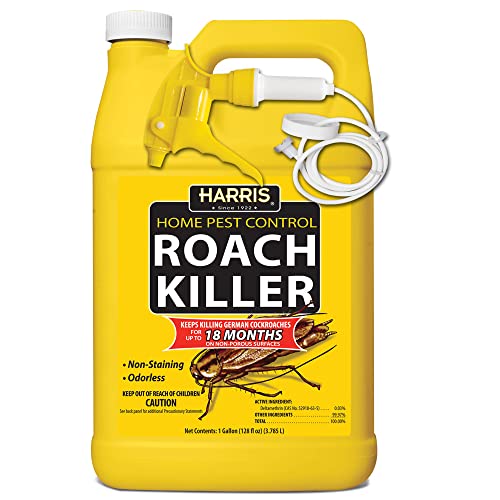
Harris stands apart from the aerosol cans with a one-gallon liquid spray and an extended trigger sprayer. The maker says the formula kills roaches once completely dry and continues killing for weeks after application; its product name claims a 12-month extended residual formula. The gallon size is substantially more volume than the other options, which can suit repeated applications, but may be more than a buyer needs for a few isolated sightings. The maker describes the formula as odorless and non-staining when used according to label directions, and says it is EPA registered for home use.
Bottom line: Choose this when you want a gallon of roach-targeted liquid for repeated applications.
Safer Home Multi-Insect Spray, 24 fl oz
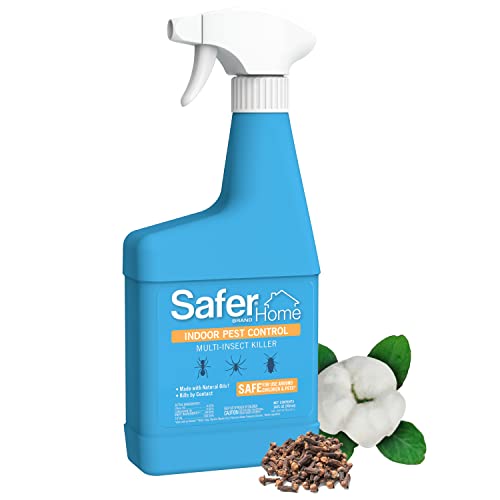
Safer Home is the broad-target choice here: its 24-fluid-ounce spray is labeled for roaches along with ants, flies, spiders, silverfish, fleas, and other insects. The maker says its natural-oil formula includes cottonseed and clove oils and kills ants, flies, and roaches within three minutes. That wider pest list can be useful when several kinds of insects are a concern, but the claim does not give a residual-control period, so do not treat it as a long-lasting barrier. The maker says it is safe around children and pets when used as directed; read and follow the label before applying.
Bottom line: Pick this if you want one spray labeled for roaches and several other household insects.
How to Choose a Roach Spray
Choose by target pest, treatment style, and whether the label makes a residual claim. A contact spray is intended to kill insects it reaches; a residual spray is intended to keep working on treated surfaces after application. In this group, the Raid maker claims up to 13 weeks on indoor surfaces, while the Harris product name claims up to 12 months and its maker says weeks after application. These claims are not directly comparable because the products give different descriptions. If your priority is a botanical active ingredient labeled for roaches, ants, and spiders, the STEM formula matches that need. If you need coverage for several kinds of household insects, check which pests the label names rather than relying on a broad phrase such as multi-insect.
Where to Apply Roach Spray Safely
Apply insecticide only to sites and surfaces permitted by its label; never spray food, dishes, or food-preparation surfaces unless the label explicitly allows that use. Keep people and pets away from treated areas for the period required by the label, even when a product is described as safe around them when used as directed. For sprays with residual claims, the treated surface and application method matter, so do not assume a surface is suitable just because it is indoors. Avoid spraying electrical outlets or appliances, and ventilate the space if the label calls for it. If a roach spray is intended for drying before it kills, such as the Harris maker describes, allow the treated area to dry fully before re-entry as directed.
When Spray Alone May Not Solve a Roach Problem
Spray can kill roaches it reaches, but visible insects may not reveal where they are sheltering or reproducing. Use sticky monitoring traps along walls and under sinks to identify activity; check them after several days and reposition them near fresh signs. Roach baits work differently from sprays: bait is carried or consumed rather than relying on direct spray contact, so avoid spraying over bait placements unless the label says the combination is appropriate. Reduce water and food access by fixing leaks, drying sinks overnight, and storing food in sealed containers. If sightings continue after sanitation and label-directed treatment, or involve multiple rooms, a licensed pest professional can assess the source and treatment plan.
Frequently Asked Questions
How long should I wait before reapplying roach spray?
The interval depends on the product label and the treatment goal. The Raid maker says to retreat indoor surfaces every 13 weeks as necessary to maintain control; do not apply other sprays more often than their labels allow.
Should I spray roach bait at the same time?
Avoid spraying directly on or near bait unless both product labels allow it, because spray may contaminate or deter roaches from reaching bait. Place bait near activity and follow its label for placement and replacement.
Can I spray roach killer on kitchen counters?
Only if the product label specifically permits that surface and use. Keep insecticide off food, dishes, and food-preparation areas unless the label explicitly gives directions for those surfaces.
How can I tell where roaches are entering?
Place sticky monitoring traps along wall edges near plumbing, appliances, and suspected entry points, then check them after several days. Concentrated catches or fresh droppings can help narrow the area to inspect and seal.
What should I do after spraying a roach treatment?
Follow the label’s drying and re-entry directions, and keep children and pets away for the required period. For sprays described as killing after drying, wait until the treated area is fully dry before allowing access.