
Thermacell Tick Control Tubes: 3 Options Compared

Thermacell Tick Control Tubes, 12-Pack suits most people seeking Thermacell tick control tubes because its 12-tube box is specified to protect 1/4 acre. Choose Thermacell Tick Control Tubes, 48-Pack if you need 48 tubes for that same coverage, or DIY Tick Trap Tubes, 20-Pack if you want to supply your own permethrin-treated cotton.
Tick tubes are placed near mouse nesting areas so mice can carry treated nesting material into their nests; they are not a general-purpose yard spray.
We earn a commission if you buy through links on this page. As an Amazon Associate I earn from qualifying purchases. Products are compared on manufacturer specifications, not hands-on testing.
- Best overall: Thermacell Tick Control Tubes, 12-Pack – Its 12-tube box is specified to protect 1/4 acre and provides a straightforward tube-count choice.
- Best for extra tubes: Thermacell Tick Control Tubes, 48-Pack – The 48-tube box is also specified to cover up to 1/4 acre per application.
- Best for DIY setup: DIY Tick Trap Tubes, 20-Pack – It includes 20 tubes and cotton balls, letting you choose and provide the treatment.
| Product | Best for | Tube count | Coverage | Included material | Shop |
|---|---|---|---|---|---|
| Thermacell Tick Control Tubes, 12-Pack | Simple yard coverage | 12 | 1/4 acre | Tick tubes | Check Price on Amazon |
| Thermacell Tick Control Tubes, 48-Pack | Many placement points | 48 | Up to 1/4 acre | Tick tubes | Check Price on Amazon |
| DIY Tick Trap Tubes, 20-Pack | DIY treatment setup | 20 | — | 200 cotton balls | Check Price on Amazon |
Thermacell Tick Control Tubes and Alternatives
Compare the coverage, tube count and setup requirements before choosing a tick-control approach.
Thermacell Tick Control Tubes, 12-Pack
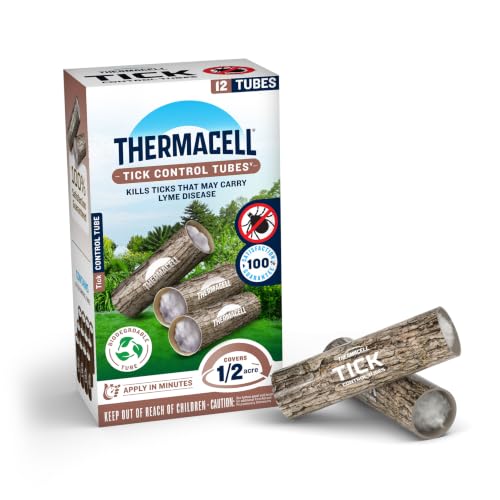
For a smaller tube count with a 1/4-acre coverage, this Thermacell box contains 12 tubes. The maker says to place them within 1 yard of the edge of a mown lawn, near gardens, bushes, fences or places mice may live, and to apply twice a year. That placement guidance makes this option suited to people treating a yard perimeter and likely mouse habitat rather than scattering tubes uniformly across open lawn. The box does not include a tube-spacing rule, so confirm the recommended placement pattern for your yard before setting them out.
Bottom line: Choose this for a 1/4-acre treatment when a 12-tube box fits your placement plan.
Thermacell Tick Control Tubes, 48-Pack

The 48-tube box provides more placement points than the 12-pack while stating the same coverage of up to 1/4 acre per application. The maker recommends spring and summer applications and placing tubes no more than 10 yards apart near rock walls, wood piles, brush, sheds, gardens and wooded areas that attract mice. That spacing makes this format useful when a yard has many separate edge habitats to cover. A larger count does not increase the treated area, so choose it for the layout and placement density rather than assuming it covers more ground.
Bottom line: Choose this when you want more tubes for placement around multiple mouse habitats.
DIY Tick Trap Tubes, 20-Pack

This DIY kit differs from the Thermacell options because the package supplies 20 craft-paper tubes and 200 cotton balls, but no permethrin; you must obtain and apply the treatment yourself. Its instructions describe setting treated cotton near wood piles, stone walls, sheds or brush so mice can use it for nest lining. The maker identifies 10 large and 10 small tubes, giving flexibility around different placement spots. The tradeoff is additional preparation and chemical handling, so this suits buyers comfortable following the separate treatment product’s label. Keep treated cotton and chemicals away from children and pets.
Bottom line: Choose this if you prefer assembling and treating cotton yourself.
How tick tubes work
Tick tubes use mouse nesting behavior to target ticks where young ticks commonly encounter their hosts. Mice collect cotton from tubes and carry it to nests; when cotton is treated with an appropriate acaricide, the intended target is ticks on mice rather than people or pets walking across a lawn. Ticks can also use other hosts, so tubes are one part of yard tick management, not a guarantee of tick-free outdoor space. Focus placement near mouse habitat such as brush, stone walls, wood piles and sheds, rather than putting every tube in open grass. Keep any treated material contained and follow the treatment product label, especially around pets and wildlife.
How to choose tube quantity and placement
Place tick tubes at habitat edges and near mouse activity, because mice are more likely to encounter nesting material in cover than on exposed lawn. For the 48-pack, the maker advises no more than 10 yards between tubes, and Thermacell recommends placing them within 1 yard of a mown-lawn edge for the 12-pack. A useful decision rule is to map the brush, fences, garden margins and wood piles first: if those points require more placements than your chosen count allows, choose a higher-count format or cover fewer priority areas. Treating a quarter-acre does not mean every square foot needs a tube.
Tick tubes compared with yard sprays
Tick tubes and broad-area sprays work differently: tubes aim to deliver treated nesting cotton through mice, while sprays are applied across vegetation or surfaces according to a pesticide label. Tubes make the most sense where mice nest and forage; they are less suited to a wide, open lawn without edge cover. The Thermacell products here are preassembled tube options, while the DIY kit requires the buyer to add permethrin. A spray may involve different coverage and application equipment, so do not treat the formats as interchangeable. In every case, use only a pesticide registered for the intended site and follow its label directions.
| Need | Approach | Key consideration |
|---|---|---|
| Mouse habitat along yard edges | Tick tubes | Place near cover and nesting areas |
| DIY choice of treatment | Empty tubes and cotton | Supply and apply a label-approved treatment |
| Broad vegetation treatment | Yard spray | Use only as its label directs |
Safety and treatment timing
Follow the pesticide label whenever cotton is treated, because the chemical—not the paper tube—sets the rules for handling, placement and exposure. Permethrin is highly toxic to cats while wet, so keep cats away from treated surfaces and materials until the label says they can return; never assume that a claim about the finished tube applies to a separately prepared DIY treatment. Thermacell says its tubes are applied twice yearly, and the 48-pack specifies spring and summer; timing for other products should follow their own label. Store unused tubes and treatment products securely, and do not place materials where children can handle or chew them.
Frequently Asked Questions
Do tick tubes eliminate every tick in a yard?
No, tick tubes target ticks associated with mice and do not remove every tick or host from a property. Pair them with habitat management, such as keeping leaf litter and brush away from frequently used areas.
Where should tick tubes go in a yard?
Place tubes near mouse habitat, including brush, wood piles, rock walls, sheds and garden edges rather than in the middle of open lawn. For the 48-pack, Thermacell recommends spacing tubes no more than 10 yards apart.
How often should Thermacell tick tubes be applied?
Thermacell says to apply its tubes twice a year; the 48-tube product specifies spring and summer. Follow the instructions for the exact package because timing can differ by product.
Are DIY tick tubes ready to use?
No, the 20-pack DIY kit includes empty tubes and cotton balls, but no permethrin. The buyer must supply and apply a suitable treatment according to its label before placing the tubes.
Can cats be near permethrin-treated cotton?
Keep cats away from permethrin while it is wet, because permethrin is highly toxic to cats during that period. Follow the pesticide label for handling and for when treated materials or areas are safe to approach.