
Koprez Knee Compression Sleeve: Fit and Support Compared

Koprez Pull-On Knee Compression Sleeve is the closest match for most shoppers seeking a Koprez knee compression sleeve because it is a straightforward pull-on design with a silicone grip. Choose Koprez Adjustable Knee Compression Sleeve instead if you want crossing straps for adjustment, or consider Copper Knee Supports with Straps, 2-Pack if you want a two-pack and a copper-blend knit.
A knee compression sleeve is a fitted fabric support worn over the joint; it is not a substitute for a medical evaluation when knee pain is severe or persistent.
We earn a commission if you buy through links on this page. As an Amazon Associate I earn from qualifying purchases. Products are compared on manufacturer specifications, not hands-on testing.
- Best overall: Koprez Pull-On Knee Compression Sleeve – The pull-on sleeve has an inner silicone grip and a Large size.
- Best for adjustable support: Koprez Adjustable Knee Compression Sleeve – Crossing straps distinguish this Koprez option from the pull-on design.
- Best for a two-pack: Copper Knee Supports with Straps, 2-Pack – The copper-blend sleeves are sold as a pair and include straps.
| Product | Best for | Design | Size | Pack | Shop |
|---|---|---|---|---|---|
| Koprez Pull-On Knee Compression Sleeve | Simple pull-on fit | Pull-on; silicone grip | Large | 1 sleeve | Check Price on Amazon |
| Koprez Adjustable Knee Compression Sleeve | Strap adjustment | Crossing straps | XXXXX-Large | 1 sleeve | Check Price on Amazon |
| Copper Knee Supports with Straps, 2-Pack | Two sleeve set | Knit with straps | Medium | 2 sleeves | Check Price on Amazon |
Koprez Knee Compression Sleeves
Compare the pull-on and strap-adjustable designs by how they fit, fasten, and come packaged.
Koprez Pull-On Knee Compression Sleeve
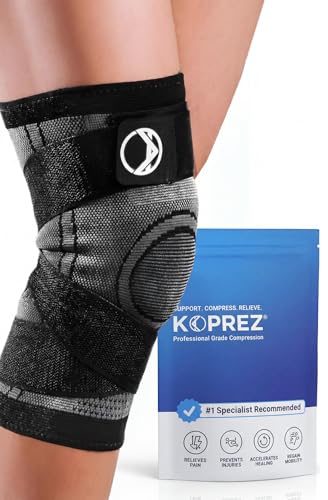
Koprez Pull-On Knee Compression Sleeve is the pull-on Koprez option, while the other Koprez model adds crossing straps. The black sleeve weighs about 0.22 lb and comes in Large. The maker says its breathable, lightweight fabric provides compression while allowing range of motion, and that an inner silicone grip helps hold it in place. That design suits someone who wants a sleeve without wraparound fastening. The size shown here is Large, so buyers outside that size should use the maker’s size chart before ordering rather than assume a close fit will compress properly.
Bottom line: Pick this if you want a pull-on sleeve with an inner grip and the Large size fits.
Koprez Adjustable Knee Compression Sleeve
Koprez Adjustable Knee Compression Sleeve differs from the pull-on style by adding crossing straps, making it the Koprez choice for shoppers who prefer an adjustable fastening. The black sleeve weighs about 0.57 lb and is identified as XXXXX-Large. The maker describes graduated compression and breathable support for walking, work, workouts, sports, and daily wear. Its strap design may be useful when a simple pull-on fit is not the preference, but the size label is unusual; confirm its meaning and fit against the maker’s chart before choosing it. Do not infer a size range from the label alone.
Bottom line: Choose this if crossing straps are a priority and the size label matches your measurements.
Copper Knee Supports with Straps, 2-Pack

Copper Knee Supports with Straps, 2-Pack is the non-Koprez alternative and the only two-pack here, with black-and-copper coloring, a Medium size, and adjustable straps. The maker says the 3D-knitted nylon fabric incorporates copper ions and describes it as moisture-wicking. The product also contains a small amount of latex, an important distinction for anyone with a latex allergy; its maker advises those with latex or silicone allergies not to use it. The thigh measurement and size chart are relevant to choosing this style, so compare your measurement with its chart rather than relying on the Medium label alone.
Bottom line: Consider this if you want two strap-adjustable sleeves and can use a latex-containing product.
How to choose a knee compression sleeve
Choose by fit, fastening, and how much of the joint the garment covers. A sleeve without straps pulls on like a tube; a strap model can be tightened or repositioned, but takes more adjustment. A properly fitted sleeve should feel snug without causing numbness, tingling, or a change in foot color or temperature; remove it if those symptoms occur. Knee sleeves do not replace a brace prescribed for a specific injury or instability. For a choice between these styles, use this quick guide.
| Need | Design to consider | Trade-off |
|---|---|---|
| Simple application | Pull-on sleeve | Fit depends on the selected size |
| Adjustable fastening | Crossing-strap sleeve | Requires wrapping and adjustment |
| Two sleeves in the set | Two-pack | Check material and size compatibility |
For persistent pain, swelling, or a recent injury, get clinical advice rather than using compression to delay evaluation.
How to measure for a knee sleeve
Measure the thigh circumference at the point specified by the sleeve’s size chart; many sleeve charts use a point several inches above the kneecap, but the exact location differs by maker. Keep the tape level and snug, not tight, and take the measurement while standing with the leg relaxed. If your measurement falls between sizes, use that maker’s sizing rule rather than assuming a tighter sleeve is better. A sleeve that rolls, slides, or produces pins-and-needles is a poor fit. Check both the chart’s measurement location and the size label before ordering, especially when a label is unusual or the intended size is not apparent.
Compression sleeves and straps compared
Pull-on sleeves and wrap-style supports differ mainly in how they secure around the knee. A sleeve provides continuous fabric contact and generally relies on its stretch and sizing for fit; straps allow localized tightening but can create pressure points if pulled unevenly. Neither construction guarantees a particular level of support, and marketing phrases such as “medical-grade” do not identify a standardized compression class by themselves. For sports use, check that the garment does not restrict comfortable bending, and stop wearing it if it causes numbness or pain.
Wearing and caring for a knee sleeve
Put a sleeve on with the knee aligned in its intended position, smooth out folds, and keep any grip material against the skin as designed. Folds or a rolled edge can concentrate pressure, while an overly tight garment can interfere with circulation. Follow the garment’s care label for washing and drying; heat can damage elastic fibers and silicone grip components. Let a damp sleeve dry fully before storing it, and inspect seams and grip areas for stretching, tears, or peeling. Replace a sleeve that no longer stays in position or has lost its elastic fit, since worn fabric may not maintain the same feel.
Frequently Asked Questions
How tight should a knee compression sleeve feel?
A knee compression sleeve should feel evenly snug without numbness, tingling, pain, or a change in foot color or temperature. Remove it if those symptoms appear, and reassess the size.
Where should I measure my thigh for a knee sleeve?
Use the exact point named by the sleeve’s size chart; many charts measure several inches above the kneecap. Keep the tape level and snug, then compare the number with that specific chart.
Can I wear a knee sleeve all day?
There is no universal wear duration for every sleeve or person. Take it off if it causes discomfort, numbness, tingling, or skin irritation, and seek medical advice for persistent symptoms.
Should a knee sleeve cover the kneecap?
A conventional sleeve generally covers the knee joint, including the kneecap, but cut and positioning vary by design. Align the sleeve as intended and smooth out folds that create concentrated pressure.
Can I wear a knee sleeve while exercising?
Many sleeves are designed for movement, but comfortable range of motion matters more than wearing one for every activity. Stop if the sleeve restricts bending, slips repeatedly, or causes pain or numbness.