
Soft Jaws for Vice: 4 Magnetic Pads Compared

For most bench-vise work, choose ATLIN 6-Inch Nylon Vise Jaws if your vise has 6-inch jaws; its nylon pads combine a flat face with several groove sizes for round stock. These removable jaw covers cushion workpieces, and the vise jaw width is the key fit measurement.
Choose a 4-inch option if your vise is narrower, or select a different surface when you mainly clamp flat parts. Magnetic pads position on the vise, but they are not a substitute for secure workholding under heavy machining loads.
We earn a commission if you buy through links on this page. As an Amazon Associate I earn from qualifying purchases. Products are compared on manufacturer specifications, not hands-on testing.
- Best overall: ATLIN 6-Inch Nylon Vise Jaws – Its 6-inch nylon pads offer a flat face and multiple specified groove sizes.
- Best for two surface styles: WORKPRO 4-Inch TPU Pads, Two Pairs – The four-piece set pairs multi-groove pads with standard waffle-surface pads.
- Best for hex stock: TRISENSE 4-Inch Aluminum and Rubber Jaws – Its V-shaped face and ledge are designed to hold round or hex parts.
| Product | Best for | Jaw width | Material | Surface / attachment | Shop |
|---|---|---|---|---|---|
| ATLIN 6-Inch Nylon Vise Jaws | 6-inch bench vises | 6 in | Nylon | Multi-groove; 3 magnets | Check Price on Amazon |
| WORKPRO 4-Inch TPU Pads, Two Pairs | Mixed flat stock | 4 in | TPU | Waffle and multi-groove; magnetic | Check Price on Amazon |
| DEF 4-Inch Nylon Vise Jaw Pads | Flat and round parts | 4 in | Nylon | Flat and multi-groove; 4 magnets per pad | Check Price on Amazon |
| TRISENSE 4-Inch Aluminum and Rubber Jaws | Round or hex stock | 4 in | Aluminum and rubber | V-shaped face and ledge; magnetic | Check Price on Amazon |
Soft Jaws for Vice
Match the pad width to your vise and the contact surface to the shape of your workpiece.
ATLIN 6-Inch Nylon Vise Jaws
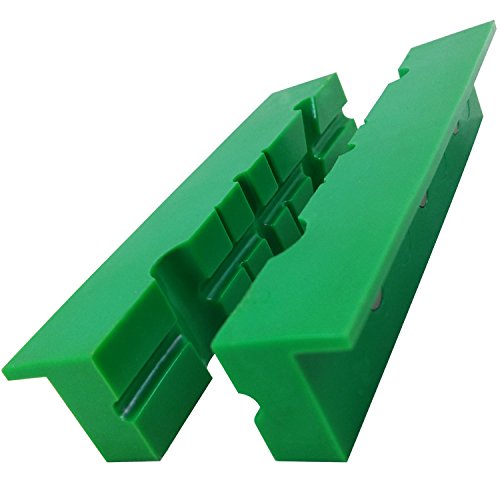
For a 6-inch vise, ATLIN 6-Inch Nylon Vise Jaws stands out with defined groove dimensions as well as a flat nylon surface. The pair measures 6 inches long and attaches with three magnets; its grooves include a 3/8-inch, 60-degree groove and vertical grooves in several sizes. That makes it a useful match for woodworking, jewelry work and plumbing when the workpiece benefits from a shaped contact surface. The main limitation is fit: these pads are intended for 6-inch vises, so measure the jaw width rather than assuming they will suit a smaller bench vise.
Bottom line: Pick this pair when your vise has 6-inch jaws and you need several groove sizes.
WORKPRO 4-Inch TPU Pads, Two Pairs

Unlike the single-surface options, WORKPRO 4-Inch TPU Pads, Two Pairs includes two pairs: one with a multi-groove face and one with a standard waffle surface. The pads are TPU and magnetic, giving you a choice between supporting cylindrical pieces in grooves and gripping flatter pieces across the waffle pattern. The set contains four pads in total, which suits a workshop that switches between different shapes. Its length is 4 inches, so it is not the pick for a 6-inch vise; check jaw width before choosing it.
Bottom line: Choose this set if you want separate grooved and waffle faces for varied workpieces.
DEF 4-Inch Nylon Vise Jaw Pads
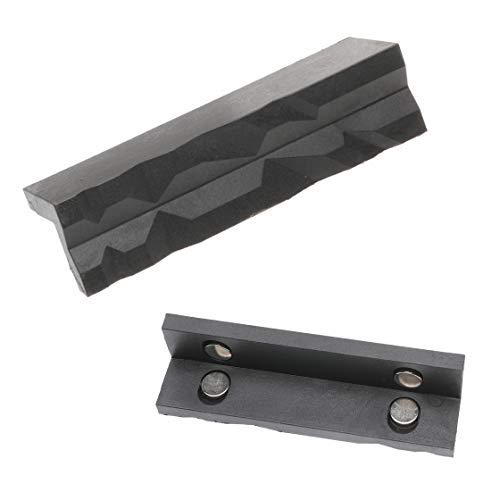
DEF 4-Inch Nylon Vise Jaw Pads uses nylon pads with a flat face on one side and a multi-groove face on the other, making it easy to switch contact shapes without changing the pad set. Four magnets per pad hold the covers in place on the vise, and the maker describes them for flat or round items and bench-vise or drill-press use. They suit hobby and workbench tasks where protecting the surface matters. The 4-inch width limits fit, so measure the vise jaws before selecting these instead of a wider pair.
Bottom line: Pick these for a 4-inch vise when you need reversible flat and grooved faces.
TRISENSE 4-Inch Aluminum and Rubber Jaws

For round or hex stock, TRISENSE 4-Inch Aluminum and Rubber Jaws differs from the nylon options with an aluminum body, rubber contact surface, V-shaped face and supporting ledge. The 4-inch pair has six embedded magnets and is described for flat or round surfaces, including tubing and threaded items. That shaped support can help center pieces that would roll against a flat face. These pads are not interchangeable with every vise width, and their 4-inch size makes them a poor match for jaws wider than the pad.
Bottom line: Choose this pair for a 4-inch vise when the V-shaped support suits your stock.
How to Choose Soft Jaws for a Vice
Choose soft jaws by matching their width to the vise and their face to the workpiece. Vise size is commonly given as jaw width; measure across the fixed jaw before buying, and avoid pads narrower than the contact area you need. Flat faces suit flat stock, while V-grooves support round work and reduce the tendency to roll. For frequent changes between shapes, reversible or multi-face pads reduce setup swaps. A measurable rule: if the workpiece is round, choose pads with a V-groove rather than relying on a flat face alone. The pad material also matters: nylon and TPU provide a softer contact than bare metal, while construction and face geometry differ between models.
Magnetic Pads Versus Bolt-On Soft Jaws
Magnetic jaw covers are designed to stay positioned on a compatible vise, while bolt-on jaws attach mechanically and are commonly used for more rigid workholding. Magnetic pads are convenient for occasional clamping and quick removal; magnets should not be treated as the force holding a workpiece during heavy milling or drilling. For machining, secure the workpiece directly in a properly mounted vise and use jaw inserts intended for that load and setup. A useful decision rule is to use magnetic pads for protective, light-duty clamping and select mechanically secured tooling for operations that generate cutting forces. Pad material does not make a vise safer than its mounting, workpiece grip or operating limits.
These common options differ by contact shape and attachment:
| Type | Useful for | Key consideration |
|---|---|---|
| Flat soft face | Flat, delicate surfaces | May not center round stock |
| V-groove face | Round or hex stock | Match groove size to the part |
| Waffle face | General flat clamping | Surface pattern differs from a smooth pad |
Fit and Contact Shape for Vise Jaw Pads
Measure the vise jaw width and compare it with the pad width before choosing a pair. Jaw widths commonly range from about 4 to 6 inches on bench vises, but the actual vise measurement—not a general size range—decides fit. Round bars and tubing need a groove wide enough to seat them without rocking; flat stock generally benefits from an even, broad contact face. Avoid clamping a part so high above the jaws that it can tip under pressure. For a 6-inch vise, select a pad set made for that width; for a 4-inch vise, a 4-inch pad is the closer match.
Using Soft Vise Jaws Safely
Soft jaw covers protect surfaces from direct metal contact, but they do not eliminate the risk of a part slipping or deforming. Tighten only enough to hold the work securely; excessive vise force can crush thin tubing, mark soft materials or bend slender parts. Keep the workpiece supported and seated against the jaw faces, and do not rely on magnetic pads as machine-workholding hardware when drilling or milling. Chips trapped between a pad and the work can scratch a surface or prevent full contact, so clear the jaw faces before clamping. For any operation involving powered cutting, use a firmly mounted vise and a workholding setup appropriate to that operation.
Frequently Asked Questions
How do I measure a vise for soft jaw pads?
Measure the width of the vise jaws across the front face, in inches, then match the pad width to it. A 4-inch pad is not a full-width fit for a 6-inch vise.
Are magnetic vise jaw pads suitable for milling?
Magnetic covers are useful for positioning and protective clamping, but the magnets should not be relied on to resist milling forces. Use a securely mounted vise and workholding suited to the cutting operation.
Which soft jaws work best for round stock?
Choose a V-groove that supports the round part without letting it rock. A flat face alone offers less centering support for round bars or tubing.
Can soft jaw pads prevent vise marks?
Soft nylon or TPU contact faces can reduce direct metal-to-workpiece contact, but they cannot guarantee a mark-free result. Chips or grit trapped between the pad and part can still scratch a finish.
Should vise jaw pads match the full jaw width?
Matching the pad width to the vise jaw width gives the intended coverage. Measure the vise itself, since common bench-vise widths include 4 and 6 inches.