
Aluminum-Free Baking Soda: 5 Options Compared

No specific brand is named for aluminum-free baking soda, so choose by package size and whether the package explicitly makes that claim. 11 lb Food-Grade Baking Soda is the largest option and explicitly says aluminum-free; BioWisdom Aluminum-Free Baking Soda, 1 lb also uses that wording but is marketed for supplement use, so choose a food-focused option if you plan to bake.
Baking soda is sodium bicarbonate, a leavening ingredient that needs an acid in a recipe to release carbon dioxide. Baking powder is a different product, so choose it when a recipe calls for baking powder rather than substituting by name alone.
We earn a commission if you buy through links on this page. As an Amazon Associate I earn from qualifying purchases. Products are compared on manufacturer specifications, not hands-on testing.
- Best overall: 11 lb Food-Grade Baking Soda – The 11-pound package explicitly identifies the baking soda as aluminum-free and food-grade.
- Best for 1-pound size: BioWisdom Aluminum-Free Baking Soda, 1 lb – The 16-ounce package explicitly uses aluminum-free wording, though it is marketed for supplement use.
- Best for 5-pound size: Relative Foods Pure Baking Soda, 5 lb – The 5-pound package is labeled pure sodium bicarbonate for baking, cooking, cleaning, and household use.
| Product | Best for | Package size | Stated use | Aluminum-free claim | Shop |
|---|---|---|---|---|---|
| 11 lb Food-Grade Baking Soda | Bulk baking | 176 oz | Food and household use | Yes | Check Price on Amazon |
| BioWisdom Aluminum-Free Baking Soda, 1 lb | Small package | 16 oz | Cooking and supplement use | Yes | Check Price on Amazon |
| Relative Foods Pure Baking Soda, 5 lb | Five-pound supply | 80 oz | Baking and household use | — | Check Price on Amazon |
| Bob’s Red Mill Baking Soda, 16 oz x 4 | Four-pack pantry | 64 oz total | Baking | — | Check Price on Amazon |
| It’s Just Baking Soda, 20 oz | Baking and cleaning | 20 oz | Baking and household use | — | Check Price on Amazon |
Aluminum-Free Baking Soda Options
Compare package size and intended use, then verify the package claim if aluminum-free labeling is essential to your purchase.
11 lb Food-Grade Baking Soda

For the largest baking-focused supply here, this 176-ounce package explicitly calls its baking soda aluminum-free and food-grade. The maker says it is pure sodium bicarbonate for bread, cookies, cleaning, and deodorizing. Its bulk size suits frequent baking or households that also use baking soda for cleaning. The tradeoff is storage: an 11-pound quantity takes more space than a 1- or 5-pound bag, and it may be excessive for occasional recipes. Keep food-use portions clean and separate from any powder used for household cleaning.
Bottom line: Pick this if you want an explicitly aluminum-free, food-grade bulk package.
BioWisdom Aluminum-Free Baking Soda, 1 lb
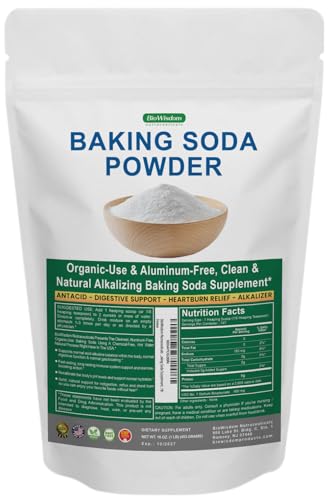
This is the smallest package among the options that explicitly say aluminum-free: 16 ounces. The maker describes a water-only processing method and says the powder is certified for organic use, while also marketing it for cooking and supplement use. That combination may appeal to buyers seeking a small quantity with an explicit claim. However, the product is presented partly as a supplement, and its health-related claims should not be treated as medical advice. For ordinary baking, choose a food-focused package and follow the recipe rather than using baking soda as a remedy.
Bottom line: Choose this for a 1-pound package with explicit aluminum-free wording, not as a treatment.
Relative Foods Pure Baking Soda, 5 lb

Relative Foods offers a 5-pound package, a middle ground between the small pantry bags and the 11-pound bulk option. The maker identifies it as pure sodium bicarbonate with no preservatives or added ingredients, and gives baking, cooking, cleaning, and household use as examples. Kosher certification is also stated. The package information does not establish the explicit aluminum-free claim sought here, so verify the package wording before choosing it for that requirement. It suits buyers who want a larger multipurpose supply and do not need the claim to be confirmed in advance.
Bottom line: Pick this for a multipurpose 5-pound supply if you can verify the claim on the package.
Bob’s Red Mill Baking Soda, 16 oz x 4

Unlike the bulk bags, this option divides the supply into four 16-ounce packages, totaling 64 ounces. Bob’s Red Mill says the baking soda is gluten-free, batch-tested with an ELISA gluten assay, and packaged in a separate gluten-free facility. The maker also describes its role in recipes containing acidic ingredients such as buttermilk, cocoa, molasses, or yogurt. Those gluten-free points do not establish an aluminum-free claim, so check the package if that wording is a requirement. The four-pack suits bakers who prefer smaller containers over one large bag.
Bottom line: Choose this for four smaller baking soda packages, after checking the aluminum-free wording if needed.
It’s Just Baking Soda, 20 oz

At 20 ounces, this package is larger than a single 16-ounce bag but much smaller than the 5- and 11-pound options. The maker identifies it as food-grade sodium bicarbonate and describes baking, cleaning, and deodorizing uses. That range makes it a flexible pantry choice, but its product wording does not make the explicit aluminum-free claim that some buyers seek. Confirm the package wording before relying on it for that requirement. For recipe use, keep the food-grade powder separate from any baking soda you use on household surfaces.
Bottom line: Pick this for a modest food-grade package with household uses, if the package confirms your claim.
How to Choose Aluminum-Free Baking Soda
Start with the ingredient and the package claim: baking soda is sodium bicarbonate, while baking powder is a different leavening product that may include acid salts and starch. Sodium bicarbonate itself contains no aluminum in its chemical formula, but products labeled baking powder can differ by formulation, so do not treat the names as interchangeable. If a recipe names baking soda, use baking soda and check that the package is intended for food use. If explicit labeling matters to you, choose a package that says aluminum-free rather than inferring it from the word “pure.” For a household that bakes only occasionally, a 16- to 20-ounce package avoids storing a bulk supply; regular bakers can compare the 5- and 11-pound options.
Baking Soda Versus Baking Powder
Baking soda needs an acidic ingredient in the recipe to produce carbon dioxide, while baking powder contains both a base and acid ingredients. That difference determines whether a substitution works: replacing one with the other can change rise, flavor, and texture. A recipe with buttermilk, yogurt, molasses, or some cocoa may use baking soda to react with the acid; baking powder is formulated to provide its own acid component. Use the ingredient and quantity the recipe specifies unless you are adapting the full formula. The table compares the main package choices by the decision that matters most: scale and stated use.
| Need | Option | Package size |
|---|---|---|
| Explicit aluminum-free wording and bulk supply | 11 lb Food-Grade Baking Soda | 176 oz |
| Explicit aluminum-free wording in a small package | BioWisdom Aluminum-Free Baking Soda, 1 lb | 16 oz |
| Multipurpose medium-size supply | Relative Foods Pure Baking Soda, 5 lb | 80 oz |
| Several smaller baking packages | Bob’s Red Mill Baking Soda, 16 oz x 4 | 64 oz total |
Choosing a Package Size and Storing It
Choose the package size based on how quickly you will use it: 16 to 20 ounces is a manageable pantry quantity, while 5 or 11 pounds makes more sense for frequent baking or cleaning. Baking soda can absorb moisture and odors, so keep the container tightly closed in a cool, dry place and use a dry spoon. For food use, keep the powder away from cleaning tools and containers to avoid cross-contact with household residues. A large bag is not automatically the right choice if it will sit open for a long time; divide it into clean, airtight containers and label food-use portions clearly. Check the package for handling and storage directions.
Food-Grade and Household Use
Food-grade labeling matters when the powder will go into recipes; a cleaning use alone does not make a product appropriate for food. Baking soda is also sold for deodorizing and surface cleaning, but keep those uses separate from cooking supplies. Avoid using any baking soda as a health treatment based on promotional wording: sodium bicarbonate adds sodium, and medical use can pose risks for some people. If considering it for a health condition or regular supplement use, ask a clinician or pharmacist rather than self-dosing. Choose a clearly food-focused product for baking, and store cleaning portions away from ingredients and utensils.
Frequently Asked Questions
Can baking soda replace baking powder in a recipe?
Not as a direct one-for-one swap: baking soda needs an acid, while baking powder includes an acid component. Use the amount and type named in the recipe unless you adjust the full formula.
Does baking soda itself contain aluminum?
Sodium bicarbonate, the chemical name for baking soda, has no aluminum in its formula. Baking powder is a separate product, so check its ingredient label if you are avoiding aluminum-containing ingredients.
How should I store a large bag of baking soda?
Keep baking soda tightly closed in a cool, dry place because moisture can cause clumping. For an 11-pound supply, clean airtight containers can make it easier to keep food-use portions separate from cleaning portions.
Is food-grade baking soda the same as cleaning baking soda?
The substance may be sodium bicarbonate, but food-grade labeling is the relevant distinction for baking. Keep any powder used on household surfaces separate from ingredients, utensils, and food-storage containers.
Can I use baking soda as a supplement for heartburn?
Do not use baking soda as a self-directed treatment for heartburn or another health condition. Sodium bicarbonate adds sodium and may be unsafe for some people, so ask a clinician or pharmacist before considering medical use.