
Best Head Gasket Sealer for Diesel Engines Compared

THERMAGASKET 24 oz Kit is the strongest match for most diesel owners because its maker specifically says it is engineered for gas and diesel engines. Choose BlueDevil 38386, 1 Quart if you want a 32-ounce alternative that also names diesel compatibility; the other options do not explicitly identify diesel engines.
Head gasket sealers are poured into the cooling system to try to seal coolant leaks without dismantling the engine, but they are not a substitute for diagnosing overheating or severe engine damage.
We earn a commission if you buy through links on this page. As an Amazon Associate I earn from qualifying purchases. Products are compared on manufacturer specifications, not hands-on testing.
- Best overall: THERMAGASKET 24 oz Kit – Its maker explicitly identifies compatibility with both gas and diesel engines.
- Best for a larger bottle: BlueDevil 38386, 1 Quart – The 32-ounce product also names diesel compatibility.
| Product | Best for | Engine compatibility | Package size | Stated seal scope | Shop |
|---|---|---|---|---|---|
| THERMAGASKET 24 oz Kit | Diesel compatibility | Gas and diesel | 24 oz | Head gaskets, blocks, heads | Check Price on Amazon |
| BlueDevil 38386, 1 Quart | Larger package | Gasoline and diesel | 32 oz | Head gaskets, heads, heater cores | Check Price on Amazon |
| Bar’s Leaks HG-1 HEAD SEAL | Coolant compatibility | — | Pack of 1 | Head and intake gaskets, heads, blocks | Check Price on Amazon |
| K-Seal ST3501 Pour & Go, 16 oz | Small leak claims | — | 16 fl oz | Head gaskets, heads, engine blocks | Check Price on Amazon |
| Steel Seal 8-Cylinder | Eight-cylinder engines | — | — | Head gasket crack | Check Price on Amazon |
Head gasket sealers for diesel engines
These options differ in how clearly they identify diesel compatibility and the leaks they aim to seal.
THERMAGASKET 24 oz Kit
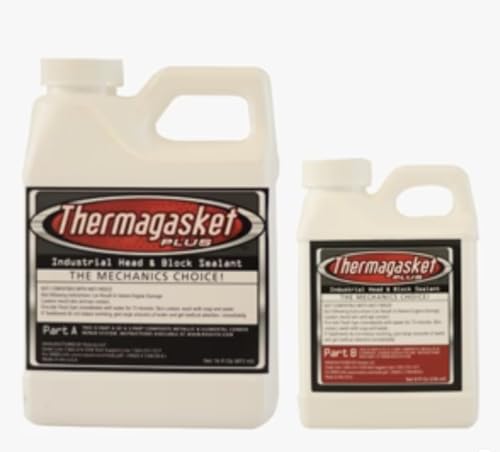
THERMAGASKET 24 oz Kit is the clearest diesel-specific match: its maker says the kit is engineered for gas and diesel engines, including cars, trucks, and SUVs. The 24-ounce kit is described as a dual-part sealant for head gaskets, engine blocks, and cracked heads, with a claimed fast-setting repair. That makes it relevant when diesel compatibility is the first filter. The claim of a permanent repair is the maker’s, not a guarantee for every failure. It may not suit owners who need a product whose instructions address their exact engine and cooling-system condition.
Bottom line: Choose it when explicit diesel compatibility is your deciding criterion.
BlueDevil 38386, 1 Quart

BlueDevil 38386, 1 Quart stands apart with a 32-ounce package and a broad list of targeted leak locations: head gaskets, warped or cracked heads, heater cores, and freeze plugs. Its maker says it is compatible with gasoline and diesel engines, so it is another directly relevant option for diesel owners. The formula is described as containing no solid or particulate matter, which distinguishes it from a product whose materials are otherwise characterized. The tradeoff is that the specifications do not give a cylinder-count limit; buyers with an engine-specific requirement should confirm compatibility before choosing it.
Bottom line: Choose it if a 32-ounce package and broader listed leak scope matter.
Bar’s Leaks HG-1 HEAD SEAL

Bar’s Leaks HG-1 HEAD SEAL is differentiated by its compatibility with all types of 50/50 coolant, including silicate and non-silicate formulas, and its maker says no flushing is required. It targets head and intake gasket leaks as well as warped or cracked heads and blocks. The maker recommends it only when the engine can idle for 15 minutes without overheating or requiring added coolant, a useful condition to screen before considering a sealant. Diesel compatibility is not explicit in the specifications, so this is a less direct match than options that name diesel engines.
Bottom line: Consider it only after confirming it is suitable for your diesel engine.
K-Seal ST3501 Pour & Go, 16 oz

K-Seal ST3501 Pour & Go, 16 oz is the only option with a maximum leak size: its maker says ceramic micro-fibres can seal holes and cracks up to 0.64 mm. The 16-ounce, one-step product is described as compatible with all types of coolant and a range of vehicle engine materials and heavy-duty machinery. Its fields do not explicitly identify diesel engines, so that compatibility needs confirmation for a diesel application. The maker also warns that bubbles at the radiator or coolant reservoir can indicate an over-pressurized system, a condition that may keep a stop-leak product from sealing.
Bottom line: Consider it for the leak-size claim only after confirming diesel suitability.
Steel Seal 8-Cylinder

Steel Seal 8-Cylinder differs from the other options by naming an 8-cylinder engine fit, making cylinder count its key selection point. Its maker describes a pour-in product intended to seal a head-gasket crack and claims a permanent seal. That gap matters especially for a diesel owner, so verify suitability for the specific engine before treating this as a candidate. The scope is narrower than products that also name cracked heads, blocks, or other cooling-system leaks.
Bottom line: Choose it only if the engine is 8-cylinder and diesel suitability is confirmed.
How to choose a diesel head gasket sealer
Start with explicit diesel compatibility, then match the product’s leak scope to the suspected failure. Of these options, two expressly name diesel engines; others need a compatibility check before use in a diesel. A sealer is intended for coolant-side leaks, not a combustion, oiling, or structural problem that requires engine repair. Severe overheating, rapid coolant loss, or coolant mixed with oil calls for diagnosis rather than relying on a pour-in fix. Product claims such as permanent sealing are maker claims, not a promise that a damaged engine will be restored.
Use this quick screen before selecting a product:
| Buyer need | What to prioritize |
|---|---|
| Diesel compatibility | Explicit gas-and-diesel wording |
| Known leak size | A maximum opening size |
| Coolant type concern | Named compatibility with your coolant |
If compatibility is absent, confirm it for the exact engine before opening the cooling system.
When a sealer is a poor fit
A head gasket sealer is a poor choice when the engine cannot maintain coolant or idle without overheating; the maker of one product specifically sets a 15-minute idle condition. Stop driving an engine that is overheating, because continued operation can worsen damage. Persistent bubbling in the radiator or reservoir can point to an over-pressurized system, and one maker warns that condition can prevent its product from sealing. A cracked block, warped head, or failed gasket can require mechanical repair; a sealant’s scope does not establish that every failure is repairable in place.
Do not open a hot cooling system. Coolant is pressurized when hot and can cause serious burns; wait until the engine is fully cool before inspecting a cap or adding product. Follow vehicle-specific cooling-system instructions for the product selected.
Diesel sealer fit and engine size
Diesel compatibility and engine fit are separate checks: a product can name diesel engines without naming every configuration. One option here is specifically labeled for 8-cylinder engines, but its diesel fit is not clear from its specifications. Meanwhile, two others explicitly describe gas-and-diesel compatibility. Match the product to the vehicle’s engine configuration rather than assuming a broad vehicle category covers every diesel.
For a decision rule, if your engine is not 8-cylinder, do not select an 8-cylinder-specific product. If it is 8-cylinder, still confirm diesel compatibility and the product’s complete procedure. Package volume alone does not prove fit or effectiveness; a larger bottle is not necessarily the right option for a particular cooling system.
Cooling-system preparation and common mistakes
Preparation depends on the exact formula: one option says it works with 50/50 coolant without flushing, while other products give different compatibility claims. Do not transfer one product’s preparation rule to another. Confirm that the cooling system’s coolant type and condition fall within the chosen product’s compatibility, and use the prescribed amount and procedure for that formula.
A common mistake is treating a sealer as routine maintenance or as a fix for any overheating cause. A thermostat, radiator, fan, water pump, or combustion leak can cause similar symptoms, and a sealer does not diagnose the cause. Never remove a radiator cap while hot; let the engine cool completely and keep coolant away from children and pets.
Frequently Asked Questions
How do I know if a sealer is suitable?
Check diesel compatibility, the leak type, and engine configuration before use. One product’s maker gives a practical screen of idling for 15 minutes without overheating or needing coolant added.
What does bubbling in the coolant reservoir mean?
Bubbling can indicate an over-pressurized cooling system, and one maker warns that this may prevent its sealer from working. Persistent bubbling warrants diagnosis instead of repeated sealer attempts.
Can I add head gasket sealer to hot coolant?
No; wait until the engine is fully cool before opening the cooling system. Hot coolant is pressurized and can cause serious burns.
Does a larger bottle mean a better repair?
No; package size does not establish suitability or effectiveness. Match diesel compatibility and stated leak scope to the engine and suspected fault first.