
Dog House With Air Conditioner: Cooling Options Compared

For a dog house that needs active cooling, the Movejoy portable unit is the closest match because it uses a 3,000-BTU compressor and is intended for dog houses under 80 square feet. The XL ice-pack cooler is a different, passive option for pets under 38.5 pounds; the other choices are outdoor shelters without an included cooling system.
Choose a standalone AC unit if you need compressor cooling and can supply power; choose a conventional shelter only if you will handle cooling separately.
We earn a commission if you buy through links on this page. As an Amazon Associate I earn from qualifying purchases. Products are compared on manufacturer specifications, not hands-on testing.
- Best overall: Movejoy 3,000-BTU Portable AC – A 3,000-BTU rotary-compressor unit designed for dog houses under 80 square feet.
- Best for small pets: Foldable Ice-Pack Pet Cooler, XL – The XL insulated cooler includes 10 ice packs and is sized for pets under 38.5 pounds.
- Best for extra-large dogs: 57-Inch Elevated Resin Dog House – The elevated resin shelter measures 57 by 47 by 50 inches and has a 14-square-foot interior.
| Product | Best for | Cooling method | Capacity or fit | Dimensions | Shop |
|---|---|---|---|---|---|
| Movejoy 3,000-BTU Portable AC | Active cooling | Rotary compressor | Under 80 sq ft | 20 × 11 × 12 in | Check Price on Amazon |
| Foldable Ice-Pack Pet Cooler, XL | Small pets | Ice-pack cooling | Under 38.5 lb | 28.3 × 15 × 16.5 in* | Check Price on Amazon |
| 57-Inch Elevated Resin Dog House | Extra-large dogs | None included | 14 sq ft interior | 57 × 47 × 50 in | Check Price on Amazon |
| Ketive 55-Inch Wooden Dog House | Large breeds | None included | About 9.36 sq ft interior | 55.1 × 33.1 × 34.8 in | Check Price on Amazon |
| SUHPETNS Wood Dog House with Terrace | Sheltered porch | None included | — | 44.2 × 44.6 × 44.6 in | Check Price on Amazon |
Dog House With Air Conditioner Options
These options range from a standalone compressor AC unit to passive cooling and conventional shelters that require a separate cooling plan.
Movejoy 3,000-BTU Portable AC

Unlike the shelters here, this is a portable compressor air conditioner intended for a dog house or other small enclosed space. The maker says it provides 3,000 BTU of cooling and draws 400 watts; it can run from a portable power station or shore power. At the draw, a 1,000-Wh station provides roughly 2.5 hours before accounting for conversion losses or other loads. It suits owners who want active cooling and can manage the electrical supply. Its limitation is runtime: a 500-Wh station is about 75 minutes by the maker’s estimate, so it is not an all-night solution on a small battery.
Bottom line: Choose this when you need compressor cooling and have a suitable power source.
Foldable Ice-Pack Pet Cooler, XL

This is a compact insulated pet cooler rather than a compressor air conditioner: its cooling comes from reusable ice packs, and the XL size is designed for pets under 38.5 pounds. The package includes 10 self-absorbing ice packs, an aluminum-foil plate, and two cotton bags. The maker claims 8 to 12 hours of cooling effect, but actual cooling depends on ambient heat and ice-pack condition. It suits a small pet needing a portable resting space, not a large dog or someone seeking powered temperature control. Confirm the dimensions before choosing: the size figures in the specifications differ.
Bottom line: Pick this for a small pet if passive ice-pack cooling is sufficient.
57-Inch Elevated Resin Dog House

This shelter stands apart from the wood houses with its elevated floor and resin construction, but it does not include air conditioning. Its 14-square-foot interior and 57-by-47-by-50-inch exterior make it the largest measured shelter among the conventional dog houses here. The product describes thick walls, an air vent, and UV-resistant, weatherproof protection. It suits owners who need a roomy outdoor shelter and plan to address heat separately. Because an AC unit is not part of this option, it is not a ready-made cooled dog house; measure the intended space and account for airflow before adding any cooling equipment.
Bottom line: Choose this for a larger dog when you need an elevated shelter and will plan cooling separately.
Ketive 55-Inch Wooden Dog House

This wooden shelter differs from the cooling options because it is built for outdoor protection rather than temperature control. Its fir-wood construction has an iron frame, asphalt roof, openable top, removable floor, and vented window; a PVC door curtain is intended to reduce cold drafts. The 55.1-by-33.1-by-34.8-inch house provides about 9.36 square feet of interior space for a large dog. It may suit an owner prioritizing shelter and access for cleaning. It has no included AC, so it needs a separate, appropriately sized cooling plan in hot weather.
Bottom line: Pick this for a large dog when weather shelter matters more than built-in cooling.
SUHPETNS Wood Dog House with Terrace
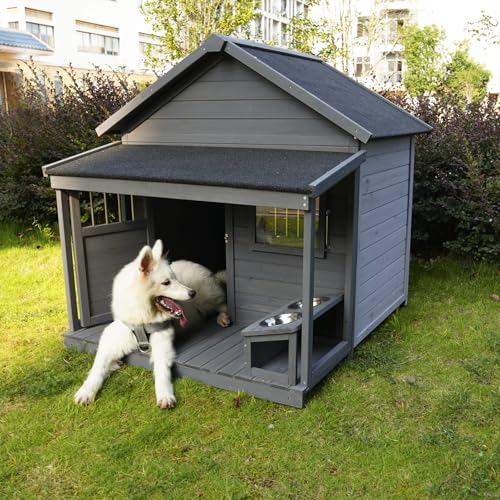
The covered terrace is the distinguishing feature of this wooden outdoor shelter; it provides a sheltered porch area in addition to the enclosed house. The structure has an asphalt roof, raised floor with removable base plate, and lockable wooden doors. Its dimensions are 44.2 by 44.6 by 44.6 inches, making it a different fit from the longer 55- and 57-inch houses. This suits owners seeking a porch-style outdoor shelter for a medium or large dog. It is not air-conditioned, so choose it only if you can provide shade and a separate cooling solution when needed.
Bottom line: Choose this for a porch-style shelter when cooling will be handled separately.
How to choose a dog house with air conditioning
Start by separating active compressor cooling from passive ice-pack cooling: the Movejoy is a compressor unit, while the foldable cooler relies on frozen packs. Match the cooling method to the space and power you have. The Movejoy is intended for dog houses under 80 square feet and draws 400 watts, so check that your power station can support both its load and the runtime you need. A 1,000-Wh station is roughly 2.5 hours at that draw before conversion losses. A conventional dog house is only shelter; do not treat ventilation, raised flooring, or a weatherproof roof as air conditioning. For any enclosed shelter, allow a safe path for exhaust and airflow rather than sealing the dog inside with a cooling device.
Size and fit for dog houses with AC
Measure the usable interior floor area, doorway, and the dog’s standing and turning space before choosing a shelter or cooling unit. The Movejoy is specified for spaces under 80 square feet, so a 14-square-foot dog house falls within that area limit; the limit does not guarantee a particular temperature because heat gain, shade, and ventilation also matter. For a portable cooler, use the pet weight limit rather than assuming the XL label means it fits a large-breed dog: this XL option is for pets under 38.5 pounds. Keep cooling equipment stable and keep cords and openings out of a dog’s chewing or snagging path. A tight shelter can restrict airflow, while excessive open area can make cooling less effective.
Compressor AC versus ice-pack cooling
A compressor unit actively removes heat and needs electricity; an ice-pack shelter stores cooling in frozen packs and needs no powered compressor. The practical choice turns on duration and access to power: a 400-watt draw uses about 400 Wh each hour, while passive packs gradually warm and need refreezing. The maker claims 8 to 12 hours of cooling effect for the XL cooler, but that is not equivalent to thermostat-controlled air conditioning. Use a compressor for a compatible small enclosure when sustained active cooling is necessary and power is available. Use an ice-pack cooler for a small pet and portable rest space. Neither product’s specifications establish a safe indoor temperature for a particular dog, so monitor conditions rather than relying on a cooling-time claim.
Keeping dogs safe in hot weather
Never rely on a dog house or portable AC alone as protection from dangerous heat. Dogs can develop heat stress quickly, especially in hot, humid, or poorly ventilated spaces; provide fresh water, shade, and a way to leave the cooled area. Keep electrical equipment dry and follow its electrical and ventilation requirements; water, damaged cords, or blocked airflow raise risk. A common mistake is choosing a shelter that fits the dog but not the cooling setup, including any required clearance or exhaust path. Another is estimating runtime from a battery’s headline capacity without allowing for power-conversion losses and other devices. If a dog shows heavy panting, weakness, confusion, or collapse, move it to a cooler place and contact a veterinarian promptly.
Frequently Asked Questions
Can a portable AC cool a dog house?
Yes, a portable AC can cool a compatible dog house when its capacity, airflow, and power supply suit the space. The Movejoy unit is intended for dog houses under 80 square feet and draws 400 watts; use a safe exhaust and airflow arrangement.
How long will a 1,000-Wh power station run the AC?
At a 400-watt draw, 1,000 Wh works out to about 2.5 hours before conversion losses. Real runtime can be shorter if the station also powers other equipment or cannot sustain the AC’s input requirements.
Do ice packs count as air conditioning for dogs?
No, ice packs provide passive cooling rather than compressor air conditioning. The XL cooler’s maker claims 8 to 12 hours of cooling effect, but pack temperature and surrounding heat affect performance.
What size dog house works with this AC unit?
The Movejoy is intended for spaces under 80 square feet, but usable floor area alone does not determine cooling performance. Consider the shelter’s heat exposure, airflow, and exhaust arrangement as well as its area.
Is an outdoor dog house enough in hot weather?
No, an outdoor shelter alone does not ensure safe conditions in heat. Provide shade, fresh water, ventilation, and access to a cooler location; a raised floor or weatherproof roof is not active cooling.