
Conditioner for Faux Leather: 5 Options Compared

For faux leather, TriNova Faux Leather Cleaner & Conditioner is the direct match because its name and features explicitly cover faux leather and it combines cleaning with conditioning. Choose Chemical Guys Leather Quick Detailer if you want a spray that also names faux leather; the other options are framed for leather, so verify compatibility with your specific surface before use.
We earn a commission if you buy through links on this page. As an Amazon Associate I earn from qualifying purchases. Products are compared on manufacturer specifications, not hands-on testing.
- Best overall: TriNova Faux Leather Cleaner & Conditioner – Explicitly names faux leather and combines cleaner and conditioner in an 18-ounce bottle.
- Best for spray application: Chemical Guys Leather Quick Detailer – A 16-ounce spray product whose features explicitly include synthetic and faux leather.
| Product | Best for | Stated surface fit | Bottle size | Format | Shop |
|---|---|---|---|---|---|
| TriNova Faux Leather Cleaner & Conditioner | Direct faux-leather care | Faux leather, vinyl | 18 fl oz | Cleaner and conditioner | Check Price on Amazon |
| Chemical Guys Leather Quick Detailer | Faux-leather spray | Natural, synthetic, faux | 16 fl oz | Spray | Check Price on Amazon |
| Weiman Leather Cleaner & Conditioner | Leather furniture care | Leather surfaces | 12 fl oz | Cleaner, conditioner, protector | Check Price on Amazon |
| Bickmore Bick 4 Leather Conditioner | Leather goods | Leather products | 8 oz | Conditioner and cleaner | Check Price on Amazon |
| Lexol All Leather Conditioner | Finished leather conditioning | Leather surfaces | 16.9 oz | Conditioner | Check Price on Amazon |
Conditioner for Faux Leather Options
Surface compatibility is the main distinction: two products explicitly include faux leather, while the others are described for leather surfaces.
TriNova Faux Leather Cleaner & Conditioner
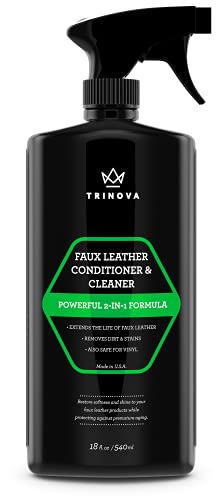
TriNova Faux Leather Cleaner & Conditioner is the most direct match for faux leather because it explicitly names synthetic leather and vinyl as target surfaces. The 18-fluid-ounce bottle combines cleaning and conditioning, and its features describe lifting dirt and mild stains while adding moisture. That combination suits routine care when the surface needs both steps. The product also names seats, furniture, and bags, offering several use contexts. Its described stain capability is limited to mild stains, so buyers dealing with heavy staining should not expect that claim to cover it.
Bottom line: Choose this for a two-in-one formula explicitly made for faux leather.
Chemical Guys Leather Quick Detailer
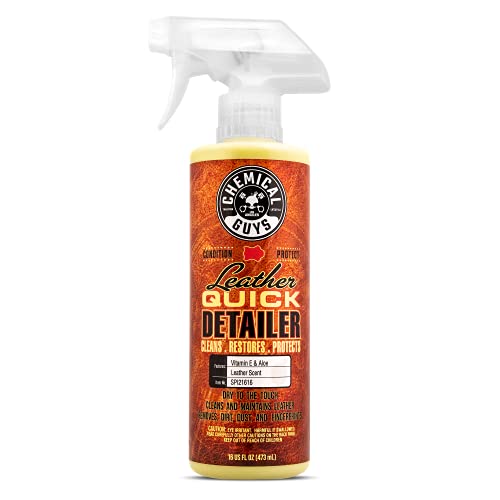
Chemical Guys Leather Quick Detailer stands apart as a quick-detailer spray that explicitly includes natural, synthetic, and faux leather. Its 16-fluid-ounce format is aimed at light dirt, dust, and body oils, and it combines cleaning and conditioning in one step. That makes it a fit for quick upkeep on seats, furniture, apparel, and footwear. The cleaning scope is light soil rather than stubborn grime, so choose a more targeted cleaner when the surface has set-in stains. Its broad surface wording does not replace checking care guidance for a particular item.
Bottom line: Pick this when spray application and light cleanup are the priorities.
Weiman Leather Cleaner & Conditioner

Weiman Leather Cleaner & Conditioner is framed for finished leather rather than specifically for faux leather, so it is a less direct match for this search. The 12-fluid-ounce product combines cleaning, conditioning, and protection, with features naming car interiors, furniture, clothing, and accessories. Its claimed UV protection is aimed at reducing sunlight-related fading, drying, discoloration, and cracking on leather. The difference matters for shoppers whose item is synthetic: verify compatibility with the surface manufacturer before applying it, rather than assuming a product for finished leather works on every faux-leather finish.
Bottom line: Consider it only when your item’s care guidance allows this leather formula.
Bickmore Bick 4 Leather Conditioner

Bickmore Bick 4 Leather Conditioner focuses on leather goods and is not presented specifically for faux leather, making it a conditional alternative. The 8-ounce formula is described for boots, bags, furniture, auto interiors, and other leather items; the maker also says it will not darken leather. That shade-related claim may matter for owners of natural leather who want to preserve its appearance. Because the product’s surface category is leather, faux-leather owners should first confirm that the item’s care guidance permits it. This is not the most direct choice for synthetic surfaces.
Bottom line: Choose it for leather goods, not as a default faux-leather treatment.
Lexol All Leather Conditioner

Lexol All Leather Conditioner is a conditioner rather than a faux-leather product, and its features focus on finished leather surfaces. At 16.9 ounces, it emphasizes quick absorption and a non-greasy finish, with use contexts including car interiors, furniture, shoes, and bags. It is suited to buyers caring for finished leather who want conditioning without a greasy residue. For faux leather, that surface distinction is important: do not infer compatibility from the shared use of the words “leather” or “car seats”; confirm the material’s care guidance first.
Bottom line: Use it for finished leather when a non-greasy conditioning finish matters.
How to choose faux leather conditioner
Choose a product that explicitly names faux or synthetic leather when material compatibility is your priority. Faux leather commonly has a plastic coating over a fabric backing; products designed to penetrate natural hide may not suit that coated surface. Cleaning needs also differ: light dust and body oils call for a gentle wipe, while grime may need a dedicated cleaner. A practical rule is to use a product whose surface range includes faux leather, and test it on a hidden area before treating a visible panel. Avoid abrasive pads and harsh solvents, which can scratch or soften coatings.
Faux leather versus finished leather care
Faux leather is a coated material, while finished leather is animal hide protected by a surface finish, so care products are not automatically interchangeable. A faux-leather-safe product should name synthetic or faux surfaces; a leather-only label is not enough to establish that fit. For coated upholstery, apply a small amount to a cloth rather than saturating seams or perforations. Wipe gently, then remove residue with a clean damp cloth if the product directions call for it. Heat and direct sun can accelerate wear in vinyl-like coatings, so parking in shade and avoiding hot surfaces helps reduce unnecessary stress.
Cleaner, conditioner, and protector differences
A cleaner lifts soil, a conditioner aims to improve feel or flexibility, and a protector is intended to add a barrier or UV-related protection. Two-in-one formulas combine steps for routine care, but the label’s surface compatibility remains the deciding factor. For light dust or body oils, a quick-detailer spray can be convenient; for visible grime, use a product whose cleaning purpose matches the mess. A basic decision rule is to choose the faux-leather-specific formula for synthetic upholstery and reserve leather-focused products for items confirmed to be finished hide. Never treat product category wording as proof of compatibility.
Safe application and maintenance
Apply care products in a ventilated area and keep them away from children and pets; follow the product label for handling and cleanup. A soft microfiber cloth is preferable to a rough brush on a coated surface, since abrasion can wear through the finish. Work in a small hidden spot first and let it dry before treating a larger panel, watching for tackiness, color transfer, or dulling. For everyday upkeep, remove loose grit before wiping so particles do not drag across the finish. Keep faux leather out of prolonged direct sunlight and away from sharp objects that can cut the coating.
Frequently Asked Questions
Can leather conditioner be used on faux leather?
Only when its label explicitly includes faux or synthetic leather, or the item’s care guidance confirms compatibility. Faux leather is usually a coated fabric, not hide that absorbs conditioner in the same way.
How often should faux leather be conditioned?
There is no universal conditioning interval for faux leather because coatings differ; use cleaning guidance for the item and apply only when the compatible product label calls for it. Frequent application can leave residue on a surface that does not absorb it.
How do you test a faux leather care product?
Apply a small amount to a hidden area with a soft cloth, then let the spot dry fully before assessing it. Stop if the coating becomes tacky, dull, discolored, or transfers color to the cloth.
What should you use to clean faux leather seats?
Use a soft cloth and a cleaner whose surface range includes faux leather or vinyl. Remove loose grit first, and avoid abrasive pads that can scratch the coating.
Can faux leather crack from sunlight?
Yes, prolonged heat and UV exposure can contribute to drying and wear in coated materials. Shade parking and keeping furniture away from direct sun reduce exposure, though they cannot reverse existing damage.