
Knife for Cutting Paper: 4 Craft Sets Compared

For paper cuts that need a steady, precise point, choose DIYSELF #11 Craft Knife Set for its #11 blade and included 6-inch steel ruler. Choose a varied-blade set instead if your projects include curves, carving or material cleanup; a retractable utility cutter is a different tool for broader cutting tasks.
We earn a commission if you buy through links on this page. As an Amazon Associate I earn from qualifying purchases. Products are compared on manufacturer specifications, not hands-on testing.
- Best overall: DIYSELF #11 Craft Knife Set – Pairs a #11 blade with a 6-inch steel ruler for paper and other light craft materials.
- Best for blade variety: DIYSELF 16-Piece Magnetic Case Set – Includes curved, fine-point and flat blade styles in a magnetic storage case.
- Best for handle options: 16-Piece Craft and Hobby Knife Set – Includes three handles and 13 different blade styles.
| Product | Best for | Blade count or styles | Included tools | Storage | Shop |
|---|---|---|---|---|---|
| DIYSELF #11 Craft Knife Set | Paper and stencils | #11 blades; 10 replacements | 6-inch steel ruler | — | Check Price on Amazon |
| DIYSELF 16-Piece Magnetic Case Set | Varied craft cuts | Multiple styles; count not given | Knife handles and blades | Magnetic case | Check Price on Amazon |
| JETMORE 16-Piece SK5 Blade Set | Mixed blade tasks | 13 SK5 steel blades | Knife and replacement blades | Storage box | Check Price on Amazon |
| 16-Piece Craft and Hobby Knife Set | Handle choices | 13 blade styles | Three handles | Storage; type not given | Check Price on Amazon |
Craft knives for cutting paper
Compare blade styles and included accessories to match the knife set to your paper projects and other craft tasks.
DIYSELF #11 Craft Knife Set
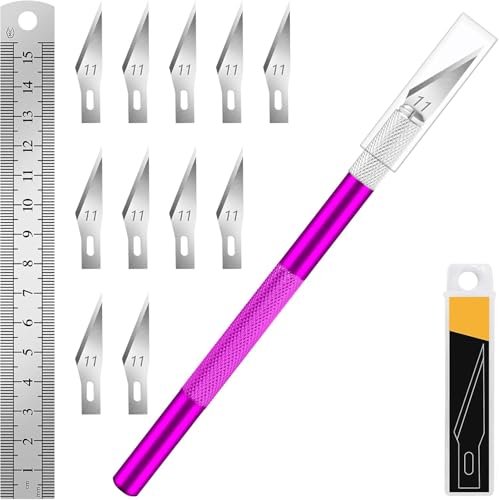
DIYSELF #11 Craft Knife Set is the most paper-focused set here: its #11 high-carbon blades are paired with a 6-inch steel ruler, and the maker says it suits paper, cardstock, vinyl, foam and other light craft materials. The package includes one knife, 10 replacement blades and the ruler. That combination suits scrapbook pages, stencil work and measured cuts without adding several blade shapes to the kit. Its limitation is the single blade style; choose a varied-blade set if you need different shapes for carving or cleanup.
Bottom line: Pick this set for paper and stencil work when a ruler and replacement #11 blades are useful.
DIYSELF 16-Piece Magnetic Case Set

DIYSELF 16-Piece Magnetic Case Set stands apart with curved, fine-point and flat blade styles, letting a paper crafter switch shapes rather than rely on one point. Its compact magnetic case organizes the handles and blades, and the maker says the kit is suited to paper, foam, vinyl, models and 3D printing. It fits projects that move between detailed paper cuts and other craft materials. The maker does not give a replacement-blade count, so this is less suited to buyers who want a known quantity of spares.
Bottom line: Choose this kit for varied blade shapes and an organized magnetic case.
JETMORE 16-Piece SK5 Blade Set

JETMORE 16-Piece SK5 Blade Set differs by specifying 13 SK5 steel blades, with sharp, nicked and chisel styles for cutting, scraping, trimming and other precision operations. The set comes in a storage box; the maker says magnetic strips hold blades on the cover and the knives are secured at the bottom. Those varied shapes can suit paper projects that also involve scraping or trimming. Buyers focused only on paper may not need the extra blade shapes, and the assortment calls for careful handling and storage.
Bottom line: Pick this set if paper work is one part of projects involving scraping and trimming.
16-Piece Craft and Hobby Knife Set

16-Piece Craft and Hobby Knife Set is the only set here that specifies three handles alongside 13 blade styles, including curved, angled and flat shapes. One yellow handle uses TPR and PP with an anti-slip surface; the silver handles are aluminum alloy with a diamond-pattern grip, according to the maker. The flat side on the yellow handle is designed to reduce rolling on a table. This mix suits crafters who want handle options as well as blade variety. The tradeoff is that choosing among multiple handles and shapes adds setup compared with a single-knife kit.
Bottom line: Choose this set if having three handle options matters for your craft work.
How to choose a paper-cutting craft knife
Choose a pointed craft knife when the cut needs control around small details; choose a retractable utility knife for broader cuts through thicker materials. A #11-style pointed blade suits curves, corners and stencil openings, while flat or chisel styles can help with trimming and scraping. Match the tool to the job rather than pressing harder with the wrong blade shape. For long straight lines, pair the knife with a rigid ruler and make multiple light passes instead of forcing one deep cut. A cutting mat protects the work surface and helps keep the blade edge from striking a hard tabletop.
For a paper-only kit, favor a familiar point and easy blade replacement. Choose a varied set when the same project also involves carving or cleanup.
Blade styles and paper-cutting tasks
Blade shape changes control more than the number of pieces in a kit. Pointed blades are useful for fine detail and tight corners; curved blades can follow arcs, while flat or chisel blades are better suited to scraping or light surface cleanup. The paper itself matters: thin sheets can tear or shift under pressure, while cardstock resists more and benefits from a sharp blade and a stable surface. Make a test cut on scrap paper before cutting the final piece, especially when following a template. A ruler helps with straight cuts, but keep fingers behind the blade path and hold the ruler securely.
Replace a blade when it drags, snags or leaves a ragged edge; extra pressure raises the chance of slipping.
Safe setup for craft knife work
Use a self-healing cutting mat and cut away from your body with the paper held flat. A craft knife blade is exposed and can cut skin quickly, so keep the non-cutting hand outside the blade’s path and avoid reaching across the line. Make several controlled passes for thick cardstock rather than pushing hard through it in one stroke. Store spare blades in a case or secure holder, not loose in a drawer or pocket. When changing a blade, point the edge away from yourself and dispose of used blades in a puncture-resistant container. Keep knives and spare blades out of reach of children.
A steel ruler can guide straight cuts, but a ruler with a raised finger guard provides a safer hand position if available.
Common mistakes when cutting paper
Forcing a dull blade is a common cause of ragged cuts and slips; replace it when it begins to snag or pull fibers. Cutting directly on a desk can damage both the surface and the blade, so put a cutting mat under the work. Another mistake is using a pointed knife for every cut: long straight cuts are easier to guide with a ruler, while curves need a blade angle that can turn smoothly. Do not lift or twist the blade while it is embedded in thick paper, since that can tear the edge or bend the blade. Secure small scraps before cutting instead of holding them close to the edge.
For clean results, keep the paper still, use light pressure, and check the cut path before each pass.
Frequently Asked Questions
What blade is best for cutting paper precisely?
A pointed craft blade is useful for detailed cuts, corners and stencil openings. Use a sharp edge and light, controlled passes, especially on thin paper that can tear under pressure.
Can a craft knife cut thick cardstock?
Yes, a craft knife can cut cardstock, but several light passes are safer and more controlled than one forceful cut. Keep the cardstock flat on a cutting mat and replace the blade if it starts to snag.
Do I need a cutting mat for paper crafts?
A cutting mat protects the work surface and reduces direct blade contact with a hard tabletop. A self-healing mat is a common craft choice; keep the sheet flat so it cannot shift during a cut.
How often should I replace a craft knife blade?
Replace the blade when it drags, snags or leaves ragged edges rather than waiting for a set number of cuts. Paper type and cutting pressure affect how quickly an edge dulls.
How should I store spare craft knife blades?
Keep spare blades in a closed case or secure holder so the edges are covered and cannot move loose. Dispose of used blades in a puncture-resistant container, and store both away from children.