
Extra Wide Camp Cot: 4 Options Compared by Fit

For most adults seeking an extra wide camp cot, the TIMBER RIDGE is the strongest fit because it has a 44.5-inch-wide sleeping surface and a 600-pound capacity. Choose Coleman Pack-Away Big ’n Tall Cot if a removable side table matters more and a 300-pound rating is enough; choose a narrower option if pack weight and a smaller footprint take priority.
We earn a commission if you buy through links on this page. As an Amazon Associate I earn from qualifying purchases. Products are compared on manufacturer specifications, not hands-on testing.
- Best overall: TIMBER RIDGE 44.5-Inch Extra Wide Cot – Its 44.5-inch stated width and 600-pound capacity make it the roomiest high-capacity match.
- Best for a side table: Coleman Pack-Away Big ’n Tall Cot – Its removable side table has a cup holder, and the cot supports up to 300 pounds.
- Best for lighter carry: Gonex 31.5-Inch Aluminum Cot – Its aluminum-frame design weighs 5.5 pounds and supports up to 350 pounds.
| Product | Best for | Width | Capacity | Weight | Shop |
|---|---|---|---|---|---|
| TIMBER RIDGE 44.5-Inch Extra Wide Cot | Roomiest sleeping area | 44.5 in | 600 lb | 27.94 lb | Check Price on Amazon |
| Coleman Pack-Away Big ’n Tall Cot | Table-side convenience | 44 in | 300 lb | — | Check Price on Amazon |
| Gonex 31.5-Inch Aluminum Cot | Lighter carry | 31.5 in | 350 lb | 5.5 lb | Check Price on Amazon |
| Fragess Cot with Removable Mattress | Padded cot comfort | — | 600 lb | 17.4 lb | Check Price on Amazon |
Extra Wide Camp Cots Compared
Compare usable width, load capacity, and carry weight before choosing a cot for camp or guest use.
TIMBER RIDGE 44.5-Inch Extra Wide Cot

The TIMBER RIDGE stands out for its 44.5-inch stated width and 600-pound capacity, giving it the most room and highest load rating among these extra-wide options. Its steel X-shaped cross-leg frame, built-in side pocket, and included carry bag suit car camping, guest use, or trips where packed size matters less than sleeping space. The maker says the frame is reinforced for stability. At 27.94 pounds, it is a heavier carry than the aluminum-frame Gonex, so it is less suited to trips where you carry camp gear a long distance.
Bottom line: Choose this cot when sleeping width and a high load rating matter more than a light carry.
Coleman Pack-Away Big ’n Tall Cot

The Coleman differs from the higher-capacity wide cot by pairing a 44-inch overall width with a removable side table and cup holder. Its sleeping area is 80 by 32 inches, so the overall width is not the same as the fabric area available for sleeping. The steel frame supports up to 300 pounds, and Coleman says the cot fits campers up to 6 feet 6 inches tall. The included carry bag is useful for packing, but the lower load rating makes this a poor match for anyone whose body weight plus gear exceeds 300 pounds.
Bottom line: Pick this cot for its removable cup-holder table if the 300-pound limit fits your needs.
Gonex 31.5-Inch Aluminum Cot

The Gonex is narrower than the two 44-inch cots, but its 5.5-pound weight makes it the carry-focused choice. The sleeping surface is 31.5 inches wide, with a 7075 aluminum frame, dual-tube design, and a built-in pocket that can hold clothing or a towel as a pillow; the pillow itself is not included. The maker gives a support capacity of 350 pounds in the features. This is a partial fit for shoppers prioritizing an extra-wide bed: the narrower surface offers less room to turn than the 44-inch options.
Bottom line: Choose this narrower cot when a lighter carry matters more than maximum sleeping width.
Fragess Cot with Removable Mattress
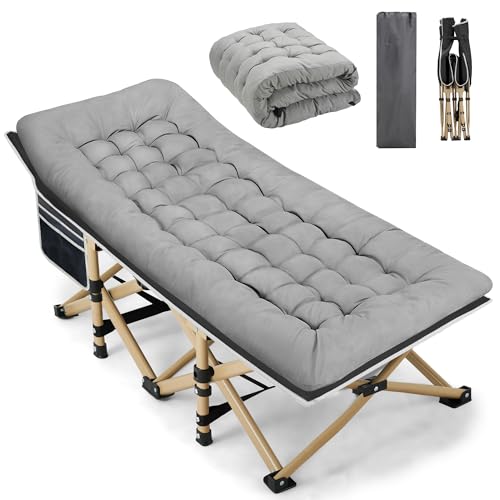
The Fragess differs from the wide-surface options by including a removable mattress, which can be taken off in hot weather. The product name gives a 600-pound maximum load and the features describe a portable folding cot with a carry bag. Its 17.4-pound weight is lighter than the TIMBER RIDGE but notably heavier than the Gonex. The size label calls this a 28-inch cot, so it is a partial fit rather than a true extra-wide choice for buyers seeking the 44-inch sleeping surfaces offered elsewhere.
Bottom line: Choose this cot for its removable mattress, not for a 44-inch-wide sleeping area.
How to choose an extra wide camp cot
Start with sleeping-surface width, not the cot’s outside width: the Coleman measures 44 inches overall but has an 80-by-32-inch sleeping area. Cot makers do not use a universal “extra wide” threshold, so compare the usable fabric area directly; a 44-inch sleeping surface is substantially roomier than a 31.5-inch one. Next, match the load rating to the combined weight on the cot, including gear placed on it. A cot rated for 300 pounds is not the right choice if the user and items on the bed exceed that limit. For car camping, prioritize space; for carrying equipment on foot, cot weight becomes a deciding factor.
How much cot width do you need
Choose the cot based on your shoulder width, sleep position, and space to turn rather than the “extra wide” label alone. A 31.5-inch sleeping area provides less side-to-side room than a 44-inch cot, while a cot’s overall width may include its frame beyond the fabric. Measure the space where the cot will stand, leaving room to unfold and access it; a wide cot can be awkward in a narrow tent or small guest room. For height, compare the sleeping length with your own height and account for pillow placement. When sharing limited tent floor space, a narrower cot may fit better even if it allows less movement.
Steel and aluminum camp cot frames
Steel frames often suit car camping because they trade lower carry weight for sturdy structure, while aluminum frames are commonly selected when portability matters. In these picks, the steel TIMBER RIDGE weighs 27.94 pounds and the aluminum Gonex weighs 5.5 pounds, but their sleeping widths differ too, so weight alone is not an apples-to-apples comfort comparison. Cot frames use legs and crossbars to hold fabric under tension; incomplete assembly can leave uneven support or create a pinch point. Open and close folding joints with fingers clear of hinges, and set the legs on firm, level ground rather than soft or sloped soil.
Camp cot fit and safety checks
Keep the total load within the cot’s capacity and distribute weight across the sleeping surface; avoid dropping onto a cot or concentrating heavy gear on one edge. A higher load rating does not establish a higher sleeping surface or a larger fabric area, so check those independently. Before each use, inspect frame joints, locking points, and fabric for bent parts, loose fasteners, or tears; stop using a cot with damaged support components. Measure the packed bag against your vehicle or storage space, since folded dimensions affect transport even when the open cot fits. For tent use, verify that the cot’s full footprint clears walls and doorways so it does not press against tent fabric.
Frequently Asked Questions
Does a cot’s overall width equal its sleeping width?
No, overall width can include the frame outside the fabric. The Coleman is 44 inches wide overall, while its sleeping area is 32 inches wide.
How much weight can an extra wide camp cot hold?
Capacity differs by model: these options range from 300 to 600 pounds where a capacity is provided. Keep the user and anything placed on the cot within its maximum.
Is an aluminum camp cot easier to carry?
Often, because aluminum-frame designs can weigh less than steel-frame models. Here, the Gonex weighs 5.5 pounds, compared with 27.94 pounds for the steel TIMBER RIDGE, though their widths also differ.
Can a camp cot fit inside a tent?
Yes, if its open footprint clears the tent floor, walls, and doorway. Measure both the cot and available floor area, and leave space so the frame does not press against tent fabric.
How should I set up a folding camp cot safely?
Place the cot on firm, level ground and fully engage its joints before adding weight. Keep fingers clear of folding hinges, and do not use a frame or fabric with visible damage.