
Oil Filter for Ford F-150 3.5 EcoBoost: 5 Options

For a Ford F-150 3.5 EcoBoost, start with the Motorcraft FL500S option, but confirm the model year and engine fitment because filter fit varies by application. The Genuine Ford AA5Z-6714-A is another OEM-part option; cartridge filters shown here are for different F-150 engine applications, not a direct substitute.
We earn a commission if you buy through links on this page. As an Amazon Associate I earn from qualifying purchases. Products are compared on manufacturer specifications, not hands-on testing.
- Best overall: Motorcraft FL500S Oil Filter, 12-Pack – The Motorcraft FL500S is presented as a genuine fit-specific oil filter, in a 12-pack.
- Best for OEM part number: Genuine Ford AA5Z-6714-A Oil Filter – The Genuine Ford filter provides the AA5Z-6714-A part number.
| Product | Best for | Filter type | Pack size | Claimed filtration | Shop |
|---|---|---|---|---|---|
| Motorcraft FL500S Oil Filter, 12-Pack | Multi-filter supply | Spin-on | 12 | — | Check Price on Amazon |
| Genuine Ford AA5Z-6714-A Oil Filter | Ford part number | — | 1 | — | Check Price on Amazon |
| WIX XP 57502XP Oil Filter | Synthetic oil claim | — | 1 | 99% at 23 microns | Check Price on Amazon |
| WIX WL10050 Cartridge Oil Filter | Cartridge filter | Cartridge | 1 | 99% at 26 microns | Check Price on Amazon |
| ECOGARD X10387 Cartridge Oil Filter | 2.7L application | Cartridge | 1 | 97% (micron size not given) | Check Price on Amazon |
Oil filters for Ford F-150 3.5 EcoBoost
Check the exact engine and model year before choosing, since these options include different filter styles and applications.
Motorcraft FL500S Oil Filter, 12-Pack

The Motorcraft FL500S is the clearest match here for buyers seeking a genuine Motorcraft filter, and this package contains 12. The product identifies the part as FL500S and says it is made to meet specifications for fit, form, and function. That makes it a practical choice for someone who already confirmed FL500S fitment for their specific F-150 year and engine. The limitation is the bulk pack: a buyer needing only one filter may not want a dozen. Confirm the engine and model-year application before ordering.
Bottom line: Choose this if your truck calls for FL500S and you want a multi-filter pack.
Genuine Ford AA5Z-6714-A Oil Filter

The Genuine Ford AA5Z-6714-A is the option to consider when matching an OEM part number rather than choosing by filter-media claims. Its part number is AA5Z-6714-A, with AA5Z 6714 A also given as the equivalent formatting. The package contains one filter. The limitation is that the product facts do not tie this part number to a specific F-150 3.5 EcoBoost model year, so verify the part number against your truck before purchase rather than assuming it fits every generation.
Bottom line: Pick this when AA5Z-6714-A is the confirmed part number for your truck.
WIX XP 57502XP Oil Filter
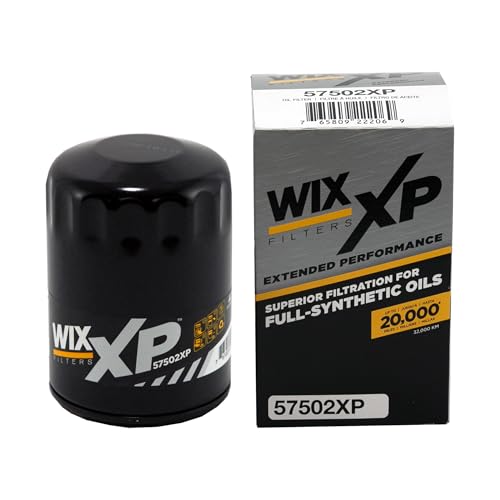
The WIX XP 57502XP differs from the OEM-named options by focusing on synthetic-oil use and filtration performance. WIX says its synthetic-blended media is 99% efficient at 23 microns, based on the 51515XP, and gives an up-to-20,000-mile change interval. Those are maker claims, not a universal service schedule for an F-150 3.5 EcoBoost. Confirm that application before choosing it.
Bottom line: Consider it only after confirming the exact engine and year fit.
WIX WL10050 Cartridge Oil Filter

The WIX WL10050 is a top-mounted cartridge element, unlike the spin-on Motorcraft option. WIX says its blended media traps 99% of dirt at 26 microns and gives an up-to-15,000-mile service life. The compatibility note mentions F-150 models among other Ford vehicles, but does not establish fit for the 3.5 EcoBoost; its cartridge format is a reason to check the engine application carefully rather than treating it as a substitute. It may suit a buyer whose confirmed vehicle uses this cartridge style and who wants a replaceable element.
Bottom line: Choose it only for an application confirmed to use this cartridge.
ECOGARD X10387 Cartridge Oil Filter

The ECOGARD X10387 is specifically described as a cartridge filter for conventional oil and lists F-150 2.7L applications, not the 3.5 EcoBoost. Its fit claims name F-150 2.7L model years 2015–2020, making the engine distinction especially important for shoppers comparing EcoBoost trucks. ECOGARD says the filter can be used with synthetic or conventional oil, and claims up to 5,000 miles between oil changes and 97% contaminant screening. Because the fit claim is for another engine, do not treat it as a direct 3.5L replacement.
Bottom line: Use it only for the 2.7L application, not as an assumed 3.5L fit.
How to choose an F-150 3.5 EcoBoost oil filter
Match the filter to the truck’s model year and engine before comparing media claims. The products here include spin-on and cartridge styles, and those formats are not interchangeable. Use the owner’s manual or the vehicle’s verified parts application to confirm the required part number and filter type. Then choose between a genuine-part option and an aftermarket filter whose exact fit is confirmed. Mileage claims such as 15,000 or 20,000 miles are maker claims for particular filters, not a reason to extend the truck’s oil-change schedule. Keep the oil and filter service interval aligned with the vehicle maker’s maintenance guidance and driving conditions.
Spin-on versus cartridge oil filters
Spin-on filters combine the filter element and a metal housing, while cartridge filters replace an element inside a reusable housing. The Motorcraft FL500S is identified as a filter part, while WIX WL10050 and ECOGARD X10387 are explicitly cartridge elements. A cartridge application requires the correct housing and sealing components; a spin-on filter instead needs the right thread and sealing face. Do not choose by shape alone: confirm the required type and part number for the exact 3.5 EcoBoost year.
| Filter style | What is replaced | Selection check |
|---|---|---|
| Spin-on | Element and housing together | Confirm part number and fit |
| Cartridge | Filter element | Confirm housing style and fit |
Oil filter service intervals and claims
Use the truck maker’s oil-change schedule as the governing interval, not an aftermarket filter’s maximum mileage claim. WIX gives up to 15,000 miles for WL10050 and up to 20,000 miles for 57502XP, while ECOGARD gives up to 5,000 miles for X10387. Those figures are tied to the makers’ stated filter performance and do not establish the right interval for every F-150. Towing, frequent short trips, and dusty operation can affect maintenance needs, so use the schedule applicable to the truck and its driving conditions. A filter’s efficiency percentage also should not be used alone to decide service timing.
Common F-150 oil filter fitment mistakes
The most important fitment mistake is treating every EcoBoost engine as if it uses the same filter. The ECOGARD X10387 fit claim names F-150 2.7L applications, while the WIX WL10050 compatibility note does not establish a 3.5 EcoBoost fit; neither should be presumed to fit the 3.5L. Model year matters too, since engine and filter applications can change between truck generations. Check the specific year, engine displacement, and required filter part number together. Also distinguish an individual filter from a 12-pack when planning routine maintenance, and never force a filter whose thread, seal, or housing style does not match.
Frequently Asked Questions
How often should I change an F-150 oil filter?
Change the filter when servicing the oil at the interval specified for your truck and driving conditions. Filter makers’ maximum mileage claims do not override the vehicle’s maintenance schedule.
Can I use a cartridge filter on a 3.5 EcoBoost?
Only if the exact truck application calls for that cartridge and housing. The ECOGARD X10387 fit claims here specify F-150 2.7L applications, so do not assume it fits a 3.5L.
Are FL500S and AA5Z-6714-A interchangeable?
The product facts identify both as Ford oil filter options but do not establish their interchangeability. Verify the exact part number for your F-150 model year and engine before selecting either.
Do oil filters have a universal mileage limit?
No. The WIX and ECOGARD mileage figures are maker claims for their particular filters, not a universal service interval. Use the maintenance schedule for the truck and its operating conditions.
What happens if an oil filter does not fit?
A mismatched thread, seal, or housing can prevent proper installation and sealing. Confirm the specified filter style and part number before installing, and do not force a filter that does not seat correctly.