
Dry Gas for Cars: 3 Water Removers Compared

For most drivers looking for dry gas for cars, HEET Iso-HEET 12 oz is the clearest match because it is specifically described as a water remover and gas-line antifreeze. Choose STP All Season Water Remover, 5.25 oz instead if an alcohol-free formula matters, or STP Gas Treatment, 5.25 oz if you want a gas treatment that also claims to remove moisture.
Dry gas is a fuel additive intended to help manage water in gasoline; it cannot repair a leak or resolve severe fuel contamination.
We earn a commission if you buy through links on this page. As an Amazon Associate I earn from qualifying purchases. Products are compared on manufacturer specifications, not hands-on testing.
- Best overall: HEET Iso-HEET 12 oz – It is specifically identified as a water remover and gas-line antifreeze.
- Best alcohol-free option: STP All Season Water Remover, 5.25 oz – Its maker says it removes water without alcohol and treats 21 gallons.
- Best for moisture removal plus treatment: STP Gas Treatment, 5.25 oz – It claims to remove moisture and treats up to 21 gallons.
| Product | Best for | Container size | Treatment volume | Water-removal formulation | Shop |
|---|---|---|---|---|---|
| HEET Iso-HEET 12 oz | Direct water removal | 12 oz | — | Water remover; alcohol type — | Check Price on Amazon |
| STP All Season Water Remover, 5.25 oz | Alcohol-free formula | 5.25 fl oz | 21 gal | Removes water without alcohol | Check Price on Amazon |
| STP Gas Treatment, 5.25 oz | Moisture and deposits | 5.25 fl oz | Up to 21 gal | Removes moisture; alcohol type — | Check Price on Amazon |
Dry gas for cars
Compare the water-removal purpose, treatment size, and formula notes before choosing an additive.
HEET Iso-HEET 12 oz
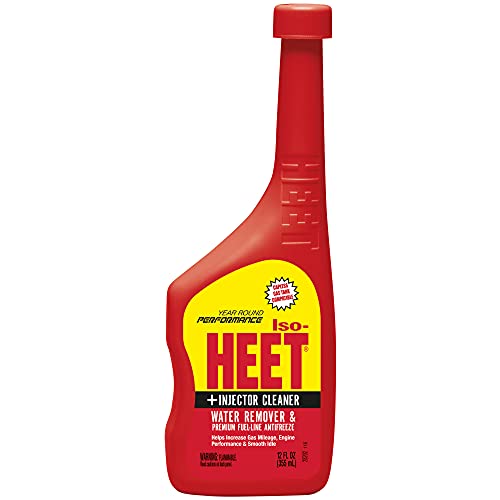
HEET Iso-HEET 12 oz is the most directly labeled dry-gas option here: it is identified as a water remover and gas-line antifreeze, rather than only a general fuel treatment. The 12-ounce bottle is an easy-pour format, and its maker says it absorbs five times more water than regular gas dryers and helps prevent rust and corrosion. That makes it a fit for a driver prioritizing water management and fuel-line freeze protection. Its treatment volume is not given, so check the recommended dose for your tank before using it.
Bottom line: Choose this if water removal and gas-line antifreeze are your main priorities.
STP All Season Water Remover, 5.25 oz

STP All Season Water Remover, 5.25 oz stands apart by explicitly pairing water removal with an alcohol-free formula. The 5.25-fluid-ounce container treats 21 gallons, and its maker says it helps fight fuel-line freeze and corrosion, keeps injectors clean, and works with capless gas systems. Those claims make it a useful fit when you want a measured treatment volume and do not want an alcohol-based water remover. It is sold as a 12-pack, so the package contains multiple treatments rather than one bottle; match each dose to the fuel volume being treated.
Bottom line: Pick this when you want an alcohol-free water remover with a 21-gallon treatment volume.
STP Gas Treatment, 5.25 oz

STP Gas Treatment, 5.25 oz is a broader gas treatment rather than a product labeled solely as a water remover. Its maker says it removes moisture, helps prevent fuel-line freeze, and prevents deposit buildup; each 5.25-fluid-ounce bottle treats up to 21 gallons. The six-pack suits drivers who want several doses and value the added deposit-control claims alongside moisture removal. Follow the package dose and confirm compatibility with the vehicle manual if uncertain.
Bottom line: Choose this if you want moisture removal combined with deposit-control claims.
How to choose dry gas for cars
Choose a dry-gas additive by matching its purpose and dose to the problem and amount of fuel. Water-removal products are intended to help manage small amounts of moisture; fuel-system cleaners may target deposits instead, so a general gas treatment is not automatically equivalent to a water remover. Check the container’s fuel capacity and use a dose scaled to the gallons in the tank rather than treating every bottle as a full-tank dose. If water contamination is repeated or substantial, an additive is not a substitute for finding its source or having the fuel system inspected. For routine winter planning, prioritize products explicitly described as water removers or gas-line antifreeze.
How dry gas handles water and fuel-line freeze
Dry-gas additives use fuel-compatible chemistry to help manage water in gasoline; formulations differ, and not every product is alcohol-free. Water in fuel can contribute to corrosion and, in cold conditions, ice-related fuel delivery problems, but an additive cannot thaw every frozen line or correct a failed seal. Gasoline sold with ethanol already contains an alcohol component, so avoid assuming that every vehicle or fuel situation needs extra alcohol-based treatment. If an additive’s formula matters to you, select one that explicitly states the property you need. A recurring freeze or drivability problem calls for diagnosis, not repeated dosing alone.
Match the treatment dose to tank volume
Use the treatment capacity printed for the specific bottle and compare it with the fuel volume being treated. For example, a treatment rated for 21 gallons should not be assumed to cover a larger quantity of fuel at the same dose. Multi-packs provide multiple bottles, not a larger per-bottle treatment capacity. Keep the container label available while dosing, and do not combine additives unless both manufacturers say the combination is compatible. If the label’s dose does not match your remaining fuel, confirm the appropriate amount before pouring; overdosing is not a reliable way to address severe water contamination.
When a fuel additive is not enough
A fuel additive is not a repair for water entering the tank, a damaged fuel cap, or persistent engine trouble. Address a suspected leak or recurring contamination before relying on a water remover, since fresh water can continue entering the fuel system. If the engine runs poorly, stalls, or will not start after freezing conditions, avoid repeated cranking and seek qualified diagnosis; the cause may extend beyond water in fuel. Store additives in their original closed containers, away from heat and ignition sources, and keep them out of reach of children. Gasoline and fuel additives are flammable, so handle spills promptly and follow the container’s safety precautions.
Frequently Asked Questions
Does dry gas help prevent fuel-line freeze?
Some water-removal additives are formulated to help prevent fuel-line freeze, but they cannot guarantee a line will not freeze. If freezing or starting trouble recurs, have the fuel system checked rather than relying on repeated doses.
How much dry gas should I add to my car?
Use the dose and fuel capacity specified for the exact additive, then match the dose to the gallons of fuel being treated. For instance, a 21-gallon treatment should not be assumed to cover more than 21 gallons.
Can I use dry gas in an ethanol-blended fuel?
Check the vehicle and additive instructions before use because ethanol-blended gasoline already contains alcohol and products use different formulas. Do not add an alcohol-based treatment if you are unsure whether it is suitable for your vehicle and fuel.
Can dry gas fix water in a gas tank?
A water remover may help manage small amounts of moisture, but it does not repair a leak or remove severe contamination. Repeated water problems or poor running warrant inspection of the tank and fuel system.
Is dry gas the same as fuel injector cleaner?
No; dry gas focuses on managing water in fuel, while injector cleaners target deposits in fuel-system components. Some products make claims in both areas, so check the specific purpose and dose on the container.