
Best Rattle Bag for Deer: 5 Calls Compared

Hunters Specialties Ruttin’ Buck is the best rattle bag for most deer hunters because its select hardwood rods and one-hand operation make it a straightforward choice for buck-rattling sounds. Choose Outdoor Hunting Lab Rattle Bag + Grunt Call instead if you want a grunt call in the same set, or Beech-Stick Rattle Bag Set if you prefer a set of loose beech sticks.
Rattle bags imitate antlers clashing, a call generally used when bucks are sparring or competing. Local rut timing matters more than the calendar date, so use rattling when deer activity supports it.
We earn a commission if you buy through links on this page. As an Amazon Associate I earn from qualifying purchases. Products are compared on manufacturer specifications, not hands-on testing.
- Best overall: Hunters Specialties Ruttin’ Buck – Select hardwood rods and a rubberized grip are paired with one-hand operation.
- Best for call variety: Outdoor Hunting Lab Rattle Bag + Grunt Call – The set pairs a rattle bag with a grunt call that makes grunts, bleats and fawn distress sounds.
- Best for loose sticks: Beech-Stick Rattle Bag Set – The portable set includes seven beech sticks in two widths and a storage pocket.
- Best for wet conditions: Nationwide Scents Deer Rattle Bag – Its maker describes the materials as weather-resistant.
| Product | Best for | Operation | Materials or finish | Included calls | Shop |
|---|---|---|---|---|---|
| Hunters Specialties Ruttin’ Buck | One-hand rattling | One-hand | Hardwood rods; rubberized grip | Rattle bag | Check Price on Amazon |
| Knight & Hale Ultimate Rattle Bag | Sound variation | One-hand | Mossy Oak Original Bottomland cover | Rattle bag | Check Price on Amazon |
| Beech-Stick Rattle Bag Set | Loose stick control | Hand-operated sticks | Beech sticks; mesh storage pocket | Rattle bag | Check Price on Amazon |
| Nationwide Scents Deer Rattle Bag | Weather resistance | — | Weather-resistant materials | Rattle bag | Check Price on Amazon |
| Outdoor Hunting Lab Rattle Bag + Grunt Call | Multiple call sounds | — | Weather-resistant materials | Rattle bag and grunt call | Check Price on Amazon |
Deer Rattle Bags Compared
Compare how each option is operated, what it includes and which hunting setup it suits.
Hunters Specialties Ruttin’ Buck

For a simple one-hand setup, this bag uses select hardwood rods and a rubberized grip. The maker says it reproduces antlers crashing together and targets pre-rut and rut calling. Its 5-inch height, length and width make it a compact option to carry. Choose it if you want a dedicated rattling tool rather than a set with extra calls. The limitation is its narrow purpose: it does not include a grunt call or a selection of separate sticks, so it suits hunters who plan to carry other calls separately.
Bottom line: Pick this for compact, one-hand buck rattling without extra calls.
Knight & Hale Ultimate Rattle Bag

For hunters who want to vary the intensity of a rattling sequence, this bag is designed to make sounds from light sparring to a heavy clash. The maker describes it as loud and realistic, and it has a Mossy Oak Original Bottomland cover. Its one-handed operation keeps the calling motion simple. The trade-off is that the facts do not establish its size or weight, so hunters who need precise pack measurements should verify those before choosing it.
Bottom line: Choose this if varying from light sparring to heavier clashes is your priority.
Beech-Stick Rattle Bag Set

This option differs from an enclosed call: it supplies separate beech sticks for making rattling sounds. The set includes four sticks 0.8 inch wide and three sticks 1.2 inches wide, plus a mesh pocket and elastic band to keep them together. At 6.5 inches long, the maker describes the set as portable. It may suit hunters who prefer handling individual sticks, but loose components require keeping the set organized and secured between calling sequences.
Bottom line: Pick this if you want separate beech sticks rather than a single enclosed call.
Nationwide Scents Deer Rattle Bag

For hunters prioritizing weather resistance, this bag is made with materials its maker describes as weather-resistant and built for outdoor use. The maker presents it for pre-rut, early-season and peak-rut calling, and says the compact design is easier to pack than bulky rattling antlers. It weighs about 0.19 pound according to the weight figure.
Bottom line: Choose this if weather-resistant construction is the deciding feature.
Outdoor Hunting Lab Rattle Bag + Grunt Call
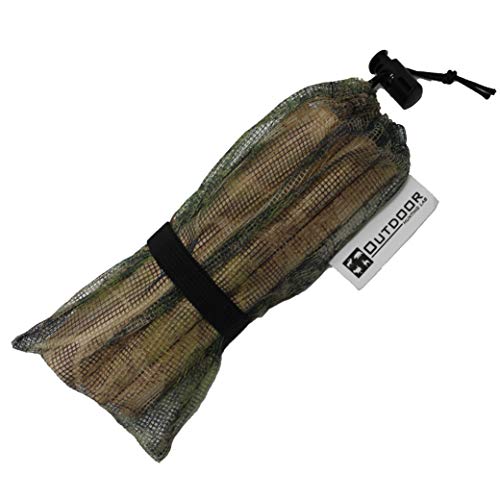
This set adds a grunt call to the rattle bag, making it the most versatile option for hunters who want more than buck-on-buck sounds. The maker says the grunt call produces buck grunts, doe bleats and fawn distress calls, while the rattle bag imitates two bucks sparring. Both pieces are described by the maker as weather-resistant. The extra call expands the set’s role, but it also means carrying more equipment than a single rattle bag.
Bottom line: Pick this if you want rattling plus several other deer-call sounds in one set.
How to Choose a Deer Rattle Bag
Choose a rattle bag by handling style first, then decide whether extra calls matter. A bag with internal rods can be easier to operate with one hand; loose sticks offer direct control over how pieces strike but need to be kept together. A set that includes a grunt call adds sounds beyond antler clashes, but also adds another item to carry. Rut timing varies by local deer herd and latitude, so a maker’s season labels are not a substitute for local scouting. If you hunt from a stand with a limited movement window, favor the operation style you can use quietly and comfortably without changing position.
Match the call to the moment
Rattling represents bucks competing, so it is most relevant when bucks are sparring or seeking dominance. A light sequence can be less aggressive than a heavy clash; avoid assuming louder is always better. Wind direction and terrain affect how sound reaches deer, and a call cannot make an animal approach from downwind if it detects your scent.
When to Rattle for Whitetail Deer
Rattling is most associated with the pre-rut and rut, but the timing of those periods changes across regions and years. Use local observations, such as increased buck activity and fresh sign, rather than applying a fixed nationwide date. Early in the season, deer may respond differently than during active breeding competition, so keep sequences restrained when activity is low. A common approach is to make a short rattling sequence, then pause and listen rather than calling continuously; movement may take time to appear. If you hear no response, changing location or waiting for better wind can be more useful than repeatedly increasing volume.
Sound and setup
Start from cover with a clear view of likely approach routes, and avoid rattling where nearby hunters could mistake the sound for real antlers. Sound does not replace concealment: keep scent and wind in mind, since deer often approach from downwind.
Rattle Bags and Antler Rattles Compared
A rattle bag is a compact alternative to carrying a pair of antlers, while loose-stick sets leave more of the striking motion in the hunter’s hands. Full antlers can be cumbersome to pack and manipulate, especially in confined cover. Bag designs can differ in how much sound variation they allow, so consider whether you want an enclosed one-hand tool, separate sticks or a multi-call set. The table summarizes those practical distinctions.
| Type | Handling | Best fit |
|---|---|---|
| Enclosed rattle bag | Shake or manipulate as designed | Compact, simple calling |
| Loose-stick set | Strike separate sticks together | Direct control of contact |
| Antler pair | Carry and clash antlers | Hunters who prefer full-size antlers |
Keep calls quiet while moving between locations, then use them only after reaching a safe, settled position. For a compact setup or limited hand movement, an enclosed bag is generally easier to carry than a pair of antlers.
Safe Rattling and Calling Practices
Never rattle while walking through hunting cover or when another hunter may mistake the sound for actual deer movement. A rattling sequence can attract people as well as wildlife, so wear the required hunter orange for your jurisdiction and keep firearm handling disciplined. Settle into position, identify the direction of any sound or movement, and keep the muzzle pointed in a safe direction. Calling is not a reason to sweep a firearm around to track a responding animal. Local hunting regulations differ on season dates, legal equipment and hunter-orange requirements; check the applicable state rules before going afield. When hunting with others, agree on locations and communication signals before separating.
Keep the setup controlled
Secure loose sticks between sequences so they do not rattle while you move. If a call has moving parts, inspect that they remain intact before a hunt; replace a damaged component rather than forcing it during use.
Frequently Asked Questions
Do deer rattle bags work outside the rut?
Rattling can be less relevant when bucks are not sparring or competing, so local behavior matters more than a fixed date. Use fresh sign and observed activity to decide whether antler-clash sounds fit the conditions.
How long should a deer rattling sequence last?
A short sequence of about 15 to 30 seconds is a common starting point, followed by a quiet wait rather than continuous rattling. Adjust the intensity to the apparent deer activity and listen for movement.
Can I use a rattle bag in windy weather?
Wind does not make rattling impossible, but it can mask sound and affects how deer approach scent. Set up with the wind in mind and avoid relying on a call to overcome a downwind approach.
Are rattle bags louder than real antlers?
Sound output depends on the bag’s construction and how it is handled, so there is no single reliable loudness comparison. Practice at a controlled volume and avoid assuming maximum volume is always best.
Should I rattle while walking to my stand?
No; call only after reaching a settled, safe position, since rattling can draw the attention of nearby hunters. Keep the firearm pointed safely and comply with local hunter-orange requirements.