
Stove Counter Gap Filler: 4 Options Compared by Fit

For most kitchens, Linda’s Essentials 21-Inch Silicone Covers is the straightforward stove counter gap filler because its 21-inch silicone cover accommodates gaps up to 2.3 inches wide. Choose Adjustable Stainless Steel Gap Covers or Lomesion Retractable Stainless Steel Covers instead if you need a retractable stainless steel guard and your gap is no wider than 0.7 inch.
We earn a commission if you buy through links on this page. As an Amazon Associate I earn from qualifying purchases. Products are compared on manufacturer specifications, not hands-on testing.
- Best overall: Linda’s Essentials 21-Inch Silicone Covers – Its flexible silicone cover spans 21 inches and fits gaps up to 2.3 inches wide.
- Best for metal fit: Adjustable Stainless Steel Gap Covers – Its telescoping stainless steel pieces adjust from 13.8 to 27.5 inches.
- Best for trimming: 21-Inch Flexible Silicone Gap Covers – Its flexible 21-inch silicone cover can be cut shorter.
| Product | Best for | Material | Length | Maximum gap width | Shop |
|---|---|---|---|---|---|
| Linda’s Essentials 21-Inch Silicone Covers | Wide gaps | Food-grade silicone | 21 in | 2.3 in | Check Price on Amazon |
| 21-Inch Flexible Silicone Gap Covers | Trimmable fit | Food-grade silicone | 21 in | 2.3 in | Check Price on Amazon |
| Adjustable Stainless Steel Gap Covers | Telescoping metal | Stainless steel | 13.8–27.5 in | 0.79 in | Check Price on Amazon |
| Lomesion Retractable Stainless Steel Covers | Flat metal fit | Stainless steel | 13.8–27.5 in | 0.79 in | Check Price on Amazon |
Stove Counter Gap Fillers Compared
Match the cover material and size to the measured gap beside your range.
Linda’s Essentials 21-Inch Silicone Covers
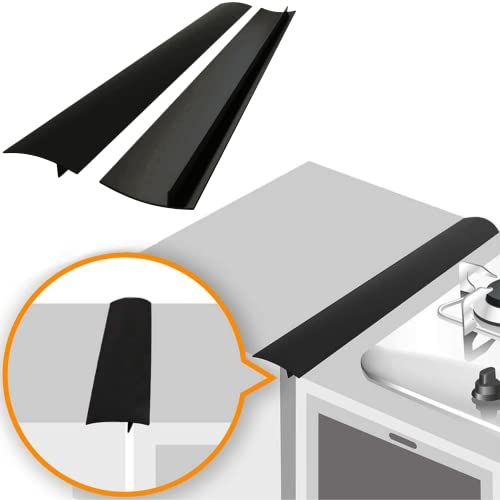
Linda’s Essentials 21-Inch Silicone Covers stands out for its wider stated fit: the 21-inch silicone cover accommodates gaps up to 2.3 inches across. The two-piece pack forms a barrier between the stovetop and counter, and the flexible surface is intended to be easy to clean. The maker says the silicone is heat resistant. Measure both the gap width and the run alongside the stove before choosing this size. Its fixed 21-inch length is the limitation; kitchens with a longer or shorter span may need a different size or model.
Bottom line: Choose it for a 21-inch span and a gap no wider than 2.3 inches.
21-Inch Flexible Silicone Gap Covers
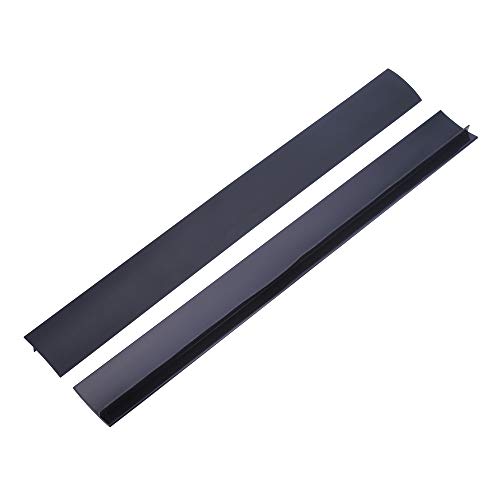
21-Inch Flexible Silicone Gap Covers is the option to consider when a flexible cover may need shortening: the maker says it can be cut to fit a shorter space. Its two-piece food-grade silicone set measures 21 inches long and 2.3 inches wide, with a non-slip surface that conforms to stove and counter edges. The maker also describes it as easy to wipe clean. The size still caps the usable span at 21 inches, so it will not bridge a longer run without a different size.
Bottom line: Pick it when you want a silicone cover that can be cut shorter.
Adjustable Stainless Steel Gap Covers
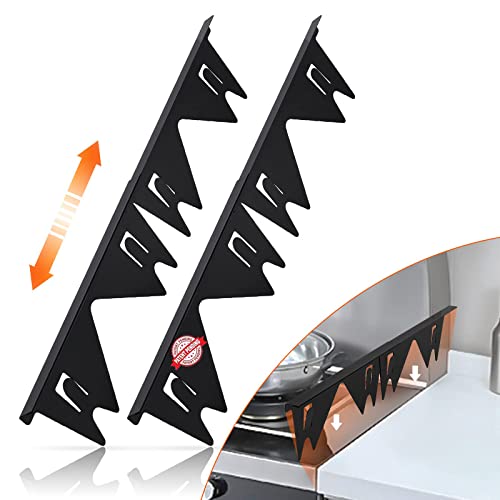
Adjustable Stainless Steel Gap Covers differs from the silicone covers with its retractable stainless steel construction: each piece combines two sliding metal parts, and the pair adjusts from 13.8 to 27.5 inches long. The width is 0.79 inch, while the fit guidance limits the gap to 1–18 mm and calls for at least 3.9 inches of depth. The maker says it suits flat and uneven stove and counter surfaces. Its narrow gap limit makes it a poor match for wider spaces that silicone covers can span.
Bottom line: Choose it for a narrow gap and a metal, adjustable cover.
Lomesion Retractable Stainless Steel Covers

Lomesion Retractable Stainless Steel Covers is another telescoping metal choice, with an L-shaped profile and built-in tabs that bend to create tension during tool-free installation. Its pair adjusts from 13.8 to 27.5 inches and is intended for gaps 0.08 to 0.7 inch wide. The maker says it fits flat or raised stove and counter edges, but its guidance rules out uneven surfaces. That restriction matters for counters or ranges that do not meet evenly; measure the surfaces as well as the gap before selecting it.
Bottom line: Choose it for a flat or raised edge and a gap within its range.
How to choose a stove counter gap filler
Measure the gap width and the length of the exposed stove-counter seam before choosing a cover. Silicone strips in this group are 21 inches long and fit gaps up to 2.3 inches wide; retractable metal guards span 13.8 to 27.5 inches but fit only gaps up to about 0.7 inch. A gap wider than 0.7 inch rules out these metal options. The silicone models are flexible, while the metal models use a narrow telescoping profile. Use the gap’s widest point for your width measurement, especially when the range and counter are not parallel.
The choice also depends on the surface shape. Flexible silicone can conform to a meeting edge, while the L-shaped metal model specifies flat or raised surfaces and excludes uneven ones. A metal guard’s guidance also calls for at least 3.9 inches of depth, so check that available support area before settling on it.
Silicone versus stainless steel gap covers
Silicone covers offer a wider stated gap capacity, while the stainless steel options trade width for adjustable length. Silicone is flexible and the 21-inch model in this group can be trimmed shorter; the metal guards extend from 13.8 to 27.5 inches. Food-grade silicone is a material designation, not a reason to place a cover on a hot burner. Keep every gap cover away from direct flame and check its position if the range moves.
The table matches the fit limits to common measurement needs. Treat maximum widths as limits, not target gaps: a cover should sit securely without obstructing burner controls or getting pinched as the stove shifts.
| Need | Choice | Fit limit |
|---|---|---|
| Gap wider than 0.7 in | Silicone | Up to 2.3 in |
| Adjustable length over 21 in | Telescoping steel | Up to 27.5 in long |
| Shorter than 21 in span | Trimmable silicone | Cut to a shorter length |
Measuring the stove and counter gap
Measure the gap at several points because the distance can change along the stove edge. Record the widest gap, then compare it with the selected cover’s maximum; choose silicone for a gap above 0.7 inch and no wider than 2.3 inches, or metal only within its narrower stated range. Measure the seam length separately: a 21-inch strip cannot cover a longer run, while a telescoping metal strip has a maximum of 27.5 inches.
For retractable steel covers, check that the support depth reaches at least 3.9 inches where required, and confirm the surface shape matches the specific model. Before installing any cover, move the stove carefully enough to avoid trapping or bending the strip, then make sure the cover does not interfere with the range’s movement or controls.
Cleaning and safe use of gap fillers
Wipe silicone covers regularly to remove crumbs and grease, and lift them for cleaning underneath so spills do not remain trapped at the seam. Stainless steel guards have a smooth metal surface that can also be wiped, but telescoping joints and built-in tabs may collect residue; clean those areas without forcing the sliding parts.
Gap fillers sit beside a heat-producing appliance, so they should not touch a flame or block ventilation, burner controls, or a range’s movement. A cover marketed as heat resistant is not a substitute for a cooktop’s safe clearances. Remove a displaced or warped cover before cooking, and consult the appliance manual for required clearances around the range.
Frequently Asked Questions
How wide can a stove gap cover be?
The silicone model here fits gaps up to 2.3 inches wide, while the stainless steel guards are limited to about 0.7 inch. Measure the widest point of the seam before selecting a cover.
Can a stove gap cover be cut shorter?
The flexible silicone cover from 21-Inch Flexible Silicone Gap Covers can be cut shorter according to its maker. Measure the seam first and trim conservatively, since removed material cannot be restored.
How do I measure between a stove and counter?
Measure the gap width at several points and use the widest reading, then measure the seam length separately. For a metal telescoping guard, also check for at least 3.9 inches of support depth where required.
Are silicone stove gap covers safe near burners?
Gap covers belong beside the cooking surface, not over a burner or in contact with flame. Even a heat-resistant material should not obstruct controls, ventilation, or a range’s required clearances.
How often should stove gap covers be cleaned?
Wipe a cover whenever spills or grease accumulate, and lift it periodically to clean the seam beneath. Crumbs trapped under a strip can remain out of sight even when the top looks clean.