
Reflective Paint for Outdoor Use: 3 Options Compared

For reflective paint for outdoor use, Rust-Oleum Reflective Clear Spray Coating is the most versatile choice because its clear spray coating is made for several surfaces, including metal, wood, plastic, concrete, and masonry. Choose White Reflective Paint, 8 oz if you want white brush-on paint instead; Weather Resistant Gold Outdoor Paint is a gold metallic outdoor paint, not a dedicated reflective coating.
We earn a commission if you buy through links on this page. As an Amazon Associate I earn from qualifying purchases. Products are compared on manufacturer specifications, not hands-on testing.
- Best overall: Rust-Oleum Reflective Clear Spray Coating – Clear spray coating is suitable for five listed surface types and indoor or outdoor items.
- Best for white brush-on paint: White Reflective Paint, 8 oz – White reflective paint comes in an 8-ounce size, with a brush and stirring stick included.
- Best for gold metallic finish: Weather Resistant Gold Outdoor Paint – Outdoor gold paint creates a high-gloss metallic sheen, but it is not marketed as a reflective coating.
| Product | Best for | Finish | Application | Size | Shop |
|---|---|---|---|---|---|
| Rust-Oleum Reflective Clear Spray Coating | Clear multi-surface coating | Clear, semi-transparent | Spray | 10 oz | Check Price on Amazon |
| White Reflective Paint, 8 oz | White brush-on projects | White | Brush-on paint | 8 oz | Check Price on Amazon |
| Weather Resistant Gold Outdoor Paint | Gold metallic accents | Gold metallic | Brush-on paint | — | Check Price on Amazon |
Reflective Paint for Outdoor Use
Compare the finish and application type first, since reflective coatings and metallic paints serve different purposes.
Rust-Oleum Reflective Clear Spray Coating

Rust-Oleum Reflective Clear Spray Coating is the clear spray option, so the underlying surface stays visible while the coating adds light-reflective properties. The 10-ounce can is suitable for metal, wood, plastic, concrete, and masonry, and the maker names mailboxes, driveway markers, light posts, fences, trailers, and bicycles among possible uses. The maker recommends several light coats rather than a wet-looking application. This choice suits outdoor objects where keeping the base color visible matters. Its clear, semi-transparent finish will not provide the opaque white look of brush-on paint.
Bottom line: Choose this when you want a clear spray coating for varied outdoor surfaces.
White Reflective Paint, 8 oz
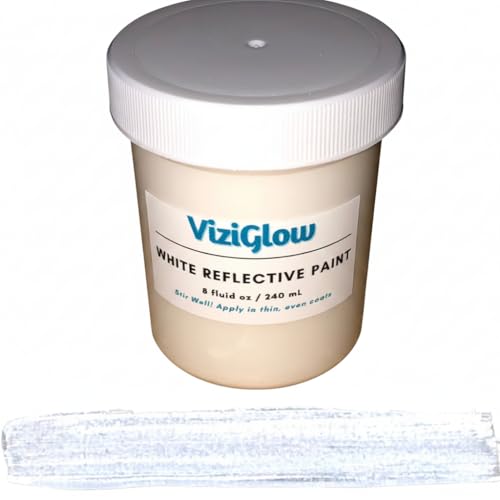
White Reflective Paint, 8 oz differs from the clear spray coating by offering a white brush-on paint solution in an 8-ounce container. A paint brush and stirring stick are included, and the maker says it can be used indoors or outdoors. The white color makes it the fit for projects where a white finish is wanted rather than a transparent coating or metallic gold. It suits small applications where brush control is useful. The specifications do not identify compatible surface materials, so confirm the intended surface is suitable before applying it.
Bottom line: Choose this for a white brush-on finish and an included brush.
Weather Resistant Gold Outdoor Paint

Weather Resistant Gold Outdoor Paint is an outdoor gold paint with a high-gloss metallic, gold-leaf-effect finish, rather than a coating identified as reflective for visibility. The maker recommends two to three thin coats for even coverage and names metal, wood, stone, picture frames, terracotta models, furniture embellishments, and signage as uses. It suits decorative projects where the gold sheen is the goal. It is only a partial match for reflective paint because a metallic finish is not the same as a dedicated coating intended to reflect direct light for nighttime visibility.
Bottom line: Choose this for decorative outdoor gold accents, not nighttime visibility.
How to choose outdoor reflective paint
Choose by the effect you need: a clear reflective coating preserves the surface color, while white paint changes the visible base color. Reflective coatings work by returning some incoming light toward its source; they are most noticeable when a light shines directly on them, rather than in darkness without illumination. For an outdoor marker or fixture, decide whether preserving its color matters before choosing clear or opaque paint. Paint also does not replace a reflector or light where a safety rule requires one. Use the product’s named surface range as a compatibility check, and test a small area first when appearance matters.
Reflective spray versus brush-on paint
Spray coating covers broad surfaces without brush strokes, while brush-on paint offers more control on small areas and edges. Spray paint commonly benefits from several thin passes; heavy wet coats can run or cure unevenly. Keep the can moving and overlap passes slightly to avoid concentrated patches, while following the specific can’s directions for distance and drying time. Brush-on paint is easier to direct onto a narrow target, but visible brush marks can remain. Choose spray for larger varied surfaces if its material list matches the project, and brush-on when you want deliberate coverage in a specific color.
Reflective paint application and visibility limits
Apply reflective coatings to a clean, dry surface, because dirt, loose paint, and moisture interfere with adhesion. Outdoor temperature and humidity affect drying, so use the paint only within the conditions on its label. Reflective paint is not glow-in-the-dark paint: reflective materials need an external light source, while luminous paint stores light and glows temporarily after charging. Neither effect guarantees visibility from every direction; angle, distance, surface coverage, and the light source all matter. For a safety-critical marker, retain required lighting or approved reflectors rather than relying on paint alone.
Common outdoor reflective paint mistakes
The main mistake is confusing reflective, metallic, and glow finishes. Metallic gold can look shiny in daylight without being a coating designed to return direct light toward a driver or flashlight, and glow paint needs prior light exposure. Another mistake is applying one thick coat: multiple light coats are less likely to create a wet-looking surface than a single heavy pass. Avoid painting over a surface that is dirty or peeling, and make sure the chosen paint is intended for the substrate. When the object is used for traffic or other safety marking, paint should not be treated as a substitute for required devices.
Frequently Asked Questions
Does reflective paint glow in complete darkness?
No. Reflective paint needs an external light source, such as headlights or a flashlight, to appear bright; glow-in-the-dark paint instead emits stored light after charging. Neither is a reliable substitute for required lighting or reflectors.
How many coats of reflective spray should I apply?
Several light coats are preferable to a wet-looking heavy coat for reflective spray coating. Allow each pass to dry as directed on the product label, since drying conditions vary with temperature and humidity.
Can reflective paint go on plastic outdoors?
Some reflective coatings are suitable for plastic; check that the product names plastic among its supported surfaces. Clean and dry the plastic first, and test an inconspicuous area if the finish is important.
Is metallic gold paint the same as reflective paint?
No. A metallic gold finish can look shiny, but that does not make it a dedicated light-reflective coating for nighttime visibility. Choose a product specifically described as reflective when returning direct light is the goal.
Can reflective paint replace driveway reflectors?
Do not assume paint can replace reflectors or lights used for safety. Reflective paint needs direct illumination and works only across the area and angles it covers; retain any required safety devices.