
Shoes for Sprained Ankle: 5 Support Options Compared

For a roomy closed-toe recovery shoe, BraceAbility Closed-Toe Medical Walking Shoe is the closest match; its square toe leaves space for swelling, socks or a cast. The other options are walking boots or an ankle brace, so choose them only if that support style matches your clinician’s guidance.
A sprain can range from mild ligament stretching to a more serious injury, and footwear alone cannot determine the right treatment. If you cannot take four steps, or have tenderness at the ankle bones, seek medical evaluation before choosing support.
We earn a commission if you buy through links on this page. As an Amazon Associate I earn from qualifying purchases. Products are compared on manufacturer specifications, not hands-on testing.
- Best overall: BraceAbility Closed-Toe Medical Walking Shoe – A closed-toe shoe with a roomy square toe accommodates swelling, socks or a cast.
- Best for a short boot: Jewlri Short Air CAM Walker Boot – A short CAM boot has a rigid frame and removable washable liner.
- Best for adjustable air support: Honprodu Air Walking Boot – An adjustable air cushion lets the wearer change pneumatic pressure.
- Best for shoe-compatible support: WHCOOL Slim-Fit Ankle Brace – A slim-fit lace-up brace wraps the ankle and is intended for wear with footwear.
| Product | Best for | Support type | Size or fit | Weight | Shop |
|---|---|---|---|---|---|
| BraceAbility Closed-Toe Medical Walking Shoe | Roomy recovery shoe | Closed-toe shoe | Medium; women’s 7–9.5 / men’s 6–8.5 | 0.53 lb | Check Price on Amazon |
| Jewlri Short Air CAM Walker Boot | Short boot support | Short CAM walker boot | Medium | 1.74 lb | Check Price on Amazon |
| Honprodu Air Walking Boot | Adjustable air cushion | Air walking boot | Medium | 1.94 lb | Check Price on Amazon |
| kefit Inflatable Fracture Boot | Inflatable ankle support | Fracture boot | Medium; men’s 6–9 / women’s 7–10 | 2.1 lb | Check Price on Amazon |
| WHCOOL Slim-Fit Ankle Brace | Brace under footwear | Lace-up ankle brace | Medium; ankle 12–13 in | — | Check Price on Amazon |
Shoes and support for a sprained ankle
Compare the support style and fit before choosing footwear for an injured ankle.
BraceAbility Closed-Toe Medical Walking Shoe

Unlike the taller boots, this closed-toe medical shoe has a square toe box designed to leave room for swelling, socks or a cast. Its adjustable unisex sizing fits either foot, and the maker says the closed toe helps keep dressings dry and clean. The 3.5-inch height and 10.75-inch length are useful fit measurements to compare with the injured foot and any dressing. It suits someone whose care plan calls for a protective shoe rather than a rigid boot. The specifications give only a Medium fit range, so confirm sizing against the chart before ordering.
Bottom line: Choose this when a roomy closed-toe recovery shoe is preferred over a tall boot.
Jewlri Short Air CAM Walker Boot
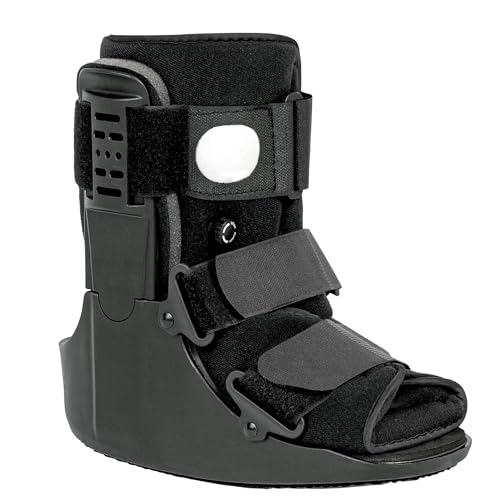
Among the boot options, this one is identified as a short CAM walker and includes a rigid plastic frame with a removable liner. The maker says the liner can be washed in cold water and the thick insole is intended to absorb shock. It fits either foot and is offered in Medium, making it a possible match when a clinician recommends boot-style support for an injury or recovery. A boot is bulkier than a medical shoe and will not suit someone seeking ordinary footwear. Measure the injured foot length and ankle width, as swelling can affect the fit.
Bottom line: Choose this if a clinician recommends a short CAM boot and washable liner.
Honprodu Air Walking Boot

Its adjustable air cushion distinguishes this walking boot from the other boot choices, with straps designed to secure the fit as swelling changes. The maker says the pneumatic support can be adjusted and the sole is non-slip. It fits either foot and comes in Medium, so it may suit someone directed to use a boot with adjustable cushioning. Measure the foot and use the size chart before buying; do not use air pressure as a substitute for clinical advice.
Bottom line: Choose this for clinician-directed boot support with an adjustable air cushion.
kefit Inflatable Fracture Boot
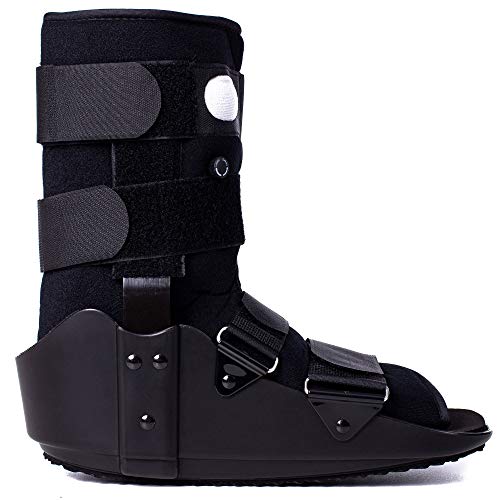
This boot pairs side aluminum brackets with a built-in inflatable bag, unlike the short CAM design or adjustable-cushion boot. The maker says the air compression can be changed for different swelling levels, and the rocker bottom is intended to support a smoother gait. Medium fits men’s shoe sizes 6–9 and women’s 7–10. It suits a buyer whose care plan calls for a structured fracture boot, rather than a low-profile shoe. At 2.1 pounds, it weighs more than the other options with weights, which may matter if minimizing footwear weight is important.
Bottom line: Choose this when side brackets and inflatable support match the prescribed boot style.
WHCOOL Slim-Fit Ankle Brace

This is an ankle brace rather than a shoe or walking boot, with two shaped side pads and a two-direction hook-and-loop wrap. The maker describes it as intended for light sprains and says the air-fabric lining is designed for breathability. Medium is sized for a 12–13-inch ankle; the maker advises sizing up for a wide foot or swelling. It may suit someone seeking ankle support compatible with their own footwear, but it does not provide the closed toe or rigid frame of the recovery shoes and boots. Measure ankle circumference before selecting the size.
Bottom line: Choose this when a measured ankle brace, rather than a shoe or boot, is appropriate.
How to choose footwear for a sprained ankle
Choose support based on the injury and the care plan, not the word “sprain” alone. A closed-toe medical shoe can protect dressings and allow room for swelling; a CAM or fracture boot adds a rigid frame for cases where more restriction is directed. An ankle brace is a separate option that wraps the joint and is generally worn with footwear.
For ordinary shoes, a firm heel counter, secure lacing and a stable, relatively stiff sole help limit unwanted foot movement. Avoid a shoe that pinches the ankle or presses on swelling. A practical rule: if swelling or a dressing makes the foot too wide for a comfortable shoe, do not force it into that shoe; ask the treating clinician whether a recovery shoe or boot is suitable. Sudden inability to bear weight warrants evaluation, not a footwear workaround.
Fit checks for recovery shoes, boots and braces
Measure both foot length and ankle circumference when swelling is present, and use the injured side for the fit decision. A cast shoe needs enough toe-box room for the cast or dressing without letting the foot slide forward; oversized footwear can also reduce stability. For braces, measure around the ankle where the maker’s size chart directs, and account for swelling rather than relying only on usual shoe size.
Try support over the sock or dressing you expect to wear, and check that straps or laces do not create pressure points. A properly fitted walking boot should hold the foot securely without numbness, color change or increasing pain. Loosen or remove a device and seek medical advice if those symptoms occur. Boot height, shoe sizing and ankle circumference measure different things, so do not compare them as interchangeable fit numbers.
Walking shoe, boot and ankle brace differences
A medical shoe, a walking boot and an ankle brace provide different kinds of coverage. The table summarizes the basic choice; the treating clinician’s recommendation takes priority, especially after a fracture, surgery or severe sprain.
| Support type | What it covers | Useful when |
|---|---|---|
| Closed-toe medical shoe | Foot and toes | A roomy protective shoe is directed |
| Walking or fracture boot | Foot and ankle in a rigid frame | More structured support is directed |
| Ankle brace | Ankle with a wrap and pads | Support with separate footwear is appropriate |
These categories are not substitutes for one another: a brace does not enclose the toes, and a medical shoe does not have the same rigid frame as a boot. Choose the type first, then compare size and closure.
When an ankle injury needs medical attention
Get an ankle injury assessed when walking is difficult, pain is severe, or swelling and bruising are substantial. The Ottawa ankle rules are a clinical screening tool: ankle-area pain plus bone tenderness at the back edge or tip of either ankle bone, or inability to take four steps, can indicate a need for imaging. These criteria are not a self-diagnosis and do not rule out every injury.
Seek urgent care for a visibly deformed ankle, an open wound, numbness, a cold or blue foot, or rapidly worsening symptoms. A shoe or brace cannot rule out a fracture or restore a torn ligament. Once a clinician identifies the injury, ask whether weight-bearing is allowed and what support type and duration are appropriate; those instructions determine whether a shoe, boot or brace is suitable.
Frequently Asked Questions
Can I walk in a shoe with a sprained ankle?
Some mild sprains can be managed in supportive footwear, but the right choice depends on pain, stability and injury severity. If you cannot take four steps, or have tenderness over an ankle bone, seek evaluation rather than trying to walk it off.
Should a sprained ankle use a boot or brace?
A boot provides a rigid frame, while a brace wraps the ankle and is used with separate footwear. The injury and clinician’s assessment determine which level of support is appropriate; a brace is not a replacement for a boot when rigid immobilization is prescribed.
How should a walking boot fit around swelling?
A walking boot should secure the foot without causing numbness, color change or increasing pain. Measure the injured foot and ankle, and reassess the fit as swelling changes; contact a clinician if the boot becomes painful or loose.
When should I seek care for ankle pain?
Seek prompt evaluation if you cannot bear weight for four steps or have tenderness over the back edge or tip of an ankle bone. Visible deformity, an open wound, a cold or blue foot, or numbness calls for urgent care.
Can an ankle brace fit inside a regular shoe?
Many slim braces are intended to be worn with footwear, but fit depends on the brace, shoe volume and swelling. Check that the shoe does not squeeze the brace or press painfully on the ankle.