
Brake Cables for Road Bikes: 4 Kits Compared

For brake cables for road bikes, the Shimano Road/MTB set is the named match, with stainless steel inner wires and 2,200 mm of 5 mm housing. Choose a cable-only option if your housing is reusable; replace damaged or kinked housing with a complete kit.
We earn a commission if you buy through links on this page. As an Amazon Associate I earn from qualifying purchases. Products are compared on manufacturer specifications, not hands-on testing.
- Best overall: Shimano Road/MTB Cable and Housing Set – Includes stainless steel front and rear inner wires plus 2,200 mm of housing.
- Best for performance-focused rebuilds: Jagwire PCK200 Pro Road Brake Cable Kit – Includes 3 m of Kevlar-reinforced housing and polished inner cables.
- Best for cable-only replacement: Eastern Power Teflon Brake Cables – Provides two 1,700 mm Teflon-coated inner cables without a housing kit.
| Product | Best for | Inner cable length | Inner wire diameter | Housing | Shop |
|---|---|---|---|---|---|
| Shimano Road/MTB Cable and Housing Set | Complete replacement | 1,000 mm front; 2,050 mm rear | 1.6 mm | 2,200 mm; 5 mm | Check Price on Amazon |
| Jagwire PCK200 Pro Road Brake Cable Kit | Full kit upgrade | 1,500 mm front; 2,800 mm rear | — | 3,000 mm; 5 mm | Check Price on Amazon |
| CKANDAY Universal Brake Cable Kit | Custom-length setup | 2,000 mm each | 1.5 mm | 2,500 mm; 5 mm | Check Price on Amazon |
| Eastern Power Teflon Brake Cables | Coated wire replacement | 1,700 mm each | 1.5 mm | Not included | Check Price on Amazon |
Brake Cables for Road Bikes Compared
Compare what each option includes and confirm your brake type and cable-end fit before choosing.
Shimano Road/MTB Cable and Housing Set

Shimano Road/MTB Cable and Housing Set is the named road-bike match and the only set here with a stainless steel inner wire pair plus housing. It includes one 1,000 mm cable, one 2,050 mm cable, 2,200 mm of 5 mm housing, four ferrules and two cable tips. The maker says the stainless wires offer smooth movement and greater corrosion resistance. This suits a basic front-and-rear cable refresh when the included lengths work for the frame. The shorter front wire may not reach every routing path, so measure the old cable before cutting.
Bottom line: Choose this if you need both inner cables and housing in one set.
Jagwire PCK200 Pro Road Brake Cable Kit

Jagwire PCK200 Pro Road Brake Cable Kit differs by pairing longer rear cable length with Kevlar-reinforced housing. The kit has 3 m of 5 mm housing, polished inner cables, Slick-Lube liners, and cable lengths of 1,500 mm for the front and 2,800 mm for the rear. The maker says the combination is intended for smooth, responsive brake pulls, and compatibility is specified for Shimano and SRAM road bikes. This suits a full rebuild on those systems. It is a narrower compatibility choice than universal sets, so riders with other brake systems should verify fit before purchase.
Bottom line: Pick this for a full Shimano- or SRAM-compatible road cable rebuild.
CKANDAY Universal Brake Cable Kit

CKANDAY Universal Brake Cable Kit offers two equal-length 2,000 mm inner cables, rather than separate front and rear lengths. Its kit also includes 2,500 mm of 5 mm PVC housing and crimp accessories; the maker says it fits standard brake systems on road, mountain, and folding bikes. The extra versatility suits a rider who wants to trim cables for a custom route or bike fit. Its equal cable lengths require careful measurement before cutting, and the maker advises measuring first; avoid confusing this brake set with a gear-shift cable kit.
Bottom line: Choose this if equal-length cables and trimmable housing suit your routing.
Eastern Power Teflon Brake Cables
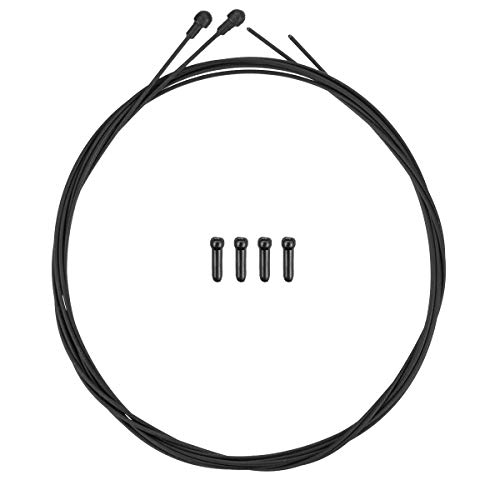
Eastern Power Teflon Brake Cables is a cable-only choice with two 1,700 mm, 1.5 mm Teflon-coated inner wires, not a housing-and-wire kit. The maker says the coating reduces friction and the galvanized steel wire resists corrosion; the package is described as compatible with Shimano and SRAM brakes and suitable for road, mountain, and kids’ bikes. This works when existing housing is in good condition and correctly routed. Because no housing is included, riders replacing cracked, kinked, or contaminated housing will need a separate housing solution.
Bottom line: Pick these if you are replacing inner wires and keeping serviceable housing.
How to choose road bike brake cables
Choose by matching cable type, length, and whether you need housing as well as inner wire. Most standard road brake inner wires are 1.5 mm in diameter; these options include both 1.5 mm and 1.6 mm wires, so match the old cable or brake maker’s specification. Housing is commonly 5 mm, while gear-shift housing is narrower and is not a substitute for brake housing. Measure the existing inner cable from end to end before trimming, then leave enough housing for smooth steering movement without tight bends. If you are replacing a frayed inner wire, inspect the housing: cracked liners, corrosion, or a kink are reasons to replace the whole run.
A complete kit is the practical choice when housing is damaged, while cable-only packs make sense if housing remains smooth and intact. End fittings must also match the brake lever; road brake cables often use a small road-style end, while other systems may use a different stop shape.
Road brake cable length and fit
Measure the front and rear runs separately because rear routing is often longer. The kits here give front lengths from 1,000 to 1,500 mm and rear lengths from 1,700 to 2,800 mm, while equal-length options provide 1,700 or 2,000 mm per wire. A longer cable can be trimmed, but a cable that is too short cannot be repaired safely with a splice. Check the route at full handlebar turn in both directions: the housing must not pull tight, kink, or interfere with the brake lever.
With cable housing, preserve a broad curve rather than forcing a short, sharp bend; tight bends add friction and can slow brake return. Use the actual old route as a template, then recheck lever movement and brake release after installation. If the existing cable’s end shape is unclear, remove it and compare it with the new cable before cutting.
Brake cable kits compared by included parts
Choose a full kit when both housing and inner wires need replacement; choose cable-only wires when housing is still sound. Housing matters because inner wire runs through its liner, and a damaged or contaminated liner can undermine a fresh cable. Ferrules seat the housing ends, while cable end caps help keep a trimmed wire from fraying. Listed front and rear lengths are useful only when they match your actual frame route.
| Need | Choose a type | Why it fits |
|---|---|---|
| Replace housing and wires | Complete brake cable kit | Includes inner cables and outer housing |
| Keep intact housing | Inner cable pair | Replaces worn wires without a housing change |
| Set custom runs | Trimmable cable and housing kit | Allows routing to be cut to measured length |
Never use a shift cable as a brake cable: brake loads are higher, and the systems use different cable and housing specifications. After installation, inspect that cable ends are seated and test braking at walking speed in a safe area before riding in traffic.
Frequently Asked Questions
How often should road bike brake cables be replaced?
Replace a cable when strands are frayed, it shows corrosion, or the lever no longer returns smoothly after housing and brake alignment are checked. Inspect cables at least during routine brake maintenance, especially after wet or gritty riding.
Can I cut a road bike brake cable to length?
Yes, excess inner wire and housing can be trimmed after measuring the routed path, but leave enough length for full handlebar turns without pulling tight. Use a proper cable cutter and cap the finished inner wire to reduce fraying.
Are road bike brake cables the same as shift cables?
No; brake systems use heavier-duty cable and housing than gear shifting, and the two should not be interchanged. Brake housing is commonly 5 mm, while shift housing is typically narrower.
What diameter is a standard road bike brake cable?
A common inner brake cable diameter is 1.5 mm, though some kits use 1.6 mm wire. Match the replacement to the cable removed or the brake maker’s specification.
Should I replace brake housing with the cable?
Replace housing when it is kinked, cracked, corroded, or causes the inner wire to drag; a clean, undamaged housing run can often remain in service. Use brake-rated housing and preserve smooth curves through the frame.