
Best Permanent Marker for Rubber: 3 Paint Pens Compared

For most rubber marking, choose Artsunlvy Black Oil-Based Paint Pens: its black oil-based paint pens are explicitly intended for rubber and tires, with a medium point for visible marks. Choose Marsrock White Paint Pens, 3 Tips when white ink or multiple tip widths suit your surface better; Overseas 8-Color Oil-Based Paint Pens is the assorted-color option.
Paint markers apply opaque paint-like ink rather than the dye-style ink found in many standard permanent markers, making them useful when a rubber surface needs a more visible mark.
We earn a commission if you buy through links on this page. As an Amazon Associate I earn from qualifying purchases. Products are compared on manufacturer specifications, not hands-on testing.
- Best overall: Artsunlvy Black Oil-Based Paint Pens – Black oil-based paint pens are specified for rubber and tires and come with a medium point.
- Best for white marks: Marsrock White Paint Pens, 3 Tips – White ink and three tip sizes cover fine detail through broader touch-ups.
- Best for color choice: Overseas 8-Color Oil-Based Paint Pens – The set has eight assorted colors and a medium round tip.
| Product | Best for | Ink color | Tip | Pack count | Shop |
|---|---|---|---|---|---|
| Artsunlvy Black Oil-Based Paint Pens | Black rubber marks | Black | Medium point | 2 pens | Check Price on Amazon |
| Marsrock White Paint Pens, 3 Tips | White touch-ups | White | 0.7, 1.0, 2–3 mm | 3 pens | Check Price on Amazon |
| Overseas 8-Color Oil-Based Paint Pens | Assorted color marks | Assorted colors | Medium round | 8 pens | Check Price on Amazon |
Permanent Markers for Rubber
Compare color, tip width and intended surface to match a marker to your rubber project.
Artsunlvy Black Oil-Based Paint Pens

Artsunlvy Black Oil-Based Paint Pens is the clearest match for rubber and tire marking among these options: the black oil-based paint pens are explicitly described for those surfaces. The two-pack uses a medium round point, a practical middle ground for writing and ordinary touch-ups. The maker says the valve-action pens dry quickly and resist water. Black ink is the limitation if you need a light mark on dark rubber; a white paint pen will be easier to see there. Test a small area first, since rubber compounds and surface textures vary.
Bottom line: Pick this when you want black, medium-point paint markers for rubber or tires.
Marsrock White Paint Pens, 3 Tips
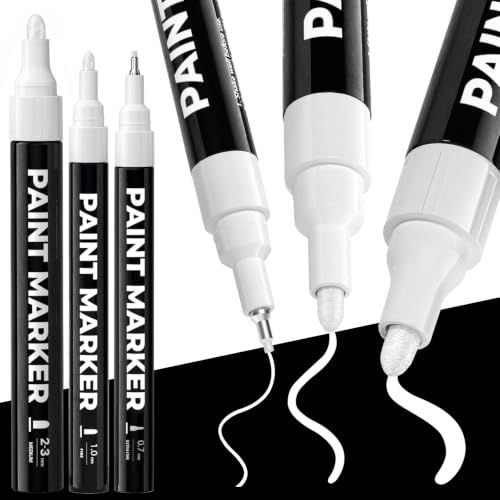
Marsrock White Paint Pens, 3 Tips is the only white-ink set here, and its three tip widths make it the most adaptable choice for fine lines and larger touch-ups. The set includes 0.7 mm, 1.0 mm and 2–3 mm tips, with valve-action flow and 5.5 g of ink per marker. The maker describes the ink as waterproof and quick-drying. White can stand out against dark rubber, but the specifications do not identify a specific rubber item or use case, so confirm the intended surface and test adhesion before committing to a visible repair.
Bottom line: Choose this for white marks when tip-size flexibility matters.
Overseas 8-Color Oil-Based Paint Pens

Overseas 8-Color Oil-Based Paint Pens gives you eight assorted colors, unlike the black-only and white-only sets. Each marker contains 5 ml of ink, and the medium round nib is suited to general marking rather than very fine lettering. The maker says the ink dries within a minute and resists water and fading. This is a less direct choice than black or white when contrast against a particular rubber color is essential.
Bottom line: Pick this when assorted colors matter more than a single high-contrast shade.
How to choose a rubber marker
Match ink color and tip width to the mark before choosing a set. White generally contrasts on black rubber, while black is easier to see on pale rubber; on colored rubber, test the actual shade because contrast changes with the surface. Fine tips suit small lettering, while broad tips cover more area but can blur narrow marks. Paint markers use paint-like ink, whereas conventional permanent markers use dye or pigment ink; the paint-style option is often selected for opaque coverage. Rubber bends and flexes, so even a permanent mark may wear or crack under repeated movement. For a small, flexible part, prioritize a narrow mark over a broad painted area.
| Need | Marker choice |
|---|---|
| Dark rubber, light mark | White paint pen |
| Light rubber, dark mark | Black paint pen |
| Several shades | Assorted-color paint pens |
| Fine detail | Fine tip, if available |
Preparing rubber for a lasting mark
Clean, dry rubber gives a marker a better chance of adhering than a dusty or oily surface. Wash off dirt with mild soap and water, rinse, and let the surface dry fully before marking; avoid applying ink over tire dressing or silicone residue. Test the marker on a hidden patch and let it dry before handling, since a surface that feels dry may still transfer under rubbing. Silicone rubber is especially difficult for coatings to adhere to because it has low surface energy; use a marker only if the maker identifies the material and the test patch holds. Keep the mark away from critical tire sidewall lettering or damage indicators.
Rubber flexibility and marker durability
Flexible rubber moves under bending and compression, so a rigid paint film can crack or flake even when its ink is called permanent. Keep marks small on parts that flex repeatedly, and avoid thick layers that create a larger brittle patch. Water resistance does not guarantee resistance to abrasion, cleaners, tire heat or prolonged sunlight; those are separate conditions. Outdoor exposure also varies: a mark on a stationary rubber mat faces different wear from one on a tire. If the mark must remain legible through repeated handling or weather, test a representative piece through the same conditions before relying on it.
Safe use on tires and other rubber
Use paint markers with ventilation and keep ink away from eyes, skin and flames; oil-based paint-marker inks can contain volatile solvents. Do not mark tread contact surfaces, tire sidewalls in ways that obscure safety markings, or any area where a coating could affect traction or inspection. Tire markings should be small and temporary unless the tire maker permits the intended product and location. Keep marker caps on when not in use, and let the ink dry completely before stacking or handling marked parts. For an item that contacts food or skin, do not assume a permanent marker is safe for that use.
Frequently Asked Questions
Will permanent marker stay on rubber tires?
A paint marker may adhere to a clean tire surface, but flexing, abrasion, weather and tire chemicals can wear the mark. Test a small area and keep marks off the tread and safety markings.
How should I prepare rubber before marking it?
Remove dirt and dressing with mild soap and water, then let the rubber dry fully. Test a hidden spot first, especially on silicone rubber, which is difficult for coatings to grip.
Is paint marker better than regular marker on rubber?
Paint markers are generally chosen when opaque coverage is needed, while conventional permanent markers use dye or pigment ink that may show less clearly. The best result still depends on rubber composition, surface finish and flexing.
How long should paint marker ink dry on rubber?
Drying time depends on ink and conditions; the maker of Overseas 8-Color Oil-Based Paint Pens says its ink dries within a minute. Give the mark longer before rubbing or stacking, and check for transfer on a test patch.
What marker color shows on black rubber?
White is usually easier to see on black rubber than black ink, though textured or dusty surfaces can reduce visibility. Test the chosen paint pen on the actual rubber before making a larger mark.