
Lifetime Kenai 103 Sit-On-Top Kayaks Compared by Fit

Lifetime Kenai 103 is the closest match for most people seeking a Lifetime Kenai 103, with fishing features and a paddle included. Its name and stated length do not align, so confirm the kayak’s length before ordering; choose Lifetime Tamarack Pro 103 if you want a clearly sized 10-foot-3-inch fishing kayak with an adjustable framed seat.
Sit-on-top kayaks have an open deck rather than an enclosed cockpit, which makes easy entry and exit part of their appeal.
We earn a commission if you buy through links on this page. As an Amazon Associate I earn from qualifying purchases. Products are compared on manufacturer specifications, not hands-on testing.
- Best overall: Lifetime Kenai 103 – It is explicitly named Kenai 103 and includes a paddle and fishing features.
- Best for seat adjustment: Lifetime Tamarack Pro 103 – Its 10-foot-3-inch length and adjustable framed seat and footrests are specified.
- Best for lighter carry weight: Lifetime Kenai 123 in. – At 53 pounds, it is lighter than the similarly sized Kenai 103 option.
| Product | Best for | Length | Weight | Fishing features | Shop |
|---|---|---|---|---|---|
| Lifetime Kenai 103 | Fishing starter setup | 123 in. (listed) | 53.5 lb. | Rod holders, paddle included | Check Price on Amazon |
| Lifetime Tamarack Pro 103 | Adjustable seating | 123 in. | 57.5 lb. | Rod holders, ruler, tackle storage | Check Price on Amazon |
| Lifetime Kenai 123 in. | Lighter Kenai option | 123 in. | 53 lb. | — | Check Price on Amazon |
| Emotion Spitfire 9 ft. | Shorter kayak option | 108 in. | 45 lb. | — | Check Price on Amazon |
| Lifetime Lockport 94 | Compact storage | 112 in. | 40 lb. | Rod holders | Check Price on Amazon |
Lifetime Kenai 103 Sit-On-Top Kayaks and Alternatives
Compare the model names, dimensions and equipment to find the kayak that best matches your intended use.
Lifetime Kenai 103

Lifetime Kenai 103 is the only option explicitly named Kenai 103, and it comes with a paddle, rod holders, accessory mounting and tackle-box storage. Its length is 123 inches, which conflicts with the 103 designation; confirm the length before ordering if storage space or transport dimensions are critical. The maker specifies a 275-pound weight capacity, so include the paddler and all carried gear when checking the load. Its flat bottom and chine rails are intended to support stability, while deep tracking channels are intended to aid control.
Bottom line: Choose this for the Kenai 103 name and included fishing setup, after confirming length.
Lifetime Tamarack Pro 103
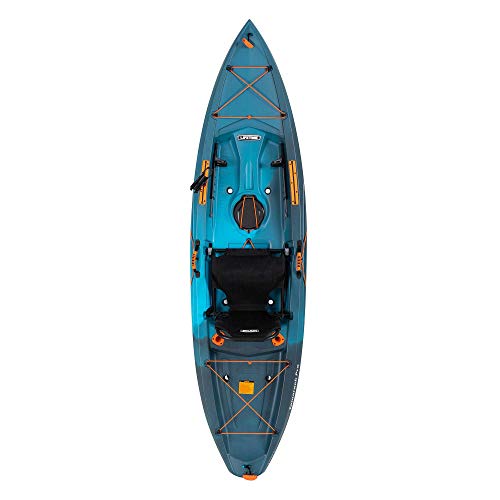
Lifetime Tamarack Pro 103 is the clearly dimensioned 10-foot-3-inch fishing alternative, with one adjustable and two flush-mounted rod holders, accessory mounts, tackle storage and a catch-measuring ruler. The adjustable framed seat and footrests allow position changes, a useful distinction for paddlers who want more setup flexibility. A center hatch includes a bucket, and the deeper tank well and bow and stern bungees provide additional places for gear. At 57.5 pounds, it is heavier than the Kenai options here, which matters if one person must carry it to the water.
Bottom line: Choose this if a specified 10-foot-3-inch length and adjustable seating matter most.
Lifetime Kenai 123 in.

Lifetime Kenai 123 in. shares the Kenai name and 123-inch length, but its product name does not identify it as the 103 model. It weighs 53 pounds, half a pound less than Lifetime Kenai 103, and has an adjustable padded seat and backrest. The flat bottom, chine rails and deep hull channels are intended to support stability and tracking. UV-protected high-density polyethylene construction is specified. This option suits someone who wants a Kenai at the 123-inch length, but the features do not establish the same fishing equipment as Lifetime Kenai 103.
Bottom line: Choose this if the Kenai name and 123-inch length matter more than specified fishing gear.
Emotion Spitfire 9 ft.
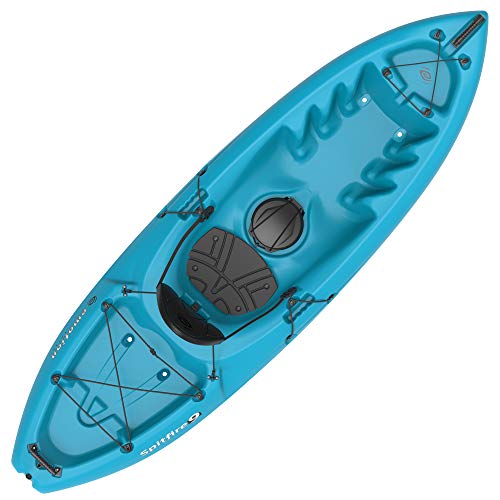
Emotion Spitfire 9 ft. is the shortest and lightest alternative here, at 108 inches and 45 pounds, rather than a Kenai. Its padded seat, molded footwells and paddle keepers suit buyers prioritizing a compact sit-on-top with basic onboard storage. A rear tankwell uses cargo-net lacing, and a hatch provides below-deck storage. The kayak has self-bailing scupper holes in the cockpit and tankwell, which let water drain.
Bottom line: Choose this if lower carry weight and a shorter hull are your main priorities.
Lifetime Lockport 94

Lifetime Lockport 94 stands apart with a two-piece modular hull that separates and nests for storage, plus a SlideLock attachment system. At 112 inches and 40 pounds, it is also shorter and lighter than the Kenai models. It includes a paddle, rod holders and an adjustable seat, pairing some fishing utility with a design aimed at easier transport and storage. Its 30-inch width is narrower than the 31-inch options here. Buyers seeking one-piece Kenai 103 construction should instead focus on Lifetime Kenai 103 or the other Kenai-length alternatives.
Bottom line: Choose this if nested storage and a modular two-piece design are priorities.
How to Choose a Lifetime Kenai 103
Start with the exact model and measured length, then weigh the equipment and carrying demands. The Kenai 103 name points to a 10-foot-3-inch kayak, or 123 inches, but Lifetime Kenai 103 lists both Kenai 103 and a 123-inch length; confirm the model dimensions before buying if a vehicle rack or storage space is tight. Kayak length affects storage and handling: a shorter hull is easier to turn, while a longer hull generally tracks straighter. Compare the carry weights as well as the onboard features. A paddle, rod holders and tackle storage may be useful for fishing, while adjustable seating or a modular hull may better serve other needs.
Kayak Length, Weight and Transport Fit
Measure the full kayak length against your rack, garage and launch route before committing; a 123-inch hull is 10 feet 3 inches. Allow extra room beyond the hull’s length for rack supports and tie-down straps, and secure both ends for transport. A kayak’s weight is the boat weight, not a loaded carry weight; add the paddle and gear when judging whether one person can move it. For a single paddler, a lightweight trolley or a second person can help move a kayak from parking to shore. The 40- to 57.5-pound spread across these options is substantial for repeated carries, even where hull lengths are similar.
Sit-On-Top Kayak Safety and Drainage
Wear a properly fitted, U.S. Coast Guard-approved life jacket on every paddle, and check local rules before launching. Sit-on-top kayaks have an open deck, so paddlers should expect to get wet and dress for the water temperature, not just the air. Scupper holes drain water from the deck; Emotion Spitfire 9 ft. explicitly includes them, but drainage features do not replace a bilge plan or safe-weather judgment. Secure loose gear before launch, keep the paddle attached only when appropriate for the conditions, and avoid overloading the kayak. Capacity includes the paddler and all gear, so stay within the limit and preserve room for movement.
Fishing Features and Onboard Storage
Rod holders, accessory mounts and tackle storage reduce the need to improvise fishing-gear placement, but they do not remove the need to balance a kayak. Keep heavier gear low and near the centerline; uneven loads can affect stability and tracking. Hatch storage is useful for items that should stay below deck, while open tank wells and bungees suit bulky gear that must be reached quickly. A paddle keeper helps prevent a loose paddle from drifting away, but it should not interfere with a quick exit. Before loading, check that tackle boxes, coolers and rods are secured and that the combined load stays below the manufacturer’s capacity.
Frequently Asked Questions
How long is a 103 kayak in inches?
A 10-foot-3-inch kayak is 123 inches long. Verify the actual model measurement when the name and listed length do not agree.
What does a sit-on-top kayak feel like?
A sit-on-top kayak has an open deck rather than an enclosed cockpit, so getting in and out is direct but splashes and water on deck are normal. Dress for the water temperature and wear a properly fitted life jacket.
How much weight can a kayak carry?
Use the manufacturer’s capacity for that specific model and count the paddler, paddle and all gear together. Lifetime Kenai 103 specifies a 275-pound capacity; keep the total below that limit.
Do kayak scupper holes need plugs?
Scupper holes are designed to drain water from a sit-on-top deck, and plugs can reduce water coming up through them in some conditions. Emotion Spitfire 9 ft. has self-bailing scupper holes; make any plug decision based on conditions and the kayak’s intended drainage.
How should I secure a kayak on a car rack?
Use rack supports appropriate for the hull and secure the kayak with straps across the hull plus bow and stern tie-downs. Check the straps again after a short drive, since loose tie-downs can let a kayak shift.