
Neretva Espresso Machines: 3 Models Compared

For most home baristas, Neretva 15-Bar Espresso Machine, Silver is the clearest fit because its pressure gauge and 198°F temperature control offer visible brewing cues. Choose Neretva Retro Espresso Machine, Green if you specifically want a 58 mm portafilter, or Neretva 20-Bar Espresso Machine, Beige if a temperature display and compact listed height of 9.1 inches matter more.
These machines use a pump and portafilter to brew espresso, with steam wands or frothers for milk drinks; pump pressure ratings are not the same as pressure at the coffee puck.
We earn a commission if you buy through links on this page. As an Amazon Associate I earn from qualifying purchases. Products are compared on manufacturer specifications, not hands-on testing.
- Best overall: Neretva 15-Bar Espresso Machine, Silver – A built-in pressure gauge pairs with 198°F temperature control.
- Best for 58 mm baskets: Neretva Retro Espresso Machine, Green – It is the only model here with a specified 58 mm portafilter.
- Best for temperature display: Neretva 20-Bar Espresso Machine, Beige – Its temperature monitor displays readings, and its height is 9.1 inches.
| Product | Best for | Pump pressure | Temperature feature | Shop |
|---|---|---|---|---|
| Neretva 15-Bar Espresso Machine, Silver | Visible brew cues | 15 bar | 198°F control | Check Price on Amazon |
| Neretva Retro Espresso Machine, Green | 58 mm portafilters | 15 bar | 198°F; instant heating | Check Price on Amazon |
| Neretva 20-Bar Espresso Machine, Beige | Compact-height counters | 20 bar | Temperature display | Check Price on Amazon |
Neretva espresso machines compared
Compare the pressure controls, portafilter fit and temperature features before choosing a machine.
Neretva 15-Bar Espresso Machine, Silver

For a visible brewing cue, this silver model has a built-in pressure gauge alongside 198°F temperature control and pre-infusion. The maker describes its pump as 15 bar; the rating is a pump specification, not a guarantee of pressure at the coffee puck. A milk frother supports latte and cappuccino preparation, and the body is stainless steel. This suits a home barista who wants a gauge while adjusting grind, dose and tamp.
Bottom line: Choose this if you want a pressure gauge and temperature control in a stainless-steel machine.
Neretva Retro Espresso Machine, Green
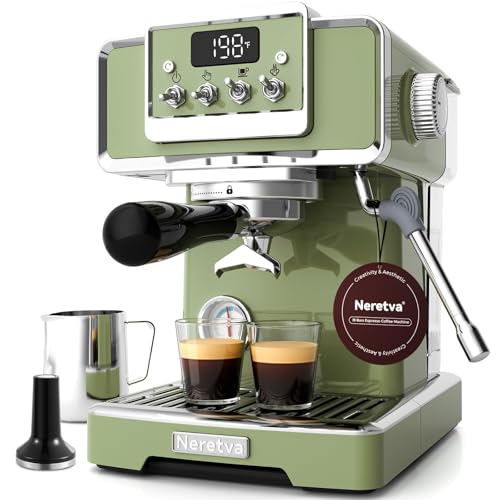
The defining distinction is a specified 58 mm portafilter, a useful match for buyers already using that basket size. This green retro machine also has a visible pressure gauge, a steam wand and an over-pressure valve (OPV). The maker says its 15-bar pump and instant-heating boiler reach 198°F for extraction. The OPV is intended to release excess pressure. This model suits someone prioritizing a full-size portafilter and manual milk steaming. Its 13.8-inch height is greater than the 9.1-inch height given for Neretva 20-Bar Espresso Machine, Beige, so measure available counter clearance.
Bottom line: Choose this if your basket setup calls for 58 mm and you want a steam wand.
Neretva 20-Bar Espresso Machine, Beige

The beige model stands apart with a temperature monitor and a height of 9.1 inches, rather than the pressure gauge emphasized by the other two machines. Its maker specifies a 20-bar pump, a 1350-watt boiler and low-pressure pre-infusion. The monitor displays temperature readings, and the machine is described as super compact. This fits buyers who prioritize visible temperature and a low listed height. The maker does not identify a portafilter diameter, so confirm basket compatibility if you already own espresso accessories.
Bottom line: Choose this if a temperature display and low listed height are your priorities.
How to choose a Neretva espresso machine
Start with basket compatibility and the controls you will use, not the pump’s headline bar rating. Espresso commonly targets about 9 bars of pressure at the coffee puck; a machine’s 15- or 20-bar pump rating does not establish puck pressure during extraction. A pressure gauge can show a changing reading, while a temperature display helps monitor heat. For milk drinks, distinguish a steam wand from a frother and consider whether you want to steam milk manually. Choose a model with a specified 58 mm portafilter when you need that size; otherwise confirm the diameter before buying accessories. Measure counter height too: leave room to operate the machine and handle a hot cup.
Portafilter size and basket fit
A 58 mm portafilter is a common full-size espresso format, but smaller machines also use narrower baskets, so accessories are not automatically interchangeable. The specified 58 mm size on Neretva Retro Espresso Machine, Green makes it the straightforward choice when you already own matching baskets or a tamper. For the other models, verify diameter and basket style before purchasing accessories. Match the tamper to the basket’s internal diameter, not just the machine’s brand. A level tamp and an even coffee bed matter; uneven distribution or a poor fit can contribute to channeling. Measure the space under cabinets as well: listed machine height does not include extra room needed for a cup or handling the water reservoir.
What pump pressure and gauges tell you
A 15-bar or 20-bar pump rating describes the pump’s capability, not the pressure the coffee puck necessarily experiences. Espresso extraction commonly aims near 9 bars at the puck, and grind size, dose, tamp and puck resistance affect the reading and flow. A gauge gives a visual cue, but it cannot fix an unsuitable grind or poorly prepared puck. If shots run quickly and taste weak, adjust the grind finer in small steps; if flow stalls, try a coarser grind or check the dose. Treat pressure as one diagnostic alongside shot time and taste rather than choosing by the largest pump number.
| Brewing clue | First adjustment |
|---|---|
| Fast, thin flow | Try a finer grind |
| Little or no flow | Try a coarser grind or check the dose |
| Gauge reading is low | Check grind, dose and tamp together |
Steam wand safety and routine care
Steam wands and hot water can cause scalds, so keep hands and faces clear of the wand tip during steaming and purging. Purge the wand into a safe direction before and after steaming, then wipe away milk residue promptly; dried milk can obstruct the tip and is harder to clean. Espresso machines also need regular removal of spent grounds and rinsing of the portafilter and basket. Descale intervals depend on water hardness and use, so use a water-hardness test strip or local water report to set a schedule rather than relying on a universal interval. Do not immerse electrical components or the machine body in water.
Frequently Asked Questions
What does pre-infusion do in an espresso machine?
Pre-infusion wets the coffee puck at lower pressure before full extraction. Even wetting can help reduce dry spots, while grind and puck preparation still affect the shot.
How do I know whether a 58 mm portafilter will fit?
Check that the machine and accessory both use a 58 mm portafilter or basket format; diameter alone does not guarantee every basket or handle will fit. Neretva Retro Espresso Machine, Green is the only model here with a specified 58 mm portafilter.
How often should an espresso machine be descaled?
Descale frequency depends chiefly on water hardness and how often the machine is used. Test the water hardness and use that result to set a schedule rather than assuming one interval fits every home.
Can I touch an espresso machine steam wand after steaming?
No; the wand and escaping steam can cause burns. Keep hands clear while steaming, purge into a safe direction, and wipe the wand only after it is safe to handle.