
Biesemeyer Table Saw Fence Options Compared by Fit

For a Biesemeyer table saw fence, choose Delta 78-919BT2 Biesemeyer Fence if you own one of its Type 2 Unisaws; its compatibility is the deciding factor. Choose a different option if your saw uses another mounting pattern or you need a complete rail-and-fence system.
A table saw fence guides stock parallel to the blade during rip cuts, and compatibility depends on the saw’s rails, mounting points and available rip capacity.
We earn a commission if you buy through links on this page. As an Amazon Associate I earn from qualifying purchases. Products are compared on manufacturer specifications, not hands-on testing.
- Best overall: Delta 78-919BT2 Biesemeyer Fence – It is specified for the 36-L352, 36-L552 and 36-L552LVC Type 2 Unisaws.
- Best for 30-inch right rip capacity: Delta T3 30-Inch Fence System – The complete Delta system provides up to 30 inches of rip capacity to the right of the blade.
- Best for a replacement body: Delta T3 Biesemeyer Fence Body – The T3 Biesemeyer fence body is a steel replacement component; rails are not included.
| Product | Best for | Right rip capacity | Fence material | Compatibility | Shop |
|---|---|---|---|---|---|
| Delta 78-919BT2 Biesemeyer Fence | Specified Type 2 Unisaws | — | — | 36-L352, 36-L552, 36-L552LVC Type 2 | Check Price on Amazon |
| Delta T3 30-Inch Fence System | Complete T3 system | 30 in. right | — | Mounts to Delta table saws | Check Price on Amazon |
| Delta T3 Biesemeyer Fence Body | T3 body replacement | — | 0.083-gauge steel | T3 body; rails not included | Check Price on Amazon |
| Rockler Wixey 36-Inch Digital Fence System | Digital readout | 36 in. capacity | Steel and aluminum | — | Check Price on Amazon |
| Peachtree Uni-Style Fence with Sacrificial Face | Delta Uni-Fence upgrade | — | Extruded aluminum | Delta Uni-Fence | Check Price on Amazon |
Biesemeyer Table Saw Fence Options
Match the fence’s mounting and rails to your saw before comparing capacity and construction.
Delta 78-919BT2 Biesemeyer Fence

Unlike a general replacement body, this Biesemeyer fence is identified for three specific Type 2 Unisaw models: 36-L352, 36-L552 and 36-L552LVC. Delta says its three-point lock is designed for accurate, repeatable cuts and that the entire fence is adjustable. That model-specific fit makes it the clearest choice when replacing a fence on one of those saws. Its maker does not establish compatibility with other Unisaws or saw brands, so owners outside the named models should verify their mounting and rail arrangement before choosing it.
Bottom line: Choose this when your saw is one of the three specified Type 2 Unisaws.
Delta T3 30-Inch Fence System
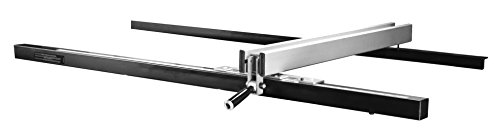
Unlike the replacement bodies, this is a complete T3 fence system, with a fence, steel guide tube with scale, front and rear support rails, and mounting hardware. Its maximum rip is 30 inches to the right of the blade and 13 1/2 inches to the left. Delta says the three-point lock and twin pointers keep the fence parallel within 1/64 inch. The fence measures 37 inches long and the rail 57 1/2 inches. It is designed to attach to Delta saws, so it may not suit a non-Delta saw or a buyer seeking only a Biesemeyer-style body.
Bottom line: Choose this if you want a complete Delta T3 system with 30 inches of right-side rip capacity.
Delta T3 Biesemeyer Fence Body
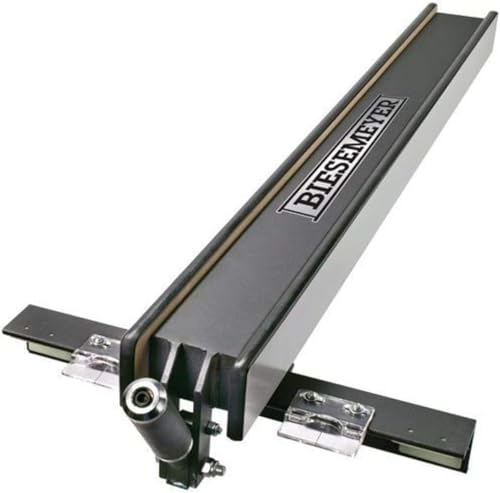
Unlike a complete fence system, this T3 Biesemeyer item is the fence body only; rails are not included. The body is made from 0.083-gauge steel, and the product features describe repeatable positioning without resetting the fence with a hand-held tape. It suits a T3 owner replacing a worn or missing body while retaining compatible rails. Because the rails and mounting hardware are not part of this item, it is not a complete upgrade for a saw that lacks the matching T3 components.
Bottom line: Choose this if you need a T3 body and already have compatible rails.
Rockler Wixey 36-Inch Digital Fence System

Unlike the Delta options, this fence system emphasizes digital measurement and micro-adjustment rather than a named Biesemeyer fit. It has a backlit readout in inches, fractions or millimeters, and its constant memory preserves calibration when powered off or removed from the bench rail. Rockler specifies accuracy of ±0.002 inch per foot. Steel and aluminum construction are intended for shop use.
Bottom line: Choose this if a digital readout and micro-adjustment matter more than a specified Biesemeyer fit.
Peachtree Uni-Style Fence with Sacrificial Face
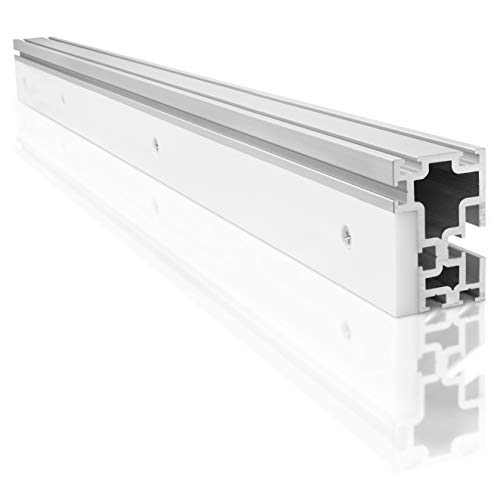
Unlike the T3 and Unisaw-specific choices, this is an upgrade fence for the factory Delta Uni-Fence system. Its single-piece extruded aluminum construction is designed to provide a surface for accessories such as a feather board or hold-down, according to the product features. The dimensions are 43 inches long, 3 inches high and 2 inches wide. It is not a general-purpose Biesemeyer replacement: the fit is the Delta Uni-Fence system, so buyers with another rail or fence design should not assume it will attach.
Bottom line: Choose this if you have a Delta Uni-Fence and want an accessory-friendly fence surface.
How to Choose a Biesemeyer Table Saw Fence
Compatibility comes before the fence’s extra features: match the saw model, mounting points and rail arrangement first. A fence can only guide cuts accurately when it locks securely and stays parallel to the blade. Compare the rip capacity with the widest panels you routinely cut; capacity is measured from the blade to the fence, and the blade position affects the available distance. For a retrofit, measure the existing rail span and check whether the candidate includes rails and hardware or only the fence body. A body-only replacement is useful when compatible rails remain installed, but it does not provide the parts needed for a complete conversion.
Fence Fit, Rails and Rip Capacity
Rip capacity is the maximum distance from the blade to the fence, not the length of the fence itself. A system rated for 30 inches to the right of the blade can support wider right-side rips than one without a capacity, but the saw table and rail extension must also support the workpiece. Measure the existing front and rear rail locations, mounting-hole spacing and table depth before ordering a retrofit. Fence rails typically guide a front-clamping fence and help stabilize its position; systems can use different rail profiles and attachments. If your measurements or saw model do not match the fit, confirm compatibility with the manufacturer before ordering.
Fence Types Compared by Shop Need
Complete systems, replacement bodies and specialized upgrades solve different problems. Use this quick guide to distinguish the parts and features before choosing.
| Need | Choose | Check first |
|---|---|---|
| Replace a fence on a specified Unisaw | Model-specific Biesemeyer fence | Exact saw model and type |
| Replace only the T3 fence body | Body-only component | Matching rails are already installed |
| Install a complete T3 setup | Fence system with rails | Saw mounting compatibility |
| Add digital measurement | Digital fence system | Rail and mounting fit |
| Upgrade a Delta Uni-Fence | Uni-style fence | Existing Uni-Fence system |
A digital display adds measurement convenience but does not replace a secure lock or a properly aligned fence. Likewise, a body made for a particular rail system is not interchangeable simply because both products are called table saw fences.
Safe Fence Setup for Rip Cuts
Keep the fence parallel to the blade and lock it firmly before starting a rip cut; a fence that shifts can pinch stock and contribute to kickback. Use a riving knife or splitter when the saw supports one, since it helps keep the kerf from closing on the blade. For a through-cut, keep the fence on the side of the blade that guides the retained workpiece, and use a separate crosscut sled or miter gauge rather than trapping a cutoff between the fence and blade. Support long stock so it cannot tip or bind. Disconnect power before adjusting or installing fence rails, and check the fence’s lock and alignment before returning the saw to use.
Frequently Asked Questions
How do I check whether a replacement fence will fit?
Match the saw model and fence system first, then compare rail profiles and mounting-hole locations. For a retrofit, also confirm that the candidate includes rails if your saw does not already have compatible ones.
What does a 30-inch rip capacity mean?
A 30-inch right rip capacity means the fence can be positioned up to 30 inches from the blade on its right side. Actual workpiece support also depends on the saw table and rail extension.
Can I use a table saw fence for crosscuts?
Do not trap a cutoff between the blade and rip fence during a crosscut; that setup can pinch the piece and cause kickback. Use a miter gauge or crosscut sled for crosscutting instead.
Why should a table saw fence be parallel?
A parallel fence keeps the workpiece from being forced sideways against the blade during a rip cut. Check alignment after installation or adjustment, and make sure the fence locks securely before cutting.
Do table saw fence bodies include rails?
Some are complete systems and some are body-only replacements. Check the exact package contents, since a body without matching rails cannot serve as a complete fence installation.