
Car Heat Insulation: 5 Materials Compared by Fit

Car Heat Sound Deadening Mat, 394 Mil suits targeted car heat insulation projects because its 394-mil sheet covers 10.8 square feet and is rated for temperatures from -40°F to 300°F. For broad coverage, choose a roll instead; drivers focused on sound damping as well as heat should compare the foam and butyl-composite options.
We earn a commission if you buy through links on this page. As an Amazon Associate I earn from qualifying purchases. Products are compared on manufacturer specifications, not hands-on testing.
- Best overall: Car Heat Sound Deadening Mat, 394 Mil – The 394-mil sheet provides a thick, manageable 10.8-square-foot piece and a working range of -40°F to 300°F.
- Best for broad foam coverage: Siless Liner 157, 36 Sq Ft – The closed-cell polyethylene foam roll covers 36 square feet at 157 mils thick.
- Best for large-area coverage: 196 Mil Car Heat Sound Mat, 58.1 Sq Ft – The 196-mil self-adhesive roll covers 58.1 square feet.
| Product | Best for | Material | Thickness | Coverage | Shop |
|---|---|---|---|---|---|
| Car Heat Sound Deadening Mat, 394 Mil | Thick sheet projects | Closed-cell foam, aluminum foil finish | 394 mil | 10.8 sq ft | Check Price on Amazon |
| Siless Liner 157, 36 Sq Ft | Foam roll coverage | Closed-cell polyethylene foam | 157 mil (4 mm) | 36 sq ft | Check Price on Amazon |
| Siless Liner 157 Foil, 36 Sq Ft | Foil-faced foam | Closed-cell polyethylene foam | 157 mil (4 mm) | 36 sq ft | Check Price on Amazon |
| 196 Mil Car Heat Sound Mat, 58.1 Sq Ft | Large-area installation | Closed-cell foam | 196 mil (5 mm) | 58.1 sq ft | Check Price on Amazon |
| CUKWUYBY Butyl Sound Deadening, 36 Sq Ft | Butyl composite panels | Butyl and aluminum composite | — | 36 sq ft | Check Price on Amazon |
Car Heat Insulation Materials
Compare material, thickness and coverage to match the insulation to your panel area and installation plan.
Car Heat Sound Deadening Mat, 394 Mil

Car Heat Sound Deadening Mat, 394 Mil is the thickest sheet-style option here, with a 394-mil nominal thickness and a 40-by-40-inch size. Its aluminum-foil finish and self-adhesive backing are intended for vehicle panels such as the hood, roof, doors and trunk. The maker says it blocks 98% of radiant heat transfer and gives a working temperature range of -40°F to 300°F. The single-sheet 10.8-square-foot coverage is convenient for a few panels, but it may be cumbersome for a full-cabin project that needs many cuts or more material.
Bottom line: Choose this for a thick, foil-finished sheet and a defined working-temperature range.
Siless Liner 157, 36 Sq Ft
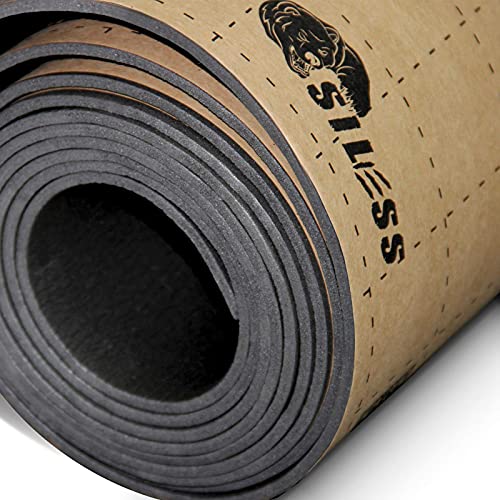
Siless Liner 157, 36 Sq Ft pairs 157-mil (4-mm) closed-cell polyethylene foam with 36 square feet of roll coverage, making it a practical pick when one sheet would leave too many seams. The manufacturer describes the liner as oil- and waterproof and says it blocks 98% of radiant heat transfer. Adhesive backing is included for panel application. Unlike the foil-finish variant, this version has no foil finish identified, so choose it when a plain foam surface suits the installation rather than when you specifically want reflective foil facing.
Bottom line: Pick this for broad foam coverage without a foil finish.
Siless Liner 157 Foil, 36 Sq Ft

Siless Liner 157 Foil, 36 Sq Ft combines the 157-mil (4-mm) closed-cell polyethylene foam used in the other Siless Liner with an aluminum foil finish, while providing 36 square feet of roll coverage. The maker says the liner blocks 98% of radiant heat transfer and describes it as oil- and waterproof; adhesive backing is part of the material. The foil-facing surface distinguishes this roll from the non-foil foam option. Its 4-mm thickness is much less than the 394-mil sheet, so buyers prioritizing thickness over continuous roll coverage may prefer a different format.
Bottom line: Choose this when you want foil-faced foam in a 36-square-foot roll.
196 Mil Car Heat Sound Mat, 58.1 Sq Ft

196 Mil Car Heat Sound Mat, 58.1 Sq Ft offers 58.1 square feet of 196-mil (5-mm) closed-cell foam in a 20-inch-wide, self-adhesive roll. That coverage exceeds the 36-square-foot rolls and suits projects spanning several panels, while the 5-mm thickness is between the 4-mm foam rolls and the thicker sheet option. The maker describes the mat as reducing road noise and vibration as well as helping block heat. Its black finish differs from the foil-faced choices; buyers who want a reflective foil surface should select a foil-finish material instead.
Bottom line: Pick this for the largest coverage area among the foam mats.
CUKWUYBY Butyl Sound Deadening, 36 Sq Ft
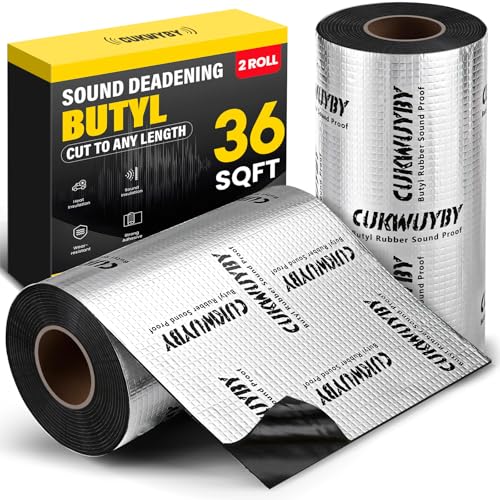
CUKWUYBY Butyl Sound Deadening, 36 Sq Ft uses a butyl-and-aluminum composite rather than the closed-cell foam used by the other roll options. Its 36-square-foot roll is designed for large vehicle panels, and the maker describes it as damping vibration while helping insulate against heat. This material may suit buyers who want a composite sound-damping mat for doors, floors or roofs. The specifications do not give a usable thickness figure, so compare its actual build with surrounding trim and available clearance before choosing it for a tight-fitting panel.
Bottom line: Choose this if a butyl-and-aluminum composite suits the panel and surrounding clearance.
How to Choose Car Heat Insulation
Choose car heat insulation by matching material, coverage and thickness to the panel and heat source. Foam mats are lightweight and can fill broad interior surfaces; butyl-and-aluminum composites are used for damping panel vibration as well as insulating. Foil can reflect radiant heat, but a reflective face works best when it faces an air gap rather than being pressed directly against another surface. Measure each panel, then add roughly 10% for trimming and seams. For example, a 36-square-foot roll generally covers less than 36 square feet of installed panel once overlaps and cut waste are included. If your project must fit beneath existing trim, prioritize clearance over nominal thickness.
Where to Install Heat Insulation in a Car
Install insulation on suitable body panels such as doors, roofs, floors or trunks, not on parts that move, drain or become dangerously hot. The maker identifies several of those panel locations for Car Heat Sound Deadening Mat, 394 Mil, while other mats are described for broad automotive panel coverage. Keep door drains, wiring access, seat-belt anchors, airbags and factory service points unobstructed. Do not cover exhaust components or other high-temperature parts with a material unless its temperature rating and intended application explicitly allow it. A mat’s working range is not by itself proof that it is safe against direct exhaust contact. If the panel surface runs near the material’s rated limit, verify compatibility before installation.
Foam, Foil and Butyl Mats Compared
Foam, foil-faced foam and butyl composites differ in construction and installation priorities. Closed-cell foam is a common lightweight panel liner; foil-faced foam adds a reflective surface, while butyl composite emphasizes vibration damping as well as thermal insulation. Radiant barriers need an air space to reflect heat effectively, so do not assume a foil finish alone guarantees the same result when compressed against a panel. Use the comparison below to narrow the material by project scale and format; actual fit still depends on the trim depth and panel shape.
| Material or format | Useful for | Selection cue |
|---|---|---|
| Closed-cell foam | Lightweight panel lining | Choose by roll coverage and thickness |
| Foil-faced foam | Foam with reflective facing | Allow for an air space at the reflective face |
| Butyl and aluminum composite | Panel vibration damping with insulation | Check build thickness and trim clearance |
Preparing Panels and Applying Insulation
Clean, dry metal gives adhesive-backed insulation a better chance of bonding than dusty, oily or damp surfaces. Remove loose dirt and grease with a cleaner compatible with the panel finish, then let the area dry fully before cutting or applying material. Plan cuts around wiring, drain holes and fasteners; avoid stretching foam across openings or trapping moisture behind an unsealed edge. Work in small sections so the mat can be pressed evenly into the panel contours. Do not install over corrosion or loose paint, since the adhesive cannot correct a weak surface. Before reinstalling trim, confirm that it clips in without force and that handles, locks and seat hardware still move freely.
Frequently Asked Questions
Does foil-faced car insulation need an air gap?
A reflective foil surface works best when it faces an air gap, because it reflects radiant heat rather than stopping heat conducted through direct contact. Even a small space can matter, but keep the insulation clear of hot components and moving parts.
How much insulation should I buy for a car?
Measure the panels you plan to cover and total their area in square feet, then allow roughly 10% extra for trimming and seams. A 36-square-foot roll will therefore cover somewhat less than 36 square feet of finished panel area.
Can car heat insulation cover the exhaust tunnel?
Do not cover an exhaust component or high-temperature surface unless the mat is explicitly rated and intended for that use. A product temperature range such as -40°F to 300°F does not establish suitability for direct exhaust contact.
Should I remove factory insulation first?
Remove factory material only if it is damaged, contaminated or prevents the new layer from fitting correctly. Added thickness can stop carpet or trim from seating, so check panel clearance and keep factory drains, wiring access and safety hardware unobstructed.
How do I stop insulation adhesive from peeling?
Apply adhesive-backed mat to clean, dry, sound surfaces and press it firmly into the panel contours. Oil, moisture, loose paint and application over a sharp edge can weaken adhesion or cause lifting.